 Subscribe

David Jones is on life support. Who’s to blame?
David Jones has survived almost 200 years, but competition from speciality retailers, online shopping and costly decisions have pushed the Aussie institution into administration.

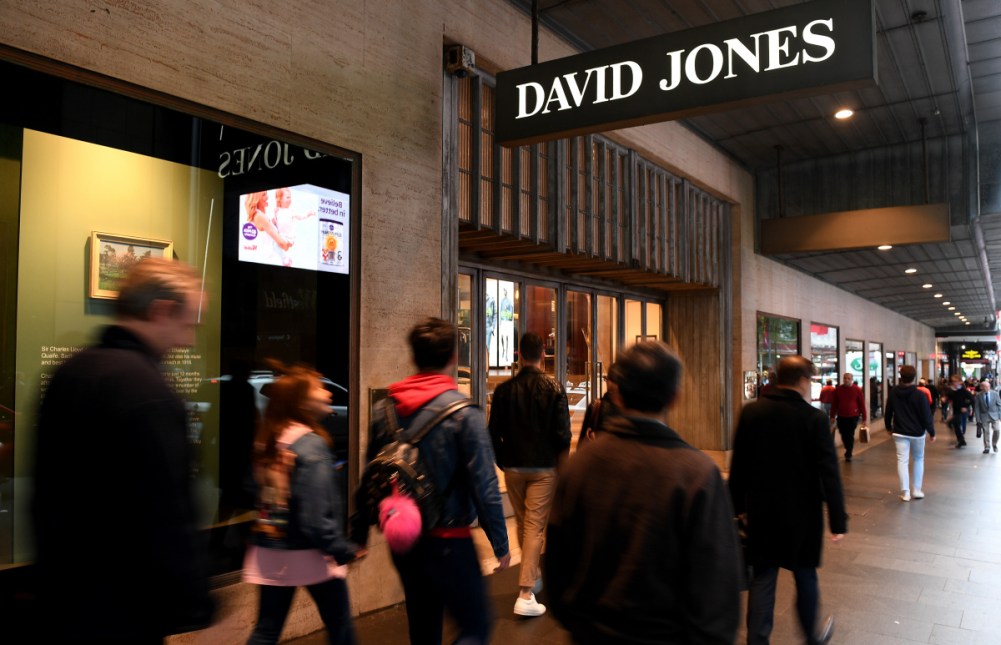
- David Jones has entered voluntary administration after rescue talks with landlords broke down, leaving the future of its 38 stores and more than 6000 staff uncertain.
- Department stores accounted for just one in 20 retail dollars last year, down from one in seven in the early 1980s.
- Staff cuts, mounting losses and competition from speciality retailers and online shopping have steadily eroded David Jones’ appeal.
Anyone trying to chart the decline of Australia’s department stores runs into a problem.
Not only are we visiting them less, but the Bureau of Statistics has stopped counting how often we visit them.
When the Bureau axed its long-running retail survey halfway through last year, only one in 20 retail dollars went to department stores. Back at the start of the 1980s, it was one in seven.
Like its bigger rival Myer, David Jones is losing money.
But its financial troubles have now reached a critical point, with the 188-year-old retailer entering voluntary administration on Thursday after rescue negotiations with landlords broke down.
David Jones’ owner, Anchorage Capital Partners, has appointed FTI Consulting as receiver, while the retailer’s directors have appointed McGrathNicol as voluntary administrators.
David Jones is proud to claim the title of the world’s oldest continuously operating department store.
Its first outlet opened in Sydney across the road from the General Post Office in 1838, a decade before Harrods opened in London and two decades before Macy’s opened in New York.
If it survives, it could be a shadow of its former self.
Before entering administration, David Jones had sought permission from landlords, including Westfield owner Scentre Group, to dramatically reduce its network of 38 stores, potentially leaving as few as 12.
However, receivers have confirmed that all physical and online stores will continue trading for now as they review the business.
How times change
There used to be few alternatives to department stores.
Australians bought their fashion, makeup, perfumes, soft goods, white goods, electrical goods, and electronic goods there.
They were why many of us came into the city: to get personal attention, marvel at the window displays and buy top-quality products from the basement food halls.
There’s scarcely an Australian over 30 who doesn’t know the David Jones houndstooth pattern, and there’s scarcely an Australian slightly older who doesn’t know the slogan (ditched for an unmemorable replacement in 2011) “there’s no other store like David Jones.”
This ethos of personalised service, deep product knowledge, impeccable presentation, and premium products from around the world allowed David Jones to survive two world wars, the Great Depression, and several recessions.

But it has found the rise of focused competitors specialising in individual parts of its business harder to deal with – new entrants such as Mecca (beauty), Cotton On (clothing), IKEA (furniture), Rebel Sport (leisure) and JB Hi-Fi (electronics).
It also had to come to grips with online shopping, which can deliver the same products it sells almost instantly.
Its response has made things worse. As it has lost business, it has cut staff, including its staff with deep knowledge.
Many of the specialist staff who remain aren’t actually employed by David Jones — they work for concession holders in beauty or clothing, so they can’t recommend products sold in the same store. Away from the concessions, getting served can take quite a while.
How David Jones lost its way
In 2014, David Jones found a saviour in Woolworths Holdings Limited, one of South Africa’s biggest retailers, and unrelated to the Australian supermarket chain Woolworths.
It already owned Australia’s iconic fashion brand Country Road and wanted to use David Jones and its South African base to become a leading retailer in the Southern Hemisphere.
The $2.1 billion purchase price was just the beginning.
It is believed to have spent another $1 billion on all sorts of grand plans that might just have worked, including opening stores in New Zealand, reopening grand food halls and refurbishing its flagship Elizabeth Street store in Sydney in 2019 to make it look like a palace.
Then Covid struck, and traffic dried up. In 2023, Woolworths sold the lot to Australian turnaround specialist Anchorage Capital Partners for just $92.5 million — a fraction of the billions it had spent trying to turn the ship around.
Asked about the experience, Woolworths South Africa’s then chief executive Ray Baggatini said it had been a case study in what not to do. He said someone might one day write a book.
Under Anchorage, David Jones continued spending, refurbishing (and shrinking) its stores in Chatswood Chase and Burwood in Sydney, as well as Southland in Melbourne, while partnering with Qantas Frequent Flyer.
But that extra spending has stopped.
Suppliers have faced payment delays, while concessionaires, including Country Road, have been pulling out.
Westfield owner Scentre Group says it offered assistance that would have allowed David Jones to continue trading through Christmas, retain staff and exit some stores, but the retailer’s private equity owner, Anchorage Capital Partners, rejected the proposal.
Scentre also revealed that David Jones had paid rent only up to September 30. The retailer occupies 17 Westfield locations, paying an average of $352 per square metre in gross rent, compared with $942 across Scentre’s wider portfolio.
Before the administration, its lender had advanced another $10 million to help stock stores through Christmas, while owner Anchorage Capital Partners had reportedly decided against injecting further funds.
Voluntary administration does not necessarily spell the end of David Jones. Administrators are now seeking offers to recapitalise or sell the business, although the future of its stores and employees remains uncertain.
But after 188 years, its future now hangs by a thread, marking another extraordinary chapter in the decline of Australia’s department stores.
If David Jones ultimately disappears, it’ll be because we stopped going there.
Topics: Consumer, David Jones, Retail