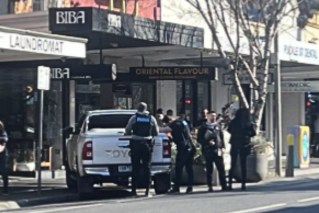
Slain fugitive could become sovereign citizen ‘martyr’
Source: AAP
Self-described sovereign citizen Dezi Freeman could become a hero for fringe conspiracy groups after being killed by police following a lengthy stand-off.
He had been on the run for seven months after killing police officers Neal Thompson and Vadim de Waart-Hottart as they served a warrant related to alleged child sex offences.
Criminologist Harry Hobbs said “sovereign citizen” or “pseudolaw adherent” were umbrella terms for a broad spectrum of people who essentially did not believe the law applied to them unless they consented to it.
Freeman appeared to have been at the extreme end of that spectrum – a violent and dangerous “true believer”, the University of NSW associate professor said.
“The narrative that underlies pseudolaw arguments is the idea that the state has been corrupted and is now being run by wicked forces,” he said.
“It’s like a legal conspiracy theory. So in that sense, they always think that they’re acting lawfully and acting legally.”
Some social media users have praised Freeman as a “hero” since his death, with one even likening him to bushranger Ned Kelly.
Hobbs said Freeman’s death was being taken by some online as confirmation of their existing beliefs the government and police were out to get them.
“It definitely seems that some people within the broader pseudolaw community don’t believe the police, and they’re folding it into their previous narratives about state corruption and tyranny,” he said.
“There is a risk that he will be seen within some circles as a martyr or heroic figure.”
The sovereign citizen ideology is self-perpetuating in that every interaction with authority — be that police or the court system — can further frustrate and isolate those who think the system is out to get them.
Dean of law at Southern Cross University David Heilpern said Freeman was a “classic example” of someone who began by contesting a traffic offence and ended up radicalised.
“All over the fact that he refused a drug-driving test for which the maximum penalty would have been a three-month disqualification, and instead he was disqualified for two years,” Heilpern said.
“This is obviously one of the factors that sent him down that spiral.”
Heilpern said soon after Freeman killed the two police officers last August, several people sought to “laud or idolise” him by displaying posters of him at an anti-immigration march.
“There will be some people who now want to canonise him, I guess,” he said.
Heilpern said a diversion program could take others like Freeman aside before their cases progressed to help them understand where they could end up.
“Show people what happens to you if you continue to argue this crap before the courts — and that is the consequences are so much more severe,” he said.
-AAP
Want to see more stories from The New Daily in your Google search results?
- Click here to set The New Daily as a preferred source.
- Tick the box next to "The New Daily". That's it.
Bomb blows up in alleged ATM thief's face
Manslaughter charge dropped over teen's death
Schoolboy trapped under train for an hour

Media boss skips court in person on assault charges

Freeman had hundreds of abuse files: Report