Six top spots to visit during Europe’s shoulder season

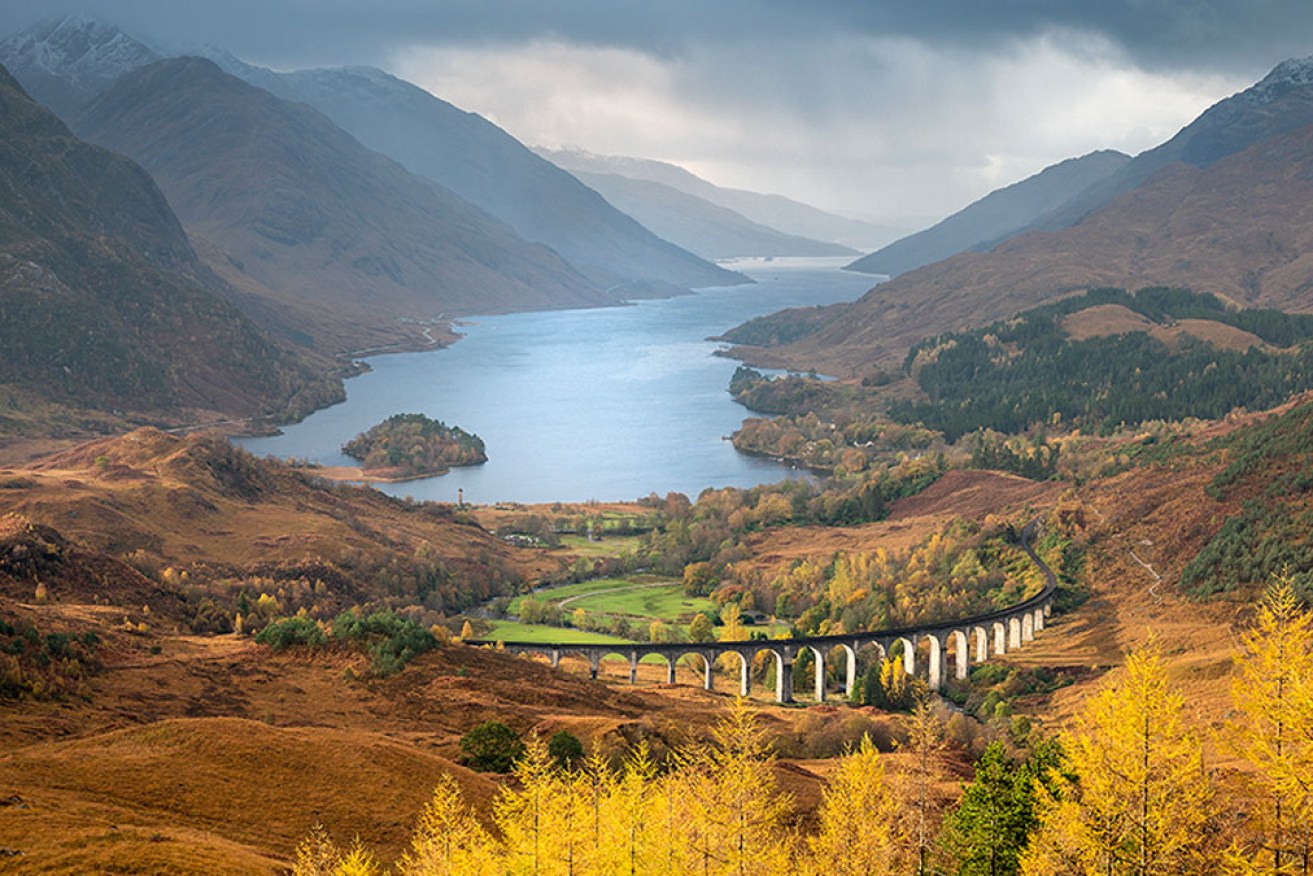
Glenfinnan Viaduct, made famous in the Harry Potter films, looks even more spectacular in autumn. Photo: Roman Popelar / Flickr
It may seem counter-intuitive to visit Europe when spring is in the air here, but a new trend is seeing the shoulder season gain favour with Australian travellers.
There are plenty of benefits in planning a holiday outside the peak summer months.
For a start, air travel, accommodation and tours are generally cheaper. And you’re less likely to have to battle with the madding crowd to secure a sliver of space on a Mediterranean beach or queue for days to climb Paris’s Eiffel Tower or Barcelona’s Sagrada Familia.
Club Med said Australian travellers are increasingly preferring the shoulder season, with latest data showing an 18 per cent year-on-year increase in September stays at its European sun resorts.
The all-inclusive holiday company said that, as well as the smaller crowds, affordability, and greater availability of accommodation, flights and experiences, another factor driving the trend is sustainability. Travel outside the peak period reduces pressure on both local infrastructure and the environment – which is worth considering when angry locals in some places have recently protested about overtourism.
The European autumn – from September to November – also brings ideal weather conditions in many places, without the extremes of summer heat or winter cold.
Club Med’s findings echo that of other travel companies in recent years, with Intrepid Travel reporting a 61 per cent increase in shoulder-season bookings to western Europe in 2023, and a 29 per cent increase to southern Europe. It attributed the change to soaring summer temperatures across the continent.
Here are six places to earmark for a shoulder-season getaway:
Tenerife, Canary Islands
The Spanish archipelago of the Canary Islands is a tourist hotspot known for sun-kissed beaches and year-round sun – and you can still expect temperatures of 24-28 degrees in September and October.
The big tourist resorts on Tenerife (the most populated island) are in the south, so Lonely Planet suggests heading north to the historic town of Puerto de la Cruz or to the beaches in the west around Los Gigantes and Puerto de Santiago.
For the more adventurous, there are plenty of hiking trails in places such as Teide National Park (including up the 3715-metre Teide volcano), Corona Forestal Natural Park, Macizo de Anaga mountain range and Masca Gorge.

Tenerife’s coastline is worth exploring. Photo: Erik Karits / Pexels
Prague, Czech Republic
The mediaeval architecture and old-world charm of the Czech capital of Prague is always enticing, and in autumn you have the added bonus of golden hues and fewer queues.
Take your time exploring the Old Town Square, walking across the historic Charles Bridge, visiting the sprawling Prague Castle, taking a cruise along the Vltava River, or enjoying a Bohemian craft beer tour.
Prague also hosts an intriguing collection of festivals across October, including an annual international classical music festival, the Signal festival featuring colourful light projections and digital installations, a six-day design and fashion exhibition dubbed Designblok, and a riverside “Festival of Soups”.

The shoulder season is an ideal time to visit Prague. Photo: Julius Silver / Pexels
Scottish Highlands
For autumnal scenery, it’s hard to beat the Scottish Highlands, with its dramatic mountains, picturesque lochs and wandering red deer.
It’s so magical and other-worldly you can almost believe that Nessie might pop her head above the water in Loch Ness.
Must-visit spots include Glencoe Valley (excellent for hiking), the 13th-century Eilean Donan Castle, Glenfinnan Viaduct (made famous by the Harry Potter films) and the picturesque Isle of Skye.
According to the Visit Scotland website, October is perfect for stargazing (maybe at the dark sky sanctuary on the Isle of Rum) and potentially spotting the northern lights. Or you could stay earth-bound with the Scottish International Storytelling Festival and a dram or two at one of the country’s myriad distilleries.

Glencoe offers excellent hiking. Photo: Robert Hack / Pexels
Tuscany, Italy
Vineyards are at their most picturesque in autumn, and none more so than those of central Italy’s Tuscany wine region.
Visit during September or October and you can expect mild temperatures, a kaleidoscope of colours, and harvest-season celebrations where you can enjoy tastings of wine, olives, cheese and other local produce, alongside music and markets.
Of course, you’ll also want to visit Florence, the region’s capital. Be warned, it is still likely to be busy in autumn, so best to book ahead for attractions such as the Uffizi Gallery or to see Michelangelo’s David in all his naked glory at the Accademia Gallery.

Tuscany’s vineyards take on an autumn glow. Photo: Wikimedia Commons
Greek Islands
“Greece in October means the heat has left the streets but has thoroughly warmed up the waters, making for great off-season sailing adventures,” says Intrepid Travel, one of many companies recommending island hopping in the shoulder season.
The beaches are also less crowded and the hotels more affordable, with one travel guide suggesting prices drop by up to 20 per cent.
Islands to put on your radar include Santorini, Mykonos, Corfu, Rhodes and Symi, which offer a combination of sparkling beaches, interesting archaeological sites and inviting villages.

Make Santorini part of your Greek odyssey. Photo: Pedro Szekely / Wikimedia Commons
Iceland
September ushers in the return of the spectacular aurora borealis or northern lights across Iceland, and while temperatures are fresh by Australian standards, it doesn’t get really cold until November.
Guide to Iceland website promises landscapes full of “fiery reds and golden yellows” and a chance to see migratory whales, also noting that September is the last opportunity to go kayaking before the water freezes. Most roads stay open until November, and there are plenty of bus and jeep tours available from the capital Reykjavik.
You can even witness the annual sheep round-up, Réttir, a century-old tradition where free-roaming sheep, and sometimes horses, are brought down from the highlands.

The northern lights can sometimes be seen in Iceland in September. Photo: Pexels
Want to see more stories from The New Daily in your Google search results?
- Click here to set The New Daily as a preferred source.
- Tick the box next to "The New Daily". That's it.
Australia’s coolest neighbourhood may surprise


Seven ways to make budget flights work in Europe


Compared to driving, flying is extraordinarily safe

