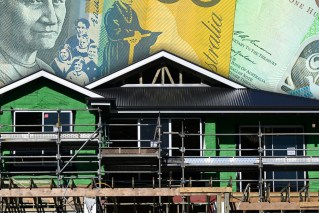
Do Australians really ‘work half the week’ just to pay their income tax? See for yourself

Source: Sky News Australia
The next federal election in 2028 looks set to be a battle of the tax plans.
Treasurer Jim Chalmers has dropped hints Labor may deliver more tax cuts for wage earners. Meanwhile, Opposition Leader Angus Taylor has promised to fix “bracket creep” by tying what people pay in income tax to inflation.
Labor’s NSW Premier Chris Minns unexpectedly appeared to side with the Coalition this week, suggesting some Australians were now working half of the week just to pay their income tax:
I know budgets are under pressure, but […] whether it’s now or in the future, we do need to make sure we’re taking urgent action when it comes to personal income taxes because at the moment a lot of working families are getting stung.
[…] The top marginal [tax] rate of 47 per cent, as I said in parliament last week, you’re working Monday, Tuesday, and half of Wednesday for yourself, and then Wednesday, Thursday, and Friday for the government.
Is that true?
Let’s take a look at the latest data on how much income tax typical Australian households paid in 2025.
How much Australians pay in tax
Most countries with comparable economies to Australia belong to the 38-nation Organisation for Economic Co-operation and Development.
Just weeks ago, the OECD released its latest annual Taxing Wages report, showing the tax trends for full-time workers across all those countries for 2025. Their earnings ranged from just 67 per cent of an average full-time wage, up to higher income-earners on 167 per cent of the average wage.
For Australian workers, the OECD used $108,674 as the base level that an average full-time worker earned in 2024-2025.
Crucially, the OECD analysis also takes into account any other government benefits they received to come up with a net tax rate for each type of household. For example, if you receive a government cash payment – such as family tax benefits – that extra money balances out some of the tax you’ve paid the government.
Taking that into account, the OECD report showed many Australians paid less income tax last year than the OECD average.
Specifically, Australia’s single full-time workers, single parents on a lower income with two kids and dual-income couples without kids all paid less tax than in comparable wealthy countries.
The most any of them paid was 28.7 per cent for a higher-income single person (someone earning 167 per cent more than the average wage). That was less than the OECD’s average of 30.3 per cent.
As an example, this is how a single Australian worker, earning an average wage, compared on tax rates against other OECD nations.
But there were some cases where Australians paid more.
For example, a married, dual-income couple – both earning an average wage – with two kids paid a tax rate of 23.5 per cent in 2025. This was higher than the OECD average of 21.5 per cent. This couple would not receive any family tax benefit, as their income would be higher than the means tests allows.
The OECD analysis does not include investment income.
No one in Australia pays 47% on their entire salary
None of the households covered in the latest OECD analysis were paying anything like a 47 per cent tax rate – particularly once you also take into account government payments like family tax benefits.
But what about Australia’s highest income-earners, who weren’t covered in that OECD analysis?
No, not even someone on a very high salary is paying 47 per cent of their entire salary.
Australia has a highly progressive tax system, with low income-earners benefiting more from tax allowances such as the low-income tax offset and transfer payments such as the family tax benefit.
Effective marginal tax rates vary based on income level and whether a person receives any government payments. Families tend to get more of those benefits – like family tax benefits – than singles.
Australia’s highest tax rate of 47 per cent applies only as a “marginal tax”: Meaning it’s applied only on each extra dollar that people earn above the highest $190,000 threshold. Here’s how it works.
The actual tax rates income earners pay
These are Australia’s current marginal tax rates, for the 2025-26 year. Note, there’s an additional 2 per cent Medicare levy for many taxpayers – taking the top tax rate to 47 per cent.
Let’s use an example. Minns’ salary from July 1, 2025, was $348,301 (plus expenses).
Minns has to pay the highest 47 per cent tax rate (including the Medicare levy) only on what he earns from $190,001 up: Less than half of his total salary.
According to the federal government’s Moneysmart income tax calculator, someone with a $348,301 salary in 2025-26 would have an after-tax income of $218,462.
That’s an effective tax rate of 37.27 per cent – not 47 per cent.
So are any Australian salary earners “working Monday, Tuesday, and half of Wednesday for yourself, and then Wednesday, Thursday, and Friday for the government”?.
The simple answer? No.
Helen Hodgson, Adjunct Professor, Curtin Law School and Curtin Business School, Curtin University
This article is republished from The Conversation under a Creative Commons licence. Read the original article.
Want to see more stories from The New Daily in your Google search results?
- Click here to set The New Daily as a preferred source.
- Tick the box next to "The New Daily". That's it.


Pork barrel rolls out again – it's time for a change
Long-awaited migrant plan reflects needs and fears