The Stats Guy: Vampire economics is alive in Australia – we need vampire hunters

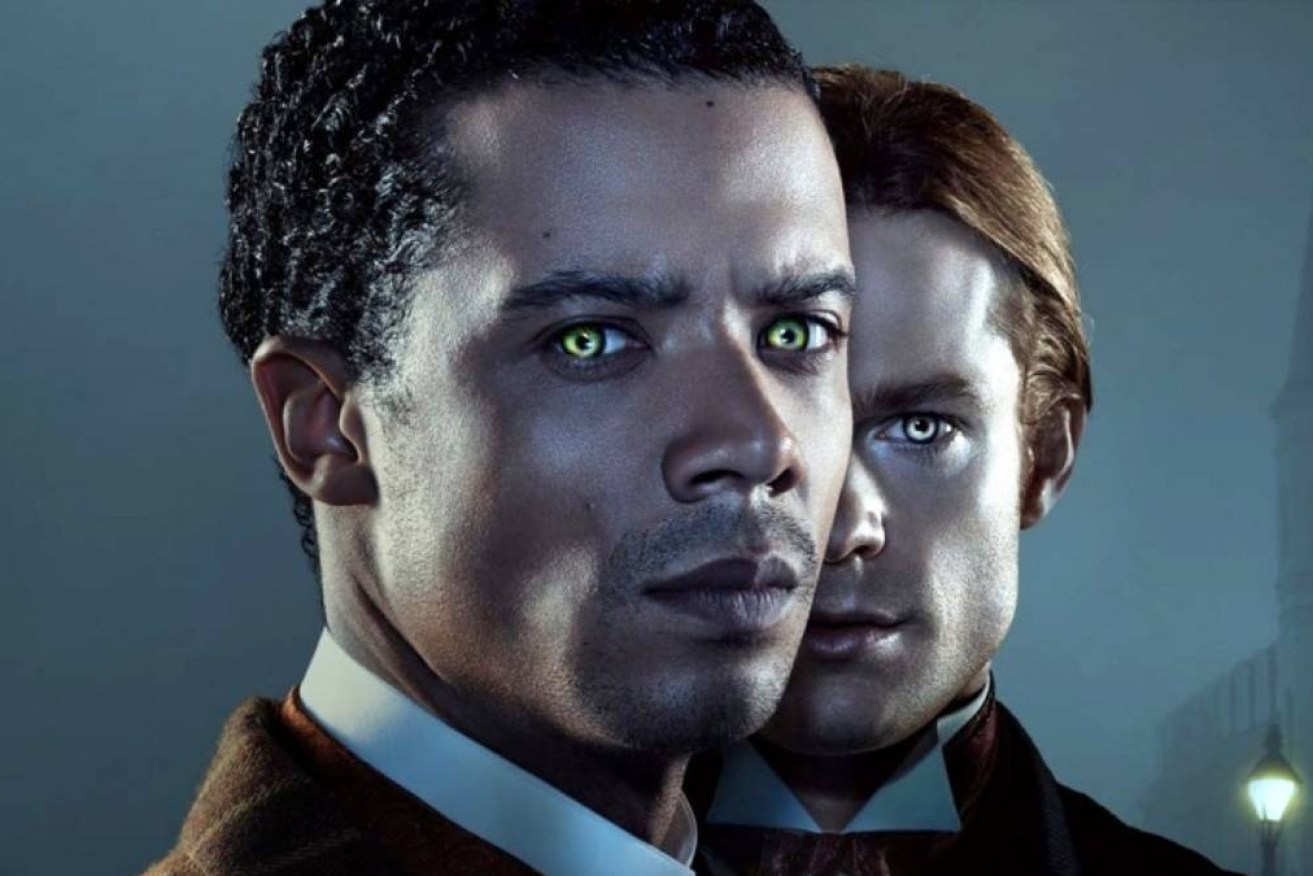
Fictional vampires are always rich, and the same principals are at work in real life. Photo: AMC
I recently watched Interview with the Vampire – the TV Show based on Anne Rice’s novels – and absolutely loved it.
While the storytelling was great, one detail stood out to me –the vampires are loaded.
Louis de Pointe du Lac, a relatively youthful vampire at 145 years old, is in a relationship with Armand, who is 514. In the modern-day storyline they live in obscene luxury in Dubai.
Naturally this got me thinking, not about blood, immortality or the burden of eternal life, but about compound interest.
Any halfway intelligent vampire should be filthy rich.
This is not because vampires are necessarily financial geniuses. They could be pretty average investors and still end up absurdly wealthy, provided they obey one simple rule – don’t die.
That, admittedly, is where vampires have an advantage over the rest of us.
The average mortal investor has a painfully short investment window.
You spend the first couple of decades being educated, the next few building a career, raising kids, paying off a mortgage, upgrading the car, replacing the dishwasher. Just when your wealth starts to compound significantly, you retire and must draw the money down again.
A vampire never reaches that point. A vampire doesn’t need a retirement plan. A vampire’s spreadsheet runs for 400-plus years.
Even a boring portfolio becomes exciting when the time horizon is long enough.
Buy land in a growing city. Hold shares in productive businesses. Reinvest income. Avoid catastrophic mistakes. Keep your identity somewhat plausible. Hire a creative accountant. Repeat for a century. Eventually you are not merely wealthy, you are old-money wealthy.
This is where vampires differ from zombies. Zombies are terrible investors. They lack impulse control and strategic foresight.
Vampires, at least in most myths, operate under some kind of code. They do not turn everyone into vampires. They remain rare. They are secretive, selective and, crucially, patient. A vampire understands scarcity.
Scarce beings invest in scarce assets. Land, heritage buildings, art, water rights, prime commercial property, equity in companies that quietly clip the ticket from everyone else’s consumption. The kind of assets that become more valuable as populations grow, cities densify and economies become more complex.
If you bought a patch of land in inner Melbourne, Sydney or Brisbane two centuries ago and simply managed not to sell it, your descendants would think of you as a genius.
In truth, your genius might have consisted mostly of being stubborn, boring and long dead.
That is the vampire model of wealth creation. Buy rare things, hold them for a very long time. Let population growth, productivity growth, inflation and human ambition do the heavy lifting for you.
Of course, a vampire has practical problems. Investing in your own name gets awkward when you have been around since the Napoleonic Wars but still look 32.
The passport office will eventually ask questions. So will the tax office. A 514-year-old Armand probably couldn’t index funds through CommSec.
This is presumably where creative accountants, trusts, shell companies and black-market arrangements come in.
Vampires, by their nature, already live outside polite society. If drinking human blood is on the weekly to-do list, a bit of financial opacity probably doesn’t keep them awake during the day.
But let’s imagine a highly moral vampire. A modern ethical vampire. One who drinks donated blood, rat blood, synthetic blood, or whatever the supernatural equivalent of oat milk might be. How would this vampire invest?
The answer is annoyingly sensible.
They would think in centuries, not quarters. They would care less about hot tips and more about asset quality. They wouldn’t fall for quick money scams. They would avoid unnecessary selling. They would minimise taxes and transaction costs.
They would use debt carefully. They would own assets that throw off income. They would diversify enough to survive wars, depressions, inflation, regime change, technological disruption and the occasional angry mob with wooden stakes.
In other words, they would invest like the world’s most patient family office.
Here our silly little thought experiment stops being silly. Vampires aren’t real, but intergenerational wealth is.
Vampires alive and well
Australia is not an old-money society in the European sense. We don’t have aristocratic families sitting on 700-year-old estates.
We are a young settler society, obsessed with home ownership, small business, superannuation and the family barbecue.
Yet the logic of vampire economics is very much alive here.
The families that build lasting wealth tend to behave differently from those that simply earn high incomes.
Income is what you make this year. Wealth is what survives you.
That distinction matters. A high-income household can still be financially fragile if every dollar is consumed. Private school fees, holidays, renovations, cars, restaurants and lifestyle creep eat up even very large salaries. Such a family looks rich, but owns little that compounds.
A wealth-building family does something else. It turns income into assets. Then it protects those assets from the very human temptation to sell them at the wrong time.
This is where the vampire mindset becomes useful. The first principle is to extend the time horizon.
Most people ask, “can I afford this?”, while a vampire asks, “what will this asset do over the next 100 years?”.
A family serious about intergenerational wealth asks a similar question: “How does this decision affect the next generation?”
That does not mean living like a monk. It means understanding that every dollar can either be consumed or converted into future family freedom.
The second principle is to accumulate scarce assets. In Australia, that often means well-located land.
Not all property is magical. A badly located, poorly built apartment in an oversupplied market is not the same thing as scarce land in a productive city with growing population, jobs and infrastructure. The vampire wants the asset that time makes harder to replicate.
The third principle is to avoid unnecessary selling. This is the hard one.
Families often sell assets for understandable reasons – divorce, tax bills, business failure, lifestyle upgrades, sibling disputes, panic or simply because someone wants the cash.
Old wealth survives because structures are put in place to make selling difficult, slow and deliberate.
That might involve trusts, companies, family agreements, clear estate planning, insurance and governance rules. The exact structure depends on the family and needs proper legal, tax and financial advice.
The principle is simple – do not leave a century-long strategy vulnerable to a bad Tuesday.
The fourth principle is to separate ownership from income. A family does not need to sell a good asset to benefit from it. Productive assets can generate rent, dividends, distributions or business income.
The trick is to let the golden goose lay eggs without turning the goose into roast dinner.
This is how families can hold land, commercial property, farms, businesses or share portfolios while still funding education, deposits, aged care and ordinary life. The asset remains intact. The income does some of the work.
The fifth principle is education. Not school education, though that matters too. I mean financial education inside the family. One generation can build wealth, the next can destroy it if nobody explains what the assets are for.
Children who inherit money without a philosophy often treat it like winnings. Children who inherit a family mission are more likely to behave like custodians. That word matters, custodian.
A vampire does not really own assets in the normal human sense. A vampire occupies them across eras. The city changes around them. Governments come and go.
Currencies change. Fashions change. New technologies are introduced. The vampire remains, quietly clipping coupons in the background.
Families can borrow a gentler version of this idea. You are not merely the owner of assets. You are their temporary custodian. You inherited advantages, or created them, and your job is to pass on something stronger than you received.
In Australia, superannuation already nudges us in this direction. It forces long-term investing on a nation that might otherwise spend the lot at Bunnings or the pub.
But super is still ultimately tied to the mortal life cycle. You accumulate, then you draw down.
Vampire economics asks a more ambitious question – what should never be drawn down?
Every family will answer differently. For some, it is the family home. For others, a business, a farm, an investment property, a share portfolio or simply a culture of saving and investing that gets passed on. The asset matters. The habit matters more.
The richest fictional vampires are not rich because they found one hot stock. They are rich because they had time, discipline, secrecy, and a deep understanding of scarcity.
We mortals cannot copy the immortality bit. Annoying, but true. We can, however, copy the patience.
We can stop thinking only in short election cycles, financial years and mortgage terms. We can think in generations. We can build portfolios that do not merely fund retirement, but strengthen families. We can teach our kids that wealth is not just spending power. It is optionality, resilience and responsibility.
We can learn quite a bit from vampires to build intergenerational riches – avoid sunlight, buy scarce assets, utilise compound growth, don’t sell the castle.
The vampire hunters
Governments in turn should think like vampire hunters.
If a tiny immortal, blood-sucking class can sit on scarce assets forever, compounding wealth across centuries while ordinary mortals must eventually retire, spend down and die, then the tax system mustn’t merely rely on income tax.
Vampires can keep their taxable income suspiciously low while their land, companies, art, trusts and offshore structures quietly swell in value.
The state therefore needs a silver bullet aimed at wealth itself – broad land taxes, inheritance taxes, stronger taxation of trusts and unrealised capital gains above very high thresholds. Proper registers of beneficial ownership and aggressive rules against hiding assets behind layers of companies.
The goal is not to punish patience or productive investment. The goal is to stop immortality of wealth – or its real-world equivalent, dynastic wealth – from turning markets into private feeding grounds.
In a healthy economy, capital should ensure each villager owns their home, rather than allowing a handful of well-dressed bloodsuckers to buy the whole village, charge demoralising rents, and build ever bigger castles for themselves.
Simon Kuestenmacher is a co-founder of The Demographics Group. His columns, media commentary and public speaking focus on current socio-demographic trends and how these impact Australia. His podcast, Demographics Decoded, explores the world through the demographic lens. Follow Simon on Twitter (X), Facebook, or LinkedIn.
Want to see more stories from The New Daily in your Google search results?
- Click here to set The New Daily as a preferred source.
- Tick the box next to "The New Daily". That's it.

RBA’s inflation warning stokes rate rise fears