Crew praised after frightening Qantas engine failure

Source: X/Coffeepakemilk
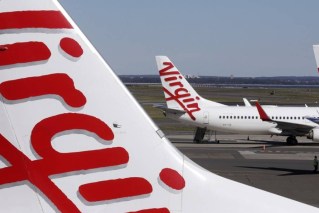
Air safety authorities have praised a Qantas crew after an engine failure at the “worst possible moment” on taking off from Sydney that led to a frightening emergency.
The Qantas 737-800 had just departed for Brisbane in November 2024 – with 181 people on board – when the flight crew heard a loud bang, accompanied by a shudder, as its right engine failed.
The crew aboard flight QF520 immediately recognised the engine failure based on caution lights and indications. But the Air Transport Safety Bureau report, released on Wednesday, said they continued their take-off as the aircraft had reached the speed beyond which it should not be aborted.
“This engine failure occurred at the worst possible moment during a critical phase of flight,” ATSB Chief Commissioner Angus Mitchell said.
“The flight crew responded quickly and decisively, continuing the take-off, declaring an emergency, and conducting relevant checklists while planning a return to Sydney.”
Source: ATSB
ABC reporter Mark Willacy, who was among those onboard, said at the time the 737’s wheels were just lifting off the ground when those on board heard a large bang “and a really jolting shudder went through the plane”.
“We knew immediately something was wrong. But what was more disturbing, I think, the plane really laboured after that,” he said.
The pilot alerted passengers to a major problem with the Boeing 737’s right engine. Willacy said QF520 banked and looped over Sydney for about 15 minutes before eventually landing safely with just one engine.
The ATSB said the damaged engine was assessed for fire risk by Aviation Rescue Fire Fighting Service personnel, before the plane taxied back to the gate and all passengers safely disembarked.
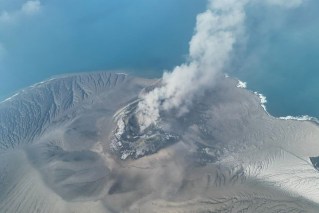
It said ARFFS had also responded to a grass fire that ignited alongside one of Sydney Airport’s runways from hot fragments expelled from the rear of the engine when the failure occurred.
“As we were coming in, it was clear that there was some sort of fire on the runway,” Willacy said.
“There was … a lot of smoke, a lot of fire engines … Eventually we had to make a very efficient exit from the plane because the right engine was still leaking some sort of fluid.
“When we landed, there was a lot of applause and cheering among the passengers. And I have to praise, always, the professionals and the pilots and the crew.”
Mitchell said all those involved in the emergency – the flight and cabin crew, ARFFS, and air traffic controllers – worked together effectively to ensure a safe and uneventful return to Sydney for the aircraft, and those on board.
“This incident provides a positive example of effective training and procedures, highlighting their importance within the aviation safety framework,” he said.
“In particular, faced with an emergency during a critical phase of flight, the flight crew responded decisively and appropriately in accordance with their training and procedures.”
The ATSB’s investigation noted the 737’s engine failed due to a fatigue crack.
The engine was scheduled to be replaced less than a fortnight later, because it was nearing the threshold recommended by manufacturer CFM International.
The ATSB said CFM International reviewed its CFM56-7B engine fleet after the Sydney incident. It found that although there had been several previous engine failures due to such cracking, the specific high-pressure turbine blade configuration of the engine on QF520 engine still met internal reliability targets and relevant regulatory guidelines.
It also noted that newer high-pressure turbine blade configurations had been introduced with improved failure rates.
Want to see more stories from The New Daily in your Google search results?
- Click here to set The New Daily as a preferred source.
- Tick the box next to "The New Daily". That's it.