Before addressing social cohesion, we need to agree on what it means

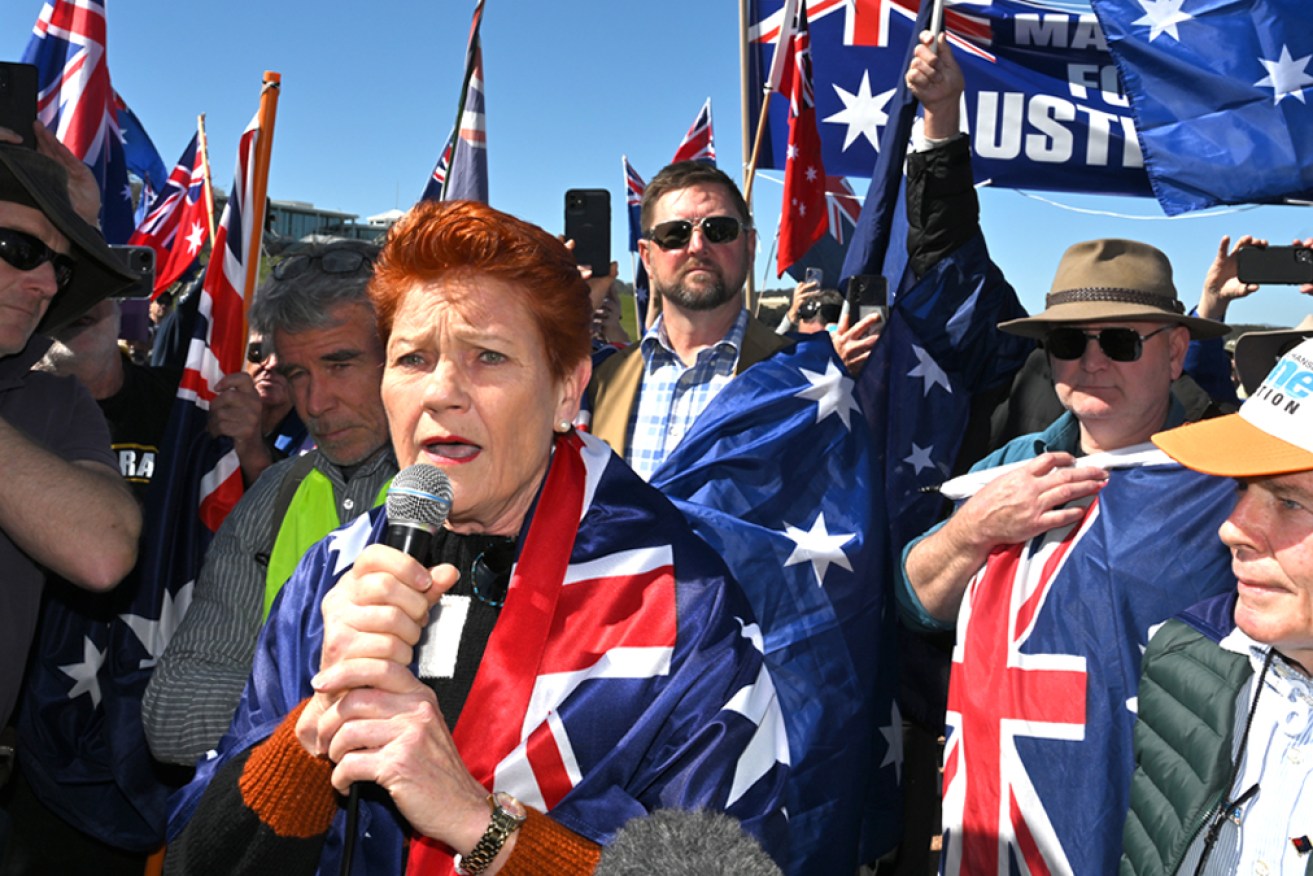
Unfortunately, it is most common for ‘social cohesion’ to be defined as being mainly about migration. Photo: AAP
In Peter Stahel’s recent The New Daily column The left brought a thesaurus to a knife fight, he writes about the competing “mental models” of social cohesion operating in Australia.
The populist assimilationist one and the inclusivist one.
He says the latter abstract and values-based view overlooks the housing, wages and taxation grievances of those who are attracted to the simple assimilationist view of social cohesion.
By failing to engage with and acknowledge the grievances of these many Australians, the inclusive view is losing ground to the view that proposes that migrants are taking our jobs and homes.
Stahel’s thesis about this cleavage in Australian society, at a stage when social cohesion is so important to us moving forward together and responding to the many problems we face, is perceptive.
Social cohesion is a very abstract concept, and there are many definitions. None is simply wrong, but unless we make a careful deliberate choice about what we mean by the concept, we risk predetermining what we discuss, what we conclude and if in fact we engage productively at all.
Unfortunately, it is most common for “social cohesion” to be defined as mainly being about migration.
For example, the current government explains it on a Department of Home Affairs webpage titled “About social cohesion” like this:
Australia is a diverse society with a rich Indigenous heritage and a successful migration history. We are proud of our Indigenous cultures, which are some of the oldest continuing cultures in the world.
Australia is also a young nation, a nation of migrants. Over one-quarter of Australia’s residents were born overseas, and have migrated from over 200 countries.
‘The diversity of the population provides Australia with a variety of languages, beliefs, traditions and cultures.
We celebrate this diversity and at the same time strive for a unified and harmonious nation. It is this social cohesion that underpins our prosperity.
While that doesn’t rule out broader definitions of social cohesion, it leans it towards being principally about culture and migration status.
Both of Stahel’s polarities are quick to agree on that, and it sets the scene for their divergences.
They need to start with a different agreement – specifically on what social cohesion is and why it’s valuable. Then, perhaps they can usefully engage.
This, in itself, will improve social cohesion, rather than undermine it as talking at cross-purposes does.
Stahel began his article by describing social cohesion as (once) being about “building a society where people from different backgrounds could live together, contribute and belong”.
That’s not bad, but “different backgrounds” is often code for different cultures, ethnicities or migration history.
Raising the importance of social cohesion and then defining it in such a narrow and racialised sense sets the scene for the polarisation about which Stahel is concerned.
Instead of being equally about all of society, it problematises those whose ethnic and migration history differences set them apart from the rest of “us”.
One side would seek to eliminate or diminish this diversity and the other side welcomes it and decries critics as racists.
For a more inclusive, less fractious debate, and to agree to and progress to a more cohesive society, we have to spell out carefully what we mean by social cohesion – in a way that doesn’t limit or bias the discussion, demonise any groups or prejudge the scope of any eventual policy responses.
For example, the OECD defines social cohesion as attitudes and behaviours of a society that works towards the wellbeing of all its members, fights exclusion and marginalisation, creates a sense of belonging, promotes trust, and offers its members the opportunity of upward mobility.
Other definitions of social cohesion emphasise connectedness at societal or community levels, fairness and a capability and propensity of community members to work together to address problems and make the most of opportunities.
Such views of social cohesion see it as protective of communities in times of crisis and benefitting all members fairly in good times.
There is likely to be widespread support for social cohesion defined in such broad terms, as well as policy measures to protect and enhance it. Such definitions place cohesion as being a valuable attribute of any community and a legitimate concern of all.
They do not foreground ethnicity or migration status, yet still allow recognition of the damaging impact of the barriers facing some migrants to full participation and a sense of belonging in Australian society and its communities.
Importantly, these definitions of social cohesion admit concerns about fairness, belonging, participation and opportunity for all, regardless of: Indigeneity, culture, ethnicity, migration history, sex, gender, sexuality, age, religion, geographical remoteness, education, health, disability/ability, employment status and so on.
They see everyone as beneficiaries and contributors to social cohesion, and as legitimate stakeholders in discussions about it.
It follows, of course, that the department responsible for immigration, multicultural affairs and security should not “own” social cohesion.
It needs to be a concern right across government, including those areas responsible for health and ageing, social services, communication, law, employment and education.
So, while you don’t need a thesaurus to have a productive discussion about social cohesion, it is important to be clear and agree about the term, and not to predetermine who has a stake in it.
A thesaurus might well be critical in finding and sharing the appropriate language. Then perhaps there need not be a “knife fight” at all.
Want to see more stories from The New Daily in your Google search results?
- Click here to set The New Daily as a preferred source.
- Tick the box next to "The New Daily". That's it.




Albanese's softly-softly just won't cut it any more


Once and future egalitarian nation of Australia