Australia’s home electrification boom has an equity problem

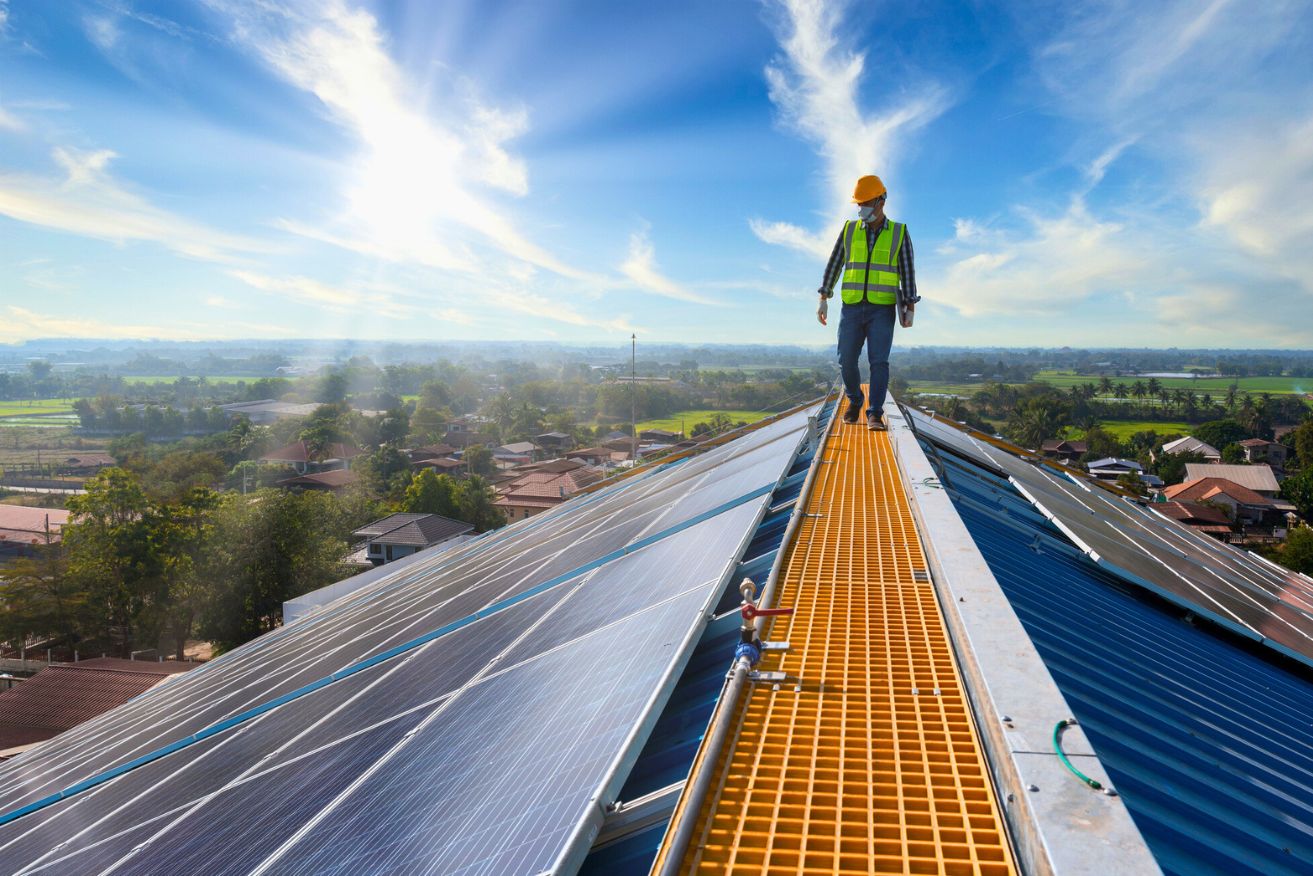
The home renewables boom mainly rewards households who can pay upfront. Photo: Getty
Australia is electrifying fast.
Rooftop solar and batteries, heat pumps and reverse-cycle air-conditioning are becoming mainstream.
Done well, this cuts emissions, lowers bills and improves comfort. Done badly, it widens inequality.
Right now, the boom mainly rewards households who can pay upfront, control their home and navigate a complicated market. Many renters and low-income households are locked out.
Capital, control, confidence
Electrification is framed as consumer choice – replace appliances, chase rebates, compare quotes, choose an installer.
In practice, the system favours people with money, time and decision power.
Evidence from a long-running Victorian home energy support service shows information alone cannot overcome structural barriers.
Sustained, multicomponent support can improve energy, financial and wellbeing outcomes for households facing vulnerability.
That inequity is already visible in the data on energy hardship. Energy Consumers Australia reports one in five households is vulnerable to, or experiencing, energy hardship, with renters disproportionately affected. It also finds many households that meet multiple hardship indicators are not accessing available supports.
Climate risk fault line
Regional and rural communities are increasingly exposed to climate extremes. State of the Climate 2024 reported rising heat and a lengthening fire weather season.
These risks land differently across the country. Australian Bureau of Statistics data show people aged 55 and over make up a larger share of the population outside capital cities than in the capitals.
When heatwaves and smoke events hit, regional communities also face distance and workforce constraints. Australian Institute of Health and Welfare reports people in rural and remote areas have poorer access to primary health care, alongside worse health outcomes on average.
Housing quality then multiplies exposure. The Australian Housing and Urban Research Institute reports widespread building problems across Australian housing and low energy performance across the existing stock.
Better Renting’s monitoring makes the thermal risk concrete: Winter indoor temperatures often sit below the World Health Organisation’s recommended minimum 18 degrees, while summer monitoring recorded indoor maximums above 46 degrees in some rentals.
A national Monash-led survey found 52 per cent of renters and 64 per cent of people in government-assisted, social or affordable housing reported not having air-conditioning, compared with about 36-38 per cent of owner-occupiers.
Add substantial housing exposure in flood plains and bushfire-prone areas, as noted by the National Housing Supply and Affordability Council, and regional electrification inequity becomes about safety as much as bills.
Rooftop solar inequality
Australia’s rooftop solar uptake is world-leading, but it is not evenly distributed. Australian PV Institute’s housing-stock analysis finds social housing, apartments and private rental housing are significantly underrepresented in residential solar penetration, despite substantial technical potential.
The Monash survey shows the same pattern in household reporting: Owner-occupiers reported current solar use around 50-51 per cent, while renters and social or affordable housing residents reported 18 per cent, with many saying they had no plans to adopt.
The biggest bill-reducing technology is easiest to access where people have secure tenure, suitable roofs, and upfront capital.
A regional pilot shows why equity does not happen by default. In Geelong’s Electric Homes Program, 658 households lodged expressions of interest and 201 completed upgrades, about a 24 per cent conversion rate.
The final research report found renters and several household types were underrepresented among participants, and most upgrades were funded from savings or mortgage offset accounts. Participation tracked home control and liquid capital.
In its January to March 2025 retail performance reporting, the Australian Energy Regulator noted average debt for customers entering hardship programs had increased in the previous year.
The Australian Energy Market Commission’s June 2025 hardship rule change is an important step. But rule changes do not retrofit a leaky home or fund a heat-pump hot water system for a household with no savings.
Equitable electrification
The solution is not mysterious: Combine upgrades with equity design and frontline delivery.
It starts with minimum rental energy performance standards, backed by funding so compliance does not simply raise rents. It means expanding targeted grants and low-cost finance, not just rebates, consistent with the National Energy Performance Strategy.
It means funding trusted energy navigation and long-term support services, especially in regional areas, and embedding equity in reform design aligned with the National Energy Equity Framework. Community Power Agency, RE-Alliance and Yes2Renewables have proposed 50 independent, government-funded Local Energy Hubs as physical drop-in centres in regional areas, staffed by local people to provide information, support and coordination.
The equity test
If electrification stays designed around households who can self-fund upgrades and control their housing, Australia can decarbonise while widening inequality, especially in regional communities facing harsher heat and poorer housing.
Design for equity, and electrification becomes an emissions strategy and a cost-of-living, health and resilience strategy that reaches households currently locked out.
Trevor Brown is Emeritus Professor of Chemistry at the School of Science and Technology, University of New England
Want to see more stories from The New Daily in your Google search results?
- Click here to set The New Daily as a preferred source.
- Tick the box next to "The New Daily". That's it.


Pork barrel rolls out again – it's time for a change
Long-awaited migrant plan reflects needs and fears