Coalition’s Python-esque grandstanding on energy is madness

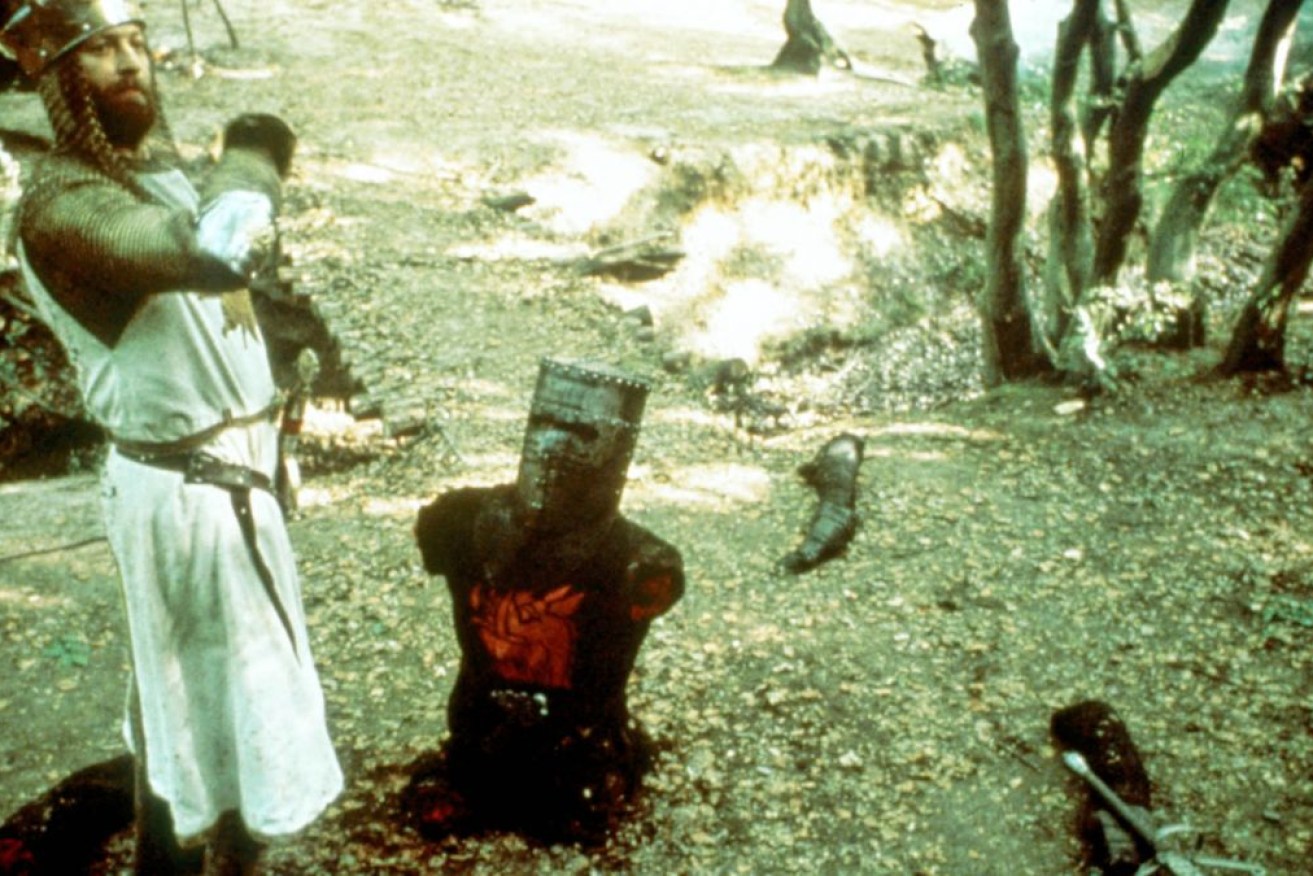
The Liberals' decision on net zero this week is madness on the level of Monty Python's Black Knight. Photo: AAP
National energy policies have always been defined in large part by wider geopolitics. In 1973, it was support for Israel in the Yom Kippur War that led oil exporting countries to cut off supplies to some markets.
Half a century later, global tensions are again uprooting the world’s energy supply chains.
This helps explain why the single greatest factor affecting electricity prices in recent years wasn’t the Morrison government’s rightful decision to sign Australia up to net zero, alongside nearly 140 other countries. It was Russia’s invasion of Ukraine in 2022 that set off a global inflation crisis that has made the cost of everything, including electricity, go up.
But as UN Secretary General António Guterres told world leaders gathered in the Amazonian city of Belem ahead of the start of this year’s COP30 Climate Conference last week, renewables are winning on “price, performance and potential” in the global energy race.
They are winning on price because – as is the case in Australia – renewables are already far cheaper than coal-fired power, and even more than that generated from gas. In fact, as the International Renewable Energy Agency, headquartered in the UAE, recently found, about governments globally saved half a trillion dollars last year with renewables – which also underpins about 10 per cent of the world’s collective GDP. If we want cheaper electricity, it stands to reason that we need more clean energy – not less.
Renewables are also clearly winning on performance, especially when you consider that Australia hasn’t had a single day in more than 2½ years without a coal-fired power station being offline. This ageing fleet has become the most unreliable part of our energy grid.
Australia’s biggest challenge is actually our equally ageing grid infrastructure. Beginning to upgrade this is behind more than half of all electricity price increases in recent years.
The challenge of grids and storage is global, with the pace and scale of renewables already far beyond a tipping point, and with global energy demand surging beyond all predictions – including to support artificial intelligence and data centres.
Renewables are also winning on potential, because they already generate three times the jobs of investment in fossil fuel infrastructure. With additional action to mobilise concessional and blended finance, an additional $1 trillion in investment in renewables globally by 2030 can also be unlocked – investments that Australia would be crazy to miss out on to other countries that have no political question over net zero.
All this helps explain why our second-largest political party is mad to follow our third-largest political party in dumping a commitment to net zero. It is akin to Monty Python’s Black Knight declaring that coal power is merely suffering a flesh wound that unidentifiable investment can fix.
It also underscores why it is mad that – for all the Coalition’s talk of the $1 billion cost of Australia potentially hosting next year’s COP31 climate conference in partnership with the Pacific – there has been zero discussion of the far superior economic benefit of us doing so in this globally competitive race for clean energy and the green industries that will rely on it.
The best estimates are that, if done well, hosting COP31 could actually deliver a two-for-one return on investment for Australia. It is also the world’s largest green trade fair and brings a huge platform that can be leveraged for sovereign and commercial deal-making as well as investment.
For South Australia alone (where the Coalition lost seats at the last federal election), it would mean a $511.6 million injection to the state’s economy, bringing in four times as many visitors as the Australian Grand Prix in Melbourne each year.
Over the long term, the benefits that hosting COP31 could help catalyse are even more profound. As the Superpower Institute chaired by Ross Garnaut has found, Australia’s iron ore exports might be worth about $120 billion a year today. If these were replaced by green iron, this could rise to as high as $386 billion a year by 2060. A report published by the World Economic Forum in recent days about Australia underscores this opportunity.
While the harsh reality is COPs often represent the triumph of incrementalism, when you are dealing with something as consequential as the climate crisis, every step forward matters. And every step forward helps governments like our own also accelerate the transition to clean energy and therefore tackle the cost-of-living crisis at the same time.
That is exactly what everyone also hopes this month’s COP30 Climate Conference in Belém will also help achieve. It is also why it is a good thing that Australia is bidding to host COP31.
Thom Woodroofe is a senior international fellow with the Smart Energy Council and a former climate diplomat. He is attending this week’s COP30 climate conference
Want to see more stories from The New Daily in your Google search results?
- Click here to set The New Daily as a preferred source.
- Tick the box next to "The New Daily". That's it.

Pork barrel rolls out again – it's time for a change
Long-awaited migrant plan reflects needs and fears