How private job agencies are capturing welfare payments

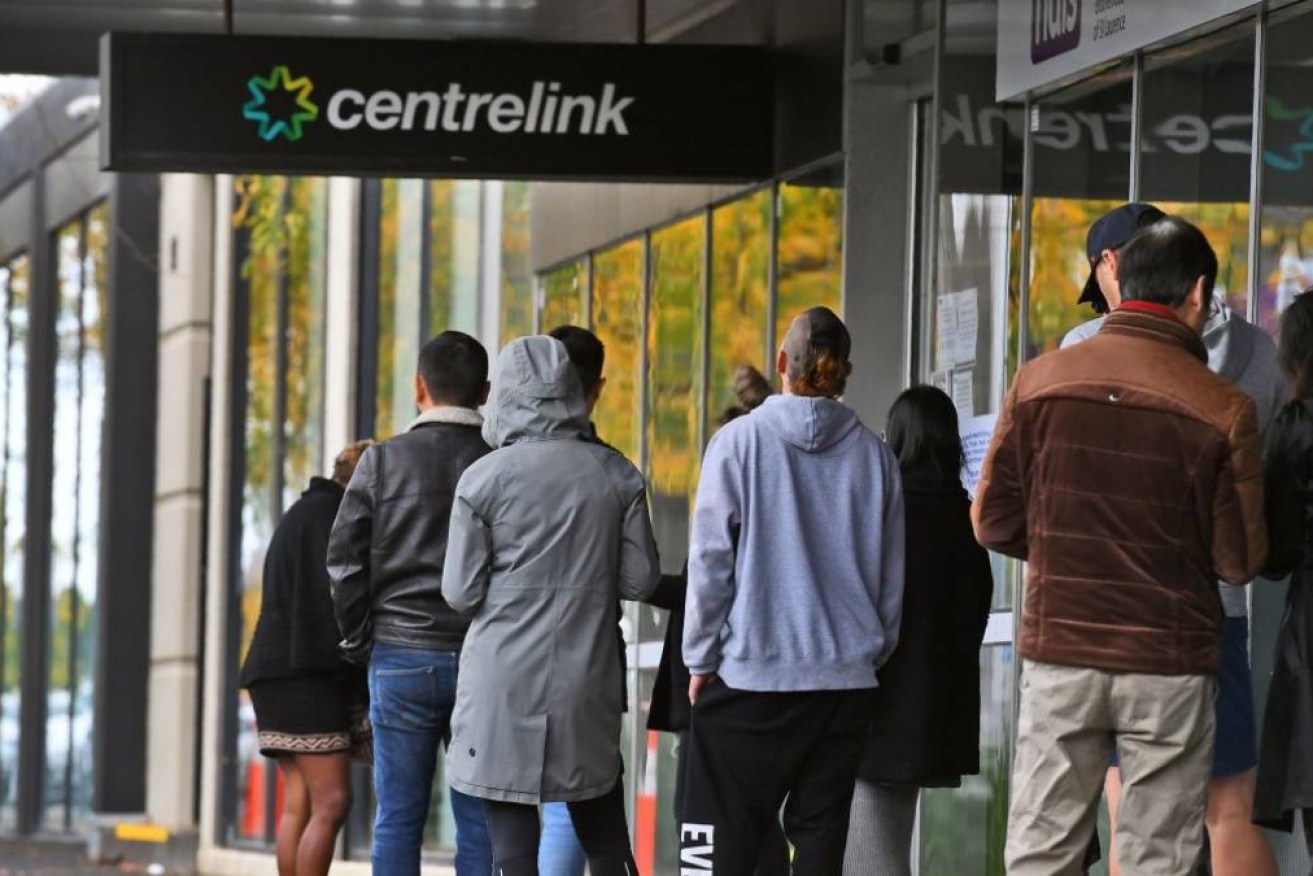
The system is not doing enough to alleviate the economic pain many are feeling. Photo: Getty
New data shows that only one in nine jobseekers (11.7 per cent) found long-term employment through a job agency in the financial year to the end of June 2025.
This is despite an increase in public funding through Workforce Australia, a Commonwealth government service that pays private job agencies to help people who are unemployed find jobs.
The involvement of private agencies in the unemployment benefit system began in 1998, when the Howard government replaced the government-run Commonwealth Employment Service.
It instead contracted private or community-run job agencies to help people find jobs.
This was combined with the “mutual obligation” requirement for those receiving the benefit. This became known as the “work for the dole” program.
Those receiving payments are required to do “work-like” activities for a certain number of hours and/or to demonstrate an effort to find employment.
Jobseekers sign up with private job agencies as a way of showing they are looking for a job. An agency claims “outcome payments” from the government when a client has completed four, 12, or 26 weeks of work (the latter being considered long-term).
In short, instead of helping some of its most vulnerable citizens directly, the Commonwealth government makes them jump through hoops to receive JobSeeker payments and private companies capture handsome profits in the process.
More than one in four JobSeeker payment recipients have disability or health conditions that affect their capacity for work, as recognised by the Albanese government’s employment white paper from September 2023.
The system is doing little to meet the white paper’s objective of “delivering sustained and inclusive full employment”.
The abysmal employment outcome for jobseekers is well below the government’s target of 15 per cent of the jobseekers finding long-term employment – it is also a deterioration from the 13.2 per cent from the 2023-24 financial year.
The figures are published in the annual report of the Commonwealth’s Department of Employment and Workplace Relations.
At a time when unemployment has been trending up, the system is not doing enough to alleviate the growing economic pain many are feeling.
The Australia Institute has pointed out that Australia could substantially lift its unemployment payments without any meaningful disincentives for working.
In fact, among all 33 OECD countries, Australia has the lowest unemployment payment relative to average wages.
Other OECD countries take much better care of their citizens who are unemployed. As one of the richest nations in the world, why shouldn’t Australia do the same?
Frank Yuan is a postdoctoral fellow at the Australia Institute.
This article first appeared in The Point. Read the original here
Want to see more stories from The New Daily in your Google search results?
- Click here to set The New Daily as a preferred source.
- Tick the box next to "The New Daily". That's it.


Pork barrel rolls out again – it's time for a change
Long-awaited migrant plan reflects needs and fears