The Australian desert doesn’t make climate-change headlines – but it should

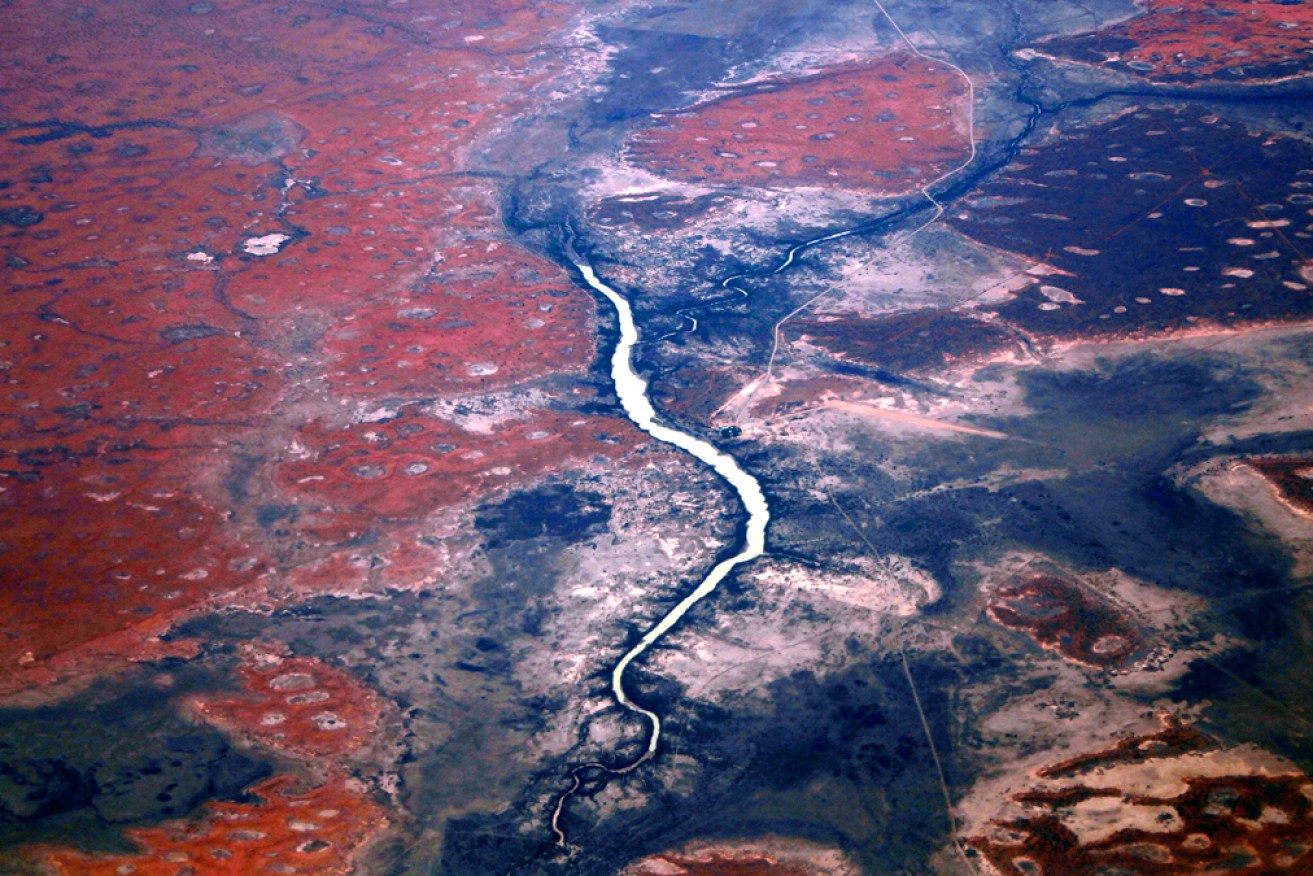
Australia's desert country is a place of plenty – but it's under grave threat. Photo: AAP
When climate change makes the news, the associated images are often of the Amazon’s canopy shrinking and burning, of corals bleaching on the Great Barrier Reef, of rising seas swamping tropical islands and coastlines.
These are places known for their lush and teeming natural abundance. But what about the places where abundance is quieter, seasonal and older.
Australia’s desert country is rarely part of the global climate conversation despite it being home to the world’s oldest continuing culture, and the largest connected conservation corridor on Earth.
It’s often portrayed as a harsh and empty expanse. But for desert people like me, who know it intimately, it is an extraordinary place of plenty.
We can tell you climate change is making the country harder to read. Bush tucker is disappearing. There is less water. Buffel grass, camels and feral cats are choking the land. And large-scale wildfires and floods are occurring more frequently.
Extreme heat is a growing menace that makes it difficult, if not impossible, for mob to stay on country year-round at a time when their presence has never been needed more.
Our people, our Indigenous rangers, are the first responders to climate change in the desert that covers a third of the Australian continent.
They are the protectors of culture and nature, they are the eyes and ears bearing witness to climate impacts, they are the knowledge holders of right-way fire that protects biodiversity, cultural heritage and communities.
And yet they lack the job security and conditions enjoyed by first responders in our cities, and they are hampered by a lack of critical infrastructure. For example, due to insufficient funding, many ranger programs lack fit-for-purpose sheds, water tanks and vehicles to access remote country safely.
Desert communities have long been left out of policy and decision-making that directly impacts us. But it doesn’t have to be this way.
Governments at all levels should proactively work together with our communities, side by side, to plan and deliver our Indigenous led climate adaptation, mobility and resilience with wrap around support.
At tthe United Nations Climate Change Conference COP30 in Belém, in Brazil, this week, I will speaking for the desert.
I want to help others understand that cultural resilience is climate resilience, and climate resilience is essential for ecological resilience.
Half of Australia’s national reserve system lies within the desert, and 28 Indigenous Protected Areas make up almost half of Australia’s global pledge to protect 30 per cent of land by 2030.
We must properly resource the Indigenous ranger programs that manage this priceless part of Australia, blending ancient law and modern science to safeguard wildlife, heal Country, and keep desert culture strong.
Yuwa palya.
Sam Murray is CEO of the Indigenous Desert Alliance and will hos a panel discussion in the Australian pavilion at Cop30 in Brazil on Tuesday on the theme “ cultural resilience = climate resilience”
Want to see more stories from The New Daily in your Google search results?
- Click here to set The New Daily as a preferred source.
- Tick the box next to "The New Daily". That's it.


Pork barrel rolls out again – it's time for a change
Long-awaited migrant plan reflects needs and fears