As the world heads to COP30, it’s time to address how we actually survive climate change

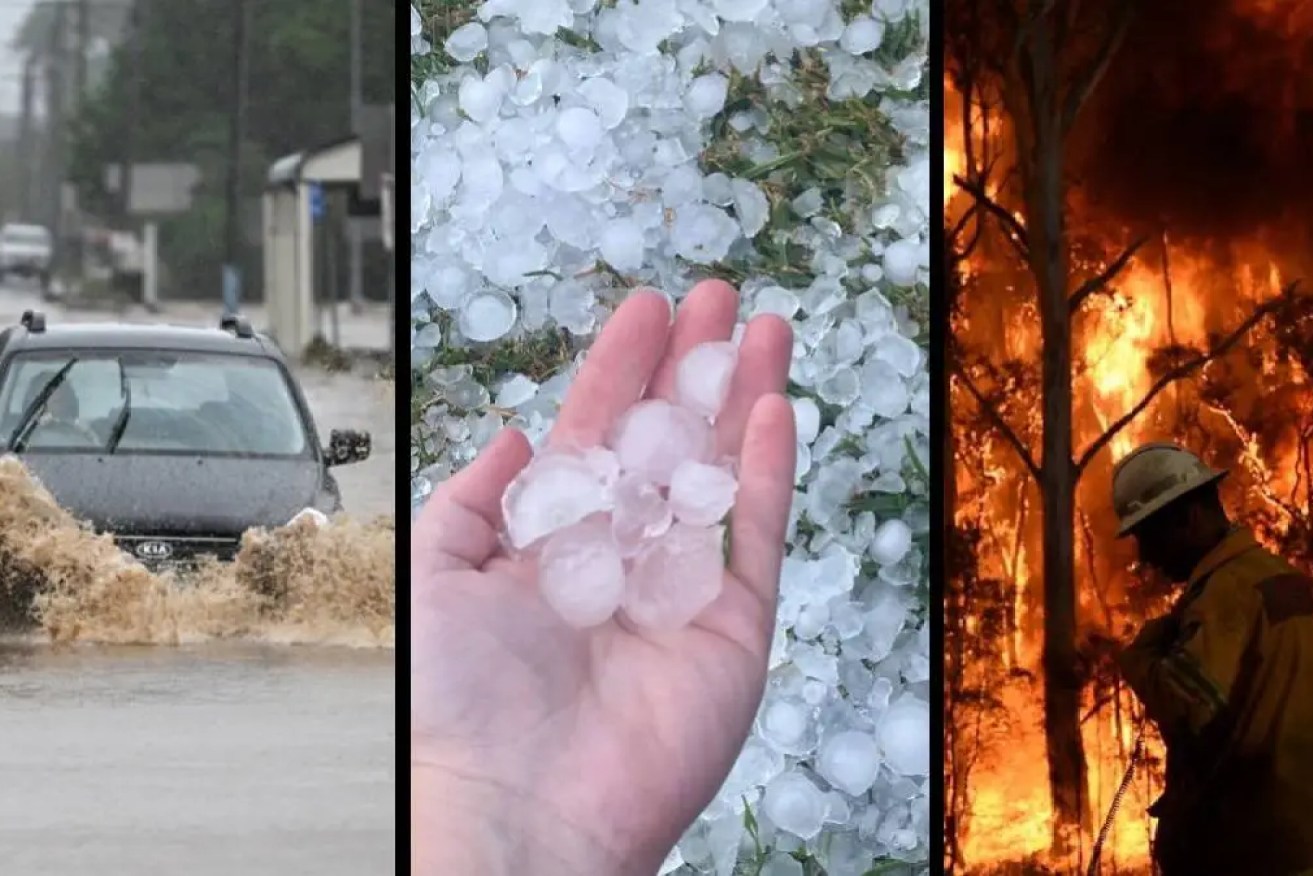
The impacts of a hotter world are no longer a future threat – they are reshaping Australia now. Photo: TND/AAP
For decades, climate politics in Australia has been dominated by a single question – how do we cut emissions?
But as Canberra continues to argue over net-zero targets, another crisis is unfolding – one that’s had far less airtime. How do we actually live through the climate damage already upon us?
From deadly heat to record-breaking floods, the impacts of a hotter world are no longer a future threat – they are reshaping Australia now.
The federal government’s own recent National Climate Risk Assessment laid it bare – our homes, health, food systems and ecosystems are all under increasing strain.
Sea level rise could leave 1.5 million more Australians in high-risk coastal areas by 2050.
More heat-related deaths are likely, particularly in Australia’s north.
Plant and animal species face extinction and ecosystems may collapse. Productivity will fall and inequality will worsen. And no Australian community is immune from climate risks.
Yet Australia’s national conversation, and our policies, largely remain fixated on how fast we should curb climate change, not how to survive it.
At COP30 in Belém the world has a chance to fix that imbalance.
Climate Change and Energy Minister Chris Bowen will join the Australian delegation of negotiators and experts at the crucial global talks in Brazil, which formally begin this week.
As you’d expect, accelerating efforts to cut greenhouse gas emissions is high on the COP30 agenda. But negotiators will also try to finalise the first Global Goal on Adaptation, setting measurable benchmarks for how nations get ready for the climate shocks ahead.
Australia has every reason to lead this effort.
At the Climate Resilience Emergency Forum I convened at Parliament House on October 31, experts made clear that Australia is already struggling under climate change – and adapting well is an issue of fairness, economic health and human survival.
We heard that local councils – many of which are already financially stressed – question how they will rebuild infrastructure when climate disasters hit.
We heard of people struggling with the cost of living who, this summer, will have to choose between buying food, medicine or electricity to run their air-conditioning.
We heard how homes are still being built in places prone to floods and bushfire, and how insurance costs are skyrocketing as wild weather worsens.
Across Australia, disasters already cost the economy almost $40 billion a year, representing 2 per cent of GDP in 2020. By 2060, this could reach $73 billion a year.
That’s why we need to invest in climate resilience. For every $1 spent on adapting to climate change now, about $10 is saved in future. I’m calling for a national commitment to invest 0.25 per cent of GDP annually in resilience – a practical down-payment on our future prosperity.
What does that mean in practice? It’s climate-proofing homes through stronger building codes. Reforming insurance so coverage stays affordable.
Scaling up Indigenous fire management and drought-resilient farming. Restoring mangroves to shield coastal communities. In short – it’s getting prepared, not pretending everything will be OK.
When it comes to defence, Australia doesn’t wait for the enemy to arrive on our shores – we get ready. We identify strategic risks and assess our capacity to respond.
We mobilise and strike partnerships and make nationally coordinated plans.
We invest big in military personnel, equipment and infrastructure, to ensure our safety, prosperity and way of life are protected.
We should approach climate preparedness with the same urgency, coordination and foresight.
Australia isn’t the only nation that needs protecting. Climate change has left nearly half of the global population – about 3.6 billion people – highly vulnerable to hazards such as food and water shortages, heat stress and death from floods, droughts and storms.
For our Pacific neighbours, climate change is an existential threat as rising seas inundate their low-lying island homes.
At COP30, rich nations like Australia – which are responsible for the lion’s share of climate damage to date – will be under pressure to commit more funding to help developing countries adapt and survive. Australia should provide its fair share.
The world stands at a pivotal moment, when real climate leadership is being redefined.
Slashing emissions is still essential, but so too is readiness to live safely and fairly in a world already transformed by climate change.
In Belém, Australia should push for a future where every community has the means to withstand what’s coming.
Zali Steggall is the independent member for Warringah, a lawyer and former Winter Olympic athlete
Want to see more stories from The New Daily in your Google search results?
- Click here to set The New Daily as a preferred source.
- Tick the box next to "The New Daily". That's it.


Albanese's softly-softly just won't cut it any more

Once and future egalitarian nation of Australia