Combating the sovereign citizen movement – and the industry that fuels it
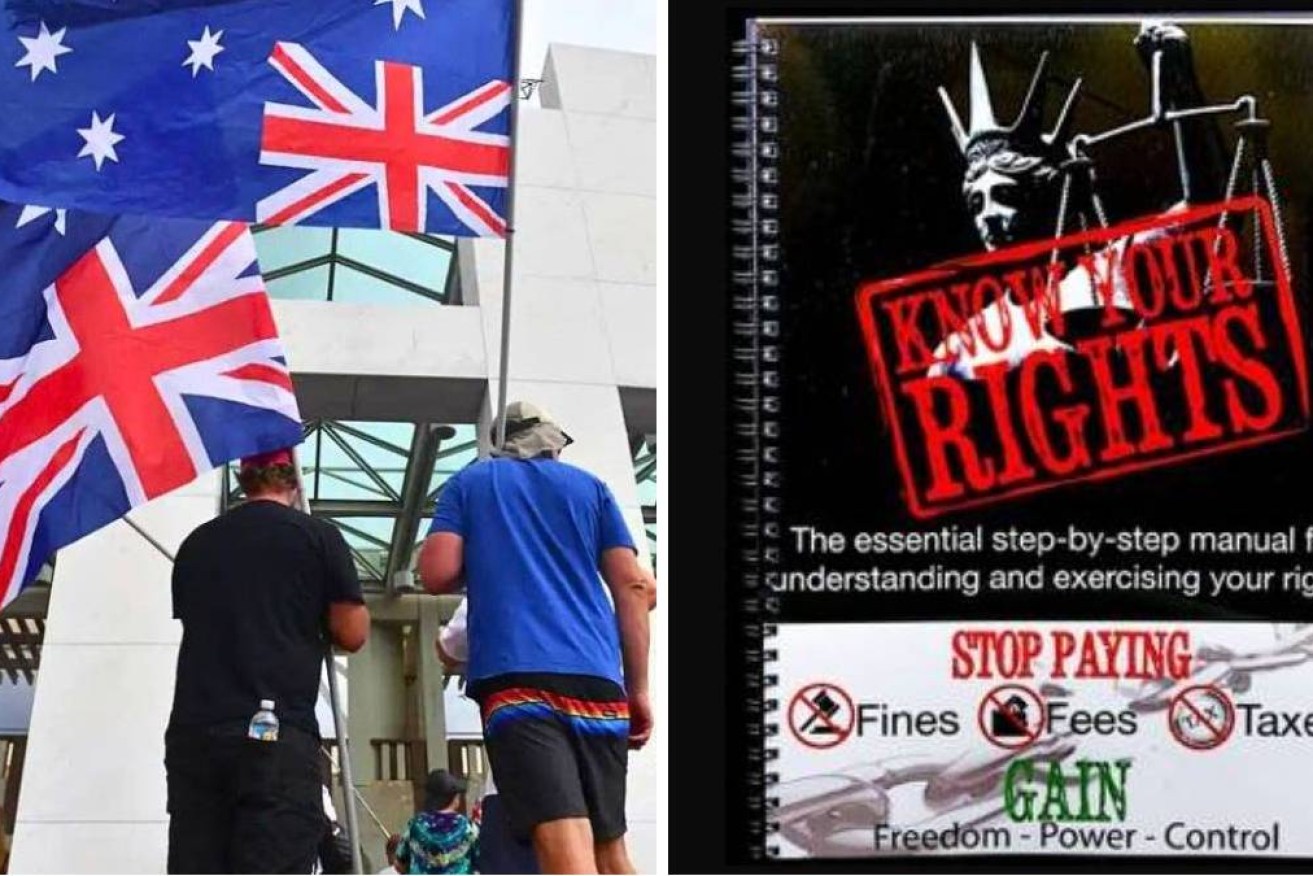
The local sovereign citizen movement is fuelled by a psuedolegal industry. Photo: TND/AAP
The recent shootings in Porepunkah, Victoria, have drawn attention to “sovereign citizens” and the dangers they pose to police.
But focusing on these shocking moments risks obscuring the slow and mundane way sovereign citizen “pseudolaw” burdens everyday governance.
This aspect of pseudolaw is much less cinematic than a shootout and a manhunt. It is banal, procedural, and paper based.
Its terrain is not the bush of rural Victoria – it is the mountains of documents and the hours of court time squandered on arguments that have never succeeded and never will.
Its costs are borne by police and judges, by local councils, clerks, and ordinary staff who find themselves dragged into disputes that are bound to lose.
Its costs are ultimately borne by all of us.
The sovereign citizen worldview is built on a strange reading of law.
Adherents believe all laws are based in contract. If they do not choose to be bound by a law passed by Parliament, they can simply ignore it.
By invoking the right words, the right documents, the right phrases, you too can avoid registering your vehicle, paying council rates and any other law you do not like.
None of this has ever been accepted by a court in Australia or elsewhere. But the point is not to win. To most adherents, our courts are illegitimate anyway. Their purpose is to stand up to authorities they believe are corrupt.

Sovereign citizen beliefs spiked in Australia with the arrival of the pandemic.
A recent study from South Australia confirmed what judges and court staff already knew – sovereign citizen pseudolaw exploded during the pandemic.
Judges described routine matters taking hours, all because litigants insisted on running irrelevant arguments.
Staff reported being followed, filmed, and even threatened with baseless lawsuits.
One magistrate confessed they were considering early retirement, worn down by the increased workload, tedium and pressure.
It is not only courts that are impacted. Local government is a particularly soft target because councils are accessible, and councillors are often part-time representatives without the protective walls surrounding judges or members of Parliament.
In 2023, 15 councils across Victoria reported being disrupted by groups advocating pseudolaw.
In South Australia, council meetings had to be adjourned when protesters stormed chambers wearing body cameras. Councils have been forced to move meetings online, lock down venues, or request police protection.
Even when encounters are not dramatic, pseudolaw clogs the system.
Rate notices are met with spurious correspondence. Planning enforcement officers must wade through unfounded objections. Debt recovery proceedings drag on as staff confront litigants armed with gibberish.
Essentially, sovereign citizens are free riders. They rely on services provided by councils and states, from rubbish collection to the rule of law, while insisting they need not contribute because they have not consented.
Their resistance drains resources, forcing governments to spend money enforcing obligations rather than providing services.
Pseudolegal industry
What is less known, however, is that behind violent attacks and everyday drudgery is the pseudolegal industry.
Sovereign citizen “gurus” sell “how-to” kits online, run seminars, and charge for templates that promise freedom from tax, fines, or mortgages.

Selling psuedolaw has become an industry of its own. Photo: Supplied
Almost two decades ago American promoters toured Australia making hundreds of thousands of dollars selling nonsense. Now, we have our own “made in Australia” pseudolaw industry.
The commercial side is crucial to understand.
Pseudolaw persists not simply because people believe in it but because others profit from spreading it.
The adherents who turn up to courts and councils may be motivated by ideology, but many have been persuaded – and fleeced – by those selling false hope.
The problem is that these gurus skirt the line of illegality. It is not illegal to sell bad legal information. And, where they sell information that encourages illegal action, regulators are yet to act.
Post Covid
When Covid restrictions eased, we hoped pseudolaw would fade. It has not. The ideas remain supported by a marketplace of gurus, websites and social media groups that sell defiance as liberation.
Adherents remain motivated by their conviction that the system is rigged.
The kicker is – they are not wrong. Inequality is growing, and modern legal systems favour the wealthy and powerful.
Access to justice is expensive and ordinary people routinely feel steamrolled by bureaucracy and banks. Instead of finding real remedies, however, they bought legal misinformation and conspiracy theories.
To combat pseudolaw, we must understand the commercial industry that fuels it, and work on shutting it down. But the challenge for governments is to respond without feeding the narrative of inequality and tyranny.
Heavy-handed crackdowns risk confirming the worldview adherents already hold. Ignoring pseudolaw does not work either.
If we are to reduce daily disruptions and violent eruptions, the focus must shift from the spectacle to the structure. We must work to make a government, a legal system and a society where legal conspiracies are not attractive.
We can start by targeting the commercial side of pseudolaw. That is where the problem lies, and where solutions will arise.
Harry Hobbs is an Associate Professor in the Faculty of Law Justice at the University of NSW and Stephen Young is an Associate Professor in the Faculty of Law at the University of Otago
Want to see more stories from The New Daily in your Google search results?
- Click here to set The New Daily as a preferred source.
- Tick the box next to "The New Daily". That's it.


Pork barrel rolls out again – it's time for a change
Long-awaited migrant plan reflects needs and fears