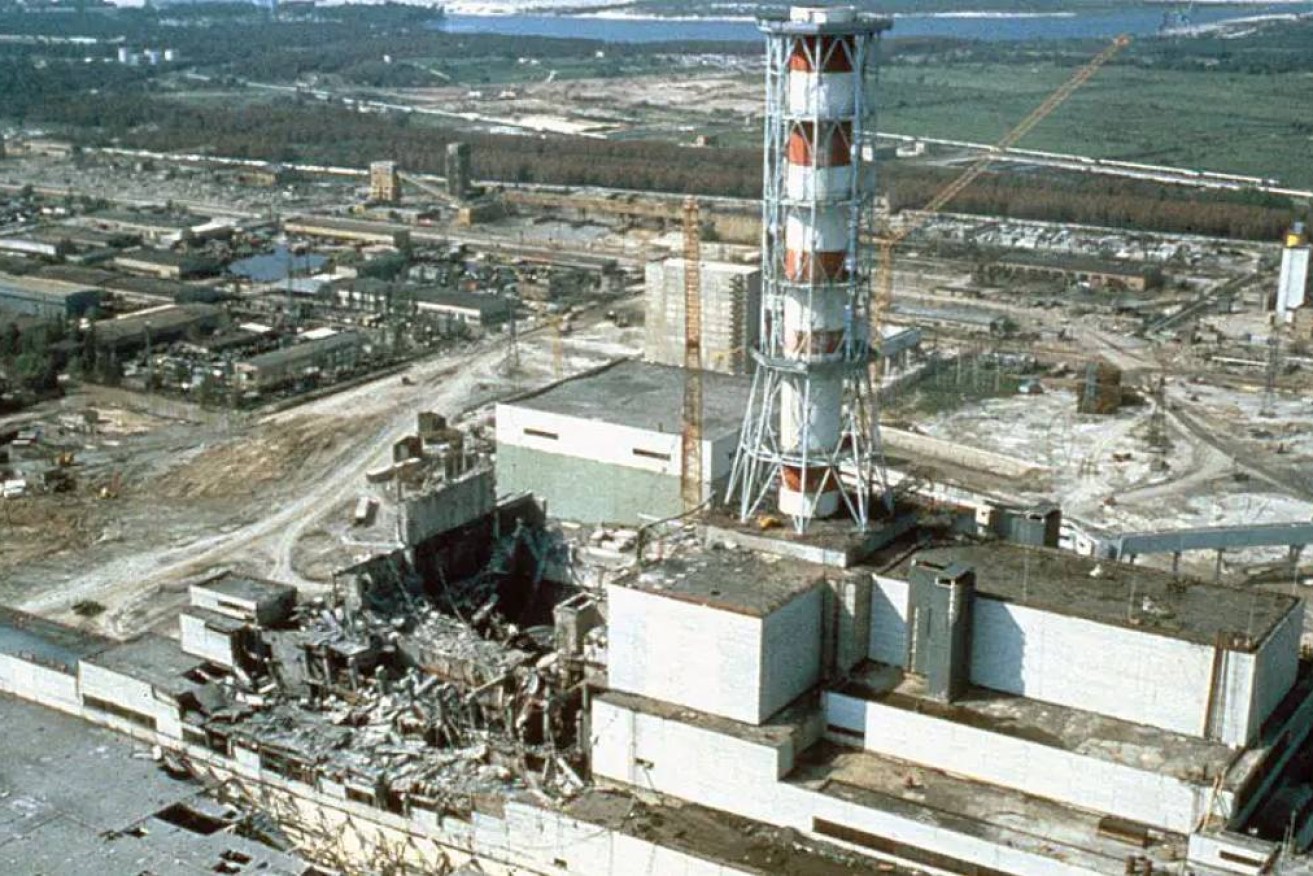
On April 26, 1986, Soviet engineers at the Chernobyl nuclear power plant were conducting a safety test.
Doomed by a fatal design flaw and pushed to the limit by human negligence, reactor 4 exploded amid an attempted shutdown during a routine procedure, setting off a chain of events that ultimately released radioactive material hundreds of times greater than that of the atomic bomb dropped on Hiroshima.
Although the accident occurred north of Kyiv, Ukraine – near the border with Belarus – radioactive fallout was soon detected throughout northern and central Europe.
Yet the Soviets did what they could to prevent the spread of information that would reveal the true horror of what had occurred.
For decades, researchers, political leaders and advocacy groups have worked to uncover the story of the explosion.
While science has allowed us to understand the circumstances of the explosion itself, it has taken much more work to uncover the layers of mismanagement, negligence and misinformation that resulted in human suffering, ecological disaster and economic damage.
One of the problems is that many of the official Soviet records of the event, such as the KGB files, are located in Moscow and inaccessible to all but a few Russian government agencies.
But there is a partial workaround – because East Germany was a Soviet satellite state and not a full member of the Soviet Union, official documents remained in the country after the fall of the Berlin Wall.
In 1991, after the reunification of Germany, the German government passed a law allowing for the declassification of certain files from the Stasi, East Germany’s secret police and intelligence service.
These files can now give us further insight into the mismanagement of Chernobyl, since the East German Stasi and the Soviet KGB were in communication on the matter.
I have spent the past three years reading Stasi files and researching the creation of misinformation in the former Eastern bloc, meeting with Stasi archivists in Berlin and viewing the original archival rooms in the former Stasi headquarters.
Looking at formerly top secret communication between the KGB and Stasi, it is clear that despite publicly insisting everything was under control, both intelligence agencies knew the explosion was absolutely devastating. They kept detailed records of hospitalizations, casualties, damaged crops, contaminated livestock and radiation levels.
But only the very top officials in East Germany and the Soviet Union had access to these numbers. The main fear for both the KGB and Stasi was not the radiation that would harm affected populations but the damage done to their respective countries’ reputations.
Controlling the message
Handling the press was a top priority.
In the Soviet Union, top government officials created their own briefings for the media to be published at precise dates and times.
In a set of classified documents that one government official bravely saved and later published, the concreteness with which the lies were devised is apparent.
It documents Mikhail Gorbachev, then-leader of the Soviet Union, saying in a Politburo meeting with top government officials: “When we inform the public, we should say that the power plant was being renovated at the time, so it doesn’t reflect badly on our reactor equipment.”
Later in the same meeting, another senior Soviet official, Nikolai Ryzhkov, suggests that the group prepare three different press releases – one for the Soviet people, one for the satellite states and another for Europe, the US and Canada.
In East Germany, the Stasi reports mirrored this messaging.
Although top officials are briefed on the presence of radioactive contaminants, the formerly classified Stasi files reiterate that the public is to be told that “absolutely no danger” is present.
East German media, controlled by the state, then disseminated this information to the public.