Our politicians continue to fail us on immigration policy

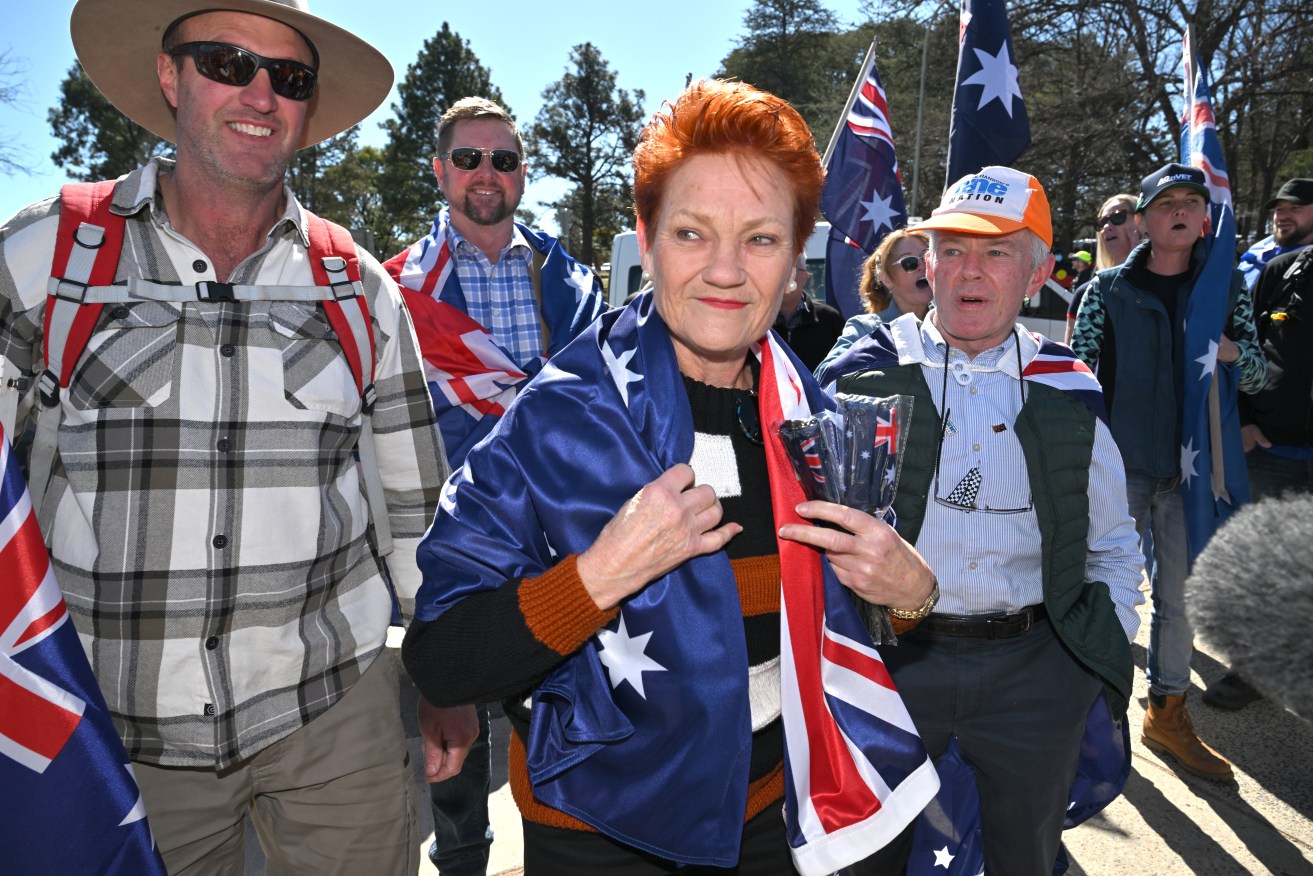
Gender-based support for One Nation does not follow the lead of other populist parties. Photo: AAP
As Pauline Hanson’s One Nation rises in the polls by copying anti-immigration ideas used by Nigel Farage in the UK and Donald Trump in the US, politicians in our major parties struggle with how to respond.
Their fumbling with immigration policy seems to just further fuel One Nation.
It’s not that Hanson has come up with anything particularly new.
Her maiden speech in 1996 set out very clearly who she is and what she believes in – she is unabashedly anti-immigration, particularly from certain parts of the world. That remains unchanged, as does the fact she has zero policy nous and an inability to manage the constantly revolving door of oddball politicians who join and leave her party.
But it is her constancy that may be attracting so many Australians to One Nation.
In the lead up to the last federal election, Peter Dutton thought he could ride the anti-immigration train to The Lodge, forcing Hanson to use ever more extreme language.
Using various dog-whistling tactics, Dutton aimed to copy Trump, until it became clear that was not working in Australia.
Dutton and his shadow immigration spokesperson Dan Tehan came under intense pressure to explain their targets for cutting permanent migration (from 185,000 to 140,000) and net migration (from a forecast of 260,000 in 2025-26 to 160,000).
Both were unable to explain their policies as they ruled out more and more visa categories to cut. It became increasingly clear to Australians that their targets had been just plucked out of thin air.
Labor’s approach in the lead-up to the election was to say as little as possible about immigration and hope that Dutton would keep putting his foot in his mouth.
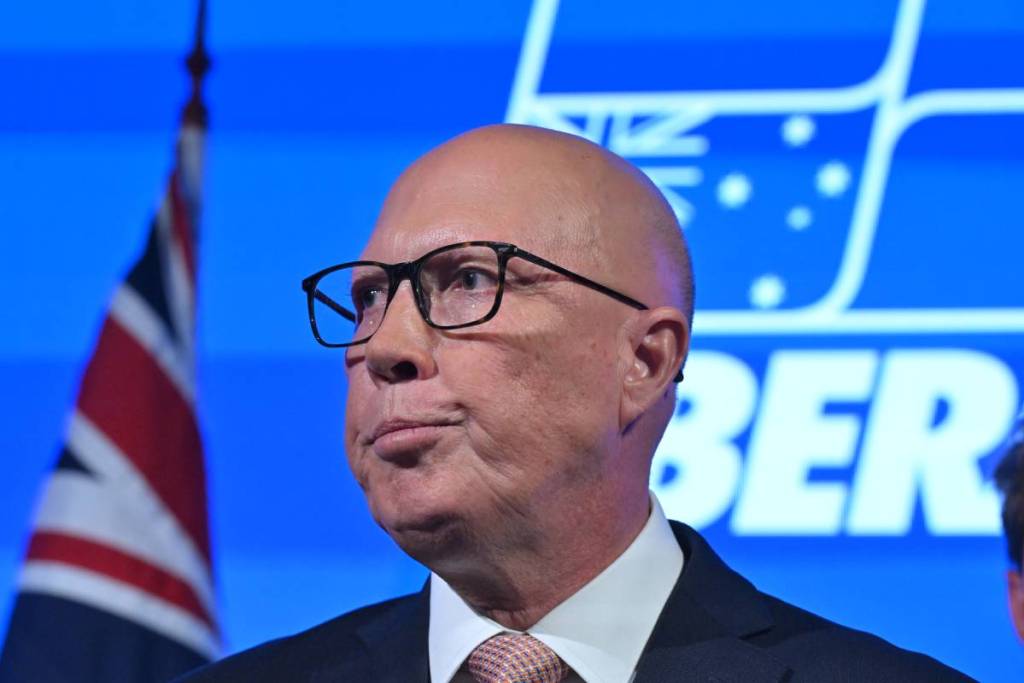
Dutton banked on a Trump-style immigration policy for the election. Photo: AAP
Dutton’s successor Sussan Ley, her shadow home affairs minister Jonno Duniam and immigration spokesperson Paul Scarr have decided to avoid his dog whistling and say that they will use a different “tone” when talking about immigration.
But they will find that difficult as they are being pressed by others such as Andrew Hastie and Jacinta Price to continue Dutton’s approach.
Hastie’s statement that Australians feel like “strangers in their own land” was pure dog whistling, from which the Ley camp distanced itself.
The latest position Ley has taken is that she will reveal some broad principles in the near future, but won’t set any targets until closer to the next election. That suggests they have abandoned Dutton’s targets. It will open the door further for One Nation.
Pressure on Ley to take a more anti-immigration stance earlier will not cease from Hastie et al, nor from organisations such as Advance Australia, the Murdoch press, radio shock jocks and the Institute of Public Affairs.
These are already misusing immigration data to try to create the impression that net migration has not fallen when it clearly has.
The Labor government rightly points out that its policy tightening around overseas students (following the Coalition’s policy settings to accelerate growth in overseas students and others) has helped reduce net migration from well over 500,000 in 2022-23 to about 315,000 in the 12 months to March 2025.
However, it is highly unlikely net migration will fall to the levels forecast by Treasury prior to the last election (260,000 in 2025-26 and 225,000 in 2026-27).
In December, the ABS will release data on net migration for the June quarter of 2025. That may well show the decline in net migration has slowed or even reversed. Treasury has to update its net migration forecasts next month.
The data and other policy changes the government has recently made to reverse its overseas student visa policy tightening will put pressure on Treasury to increase its forecasts, which the government will not like.
Immigration Minister Tony Burke has decided we do not need a long-term migration plan, as promised prior to the election. Apparently, there is no “magic number” for immigration and a long-term plan would reduce the government’s flexibility to respond to changing circumstances.
Those comments may reflect the problems Burke faces to address the massive onshore backlogs for both permanent and temporary migration.
Burke would know that the Canadian government has developed a long-term immigration plan and is implementing it. That is because it has taken the hard decisions on its massive temporary entrant population that Burke is finding too difficult to take.
He even tried to avoid announcing a migration program for 2025-26, until the anti-immigration marches in September forced him to do a cut and paste of the 2024-25 program for 2025-26.
Burke can continue to avoid addressing issues confronting the immigration system for only so long. Data, politics or law will force him to act on developing a long-term immigration plan. Being forced to do so would be politically embarrassing.
It would be better if he took his medicine and acted sooner on a long-term plan rather than let the problems just keep getting bigger.
Abul Rizvi PhD is a former senior official in the Department of Immigration and was awarded the Public Service Medal and the Centenary Medal for services to the development and implementation of immigration policy
This article first appeared in Pearls and Irritations. Read the original here
Want to see more stories from The New Daily in your Google search results?
- Click here to set The New Daily as a preferred source.
- Tick the box next to "The New Daily". That's it.


Pork barrel rolls out again – it's time for a change
Long-awaited migrant plan reflects needs and fears