Anzacs’ messages in a bottle found on Australian beach
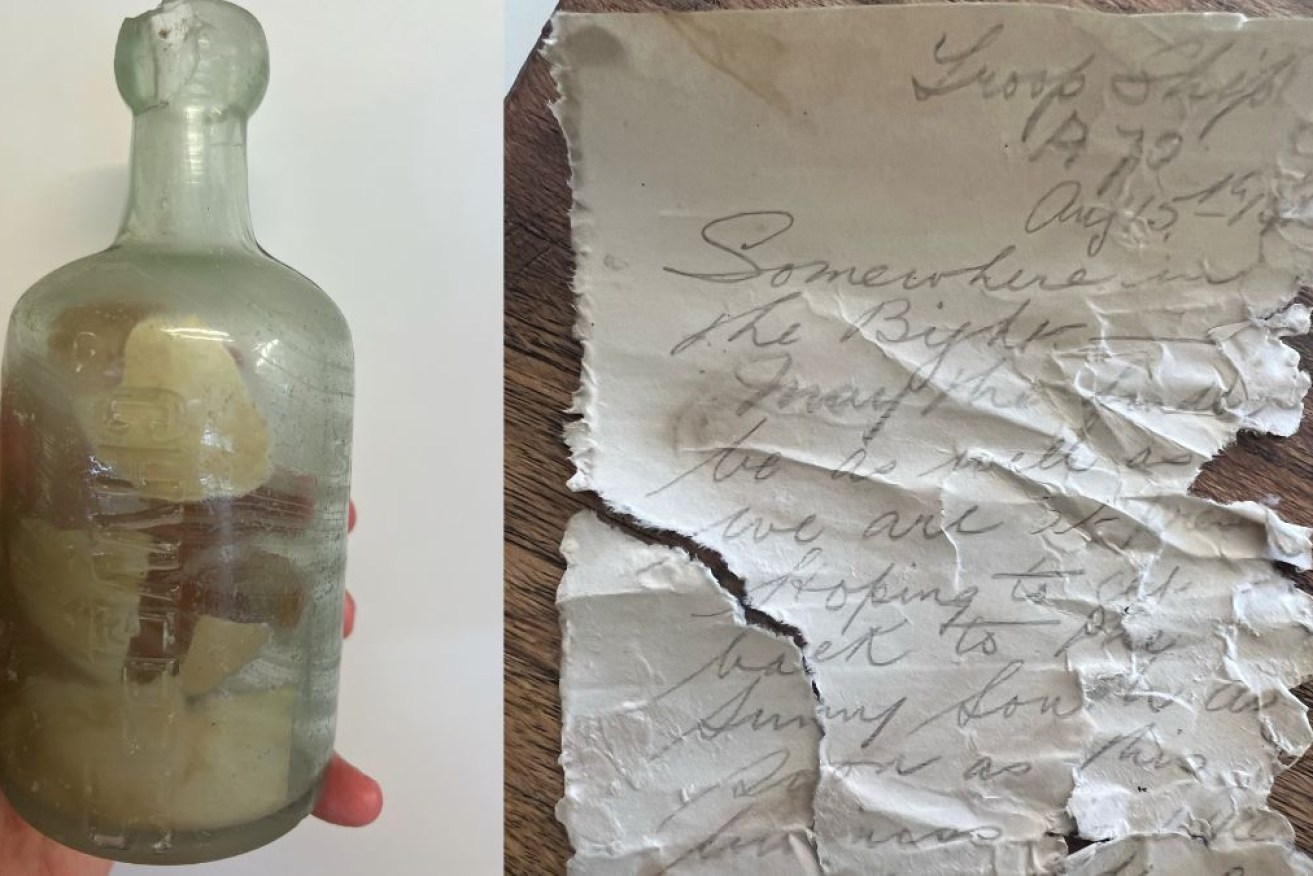
The two soldiers on their way to WW1 battlefields were in good spirits when they left the messages. Photos: AAP
Messages in a bottle written by two soldiers headed to the battlefields of France for World War I have been found more than a century later on Australia’s coast.
The Brown family found the Schweppes-brand bottle just above the waterline at Wharton Beach near Esperance in Western Australia earlier this month.
Deb Brown, her husband Peter and daughter Felicity made the find during one of the family’s regular quad bike expeditions to clear the beach of trash.
“We do a lot of cleaning up on our beaches and so would never go past a piece of rubbish. So this little bottle was lying there waiting to be picked up,” she said.
Inside were cheerful letters written in pencil by Privates Malcolm Neville, 27, and William Harley, 37, dated August 15, 1916.

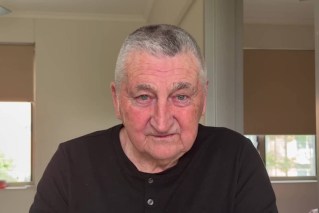
The bottle and letters had likely been buried in dunes for decades, before recent erosion. Photo: AAP
Their troop ship HMAT A70 Ballarat had left Adelaide earlier the same month on the long journey to the other side of the world, where its soldiers would reinforce the 48th Australian Infantry Battalion on Europe’s Western Front.
Neville was killed in action a year later. Harley was wounded twice but survived the war, dying in Adelaide in 1934 of a cancer his family said was caused by him being gassed by the Germans in the trenches.
Neville requested the bottle’s finder deliver his letter to his mother at Wilkawatt, now a virtual ghost town in South Australia.
Harley wrote “may the finder be as well as we are at present”.
Neville wrote to his mother he was “having a real good time, food is real good so far, with the exception of one meal which we buried at sea.”
The ship was “heaving and rolling, but we are as happy as Larry,” he wrote.
Deb Brown suspected the bottle hadn’t travelled far. It likely spent more than a century ashore buried in the sand dunes. Extensive erosion of the dunes caused by huge swells along Wharton Beach in recent months probably dislodged it.
The paper was wet, but the writing remained legible. Because of that, Brown was able to notify both soldiers’ relatives of the find.
Harley’s granddaughter Ann Turner said her family was “absolutely stunned” at the discovered.
“We just can’t believe it. It really does feel like a miracle and we do very much feel like our grandfather has reached out for us from the grave,” Turner told the ABC.
Neville’s great-nephew Herbie Neville said his family had been brought together by the “unbelievable” discovery.
“It sounds as though he was pretty happy to go to the war. It’s just so sad what happened. It’s so sad that he lost his life,” Herbie Neville said.
“What a man he was.”
-AAP
Want to see more stories from The New Daily in your Google search results?
- Click here to set The New Daily as a preferred source.
- Tick the box next to "The New Daily". That's it.