‘Sometimes candid, sometimes tragic’: Australian film fest hits Cannes

Source: Zane Borg
Cannes Film Festival opened last week and, in among the film industry throng, a contingent from Adelaide made the pilgrimage to share a slate of new projects.
Adelaide Film Festival CEO and creative director Mat Kesting kicked off the Adelaide Goes to Cannes market event on Friday.
Kesting noted that previous films that received support included Wolfram and Lesbian Space Princess, and that “the fund is proud to support filmmakers with direct connectivity to markets and festivals”.
“This year’s selection is particularly potent with stories from Italy, Ecuador, Ukraine and Australia demonstrating the curiosity and talent of Australian filmmakers and our connectivity across the globe,” he said.
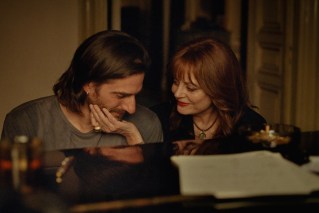
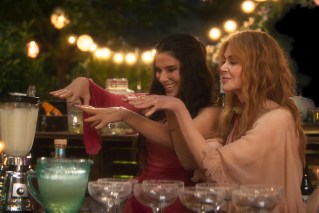
The Yael Stone-led Wilderness was first off the rank, written and directed by Martin McKenna and produced by Mat Govani.
“Wilderness is an uplifting drama,” Govani said. “It explores themes of loss, the loss of friendship as we get older, the loss of the environment, and ultimately, the loss of life as well. It’s funny, sometimes candid, sometimes tragic, and follows the relationship between two middle aged women as they hike through the magnificent Victorian High Country.”
Stone and Mirrah Foulkes play the two women, who are old school friends.

Yael Stone stars in the upcoming environmental drama Wilderness. Photo: Supplied
McKenna said he wanted to make a film that dealt with “broad themes about the loss of personal power and mortality and the impending climate catastrophe”.
“These are pretty heavy themes, so it was important for me to approach the work with a lot of humour, a lot of drama and a lot of love,” he said.
Then came the Italy-set Tiber from writer-director Dominic Allen. After 20 years of documentary filmmaking, it is his first dramatic feature.
The film is 95 per cent in Italian and stars Marcus J. Cotterell as Marco. He is a Rome art historian who, after losing his job, takes his daughter (played by his real-life daughter Uma) on a road trip to explore art, history and some tough memories in the Italian summer.
Cotterell, also an executive producer, had long wanted to make a film with Allen, his lifelong friend from Melbourne. Cotterell lives in Italy, as he also did for a decade in his youth after his mother went travelling following her divorce from his father. While at university in Melbourne, he returned to Italy and never came back.
In the film there are a lot of encounters with sculpture and art, and the filmmakers had to receive the Vatican’s approval to film a sculpture in one scene.
“Art is not a decorative element,” Allen said. “It’s very much part of language of the film. It’s a case where Marco is somebody who can’t really speak to the themes, so the art speaks for him.”

Director Zane Borg. Photo: Supplied
Third was River, a road movie written and directed by 28-year-old Zane Borg. The film follows a 16-year-old girl named River (Mia Barrett) whose mother has recently died.
“She’s torn between trying to continue her normal teenage existence and also dealing with a world that’s been reshaped by grief,” Borg said.
River finds unlikely healing and solace in a local drug dealer with wounds of his own (Heartbreak High’s William McKenna), and the pair embark on a road trip to South Australia to search for the latter’s mother.
“I was tired of watching movies about the teenage years because I couldn’t relate to them when I was a teenager,” Borg said. “When I was 16, my mum passed away, so my existence of growing up at that time was very different to what I was seeing in American Pie.”
Recent breakout star Shabana Azeez (The Pitt, Lesbian Space Princess) and Justin Rosniak (Mr Inbetween) also feature in the film.
Polish-born Agnes Burrell’s documentary Polina follows a 10-year-old Ukrainian girl whose village was almost destroyed in 2022 when her family was forced to live beside the remnants of her home. War becomes her everyday environment and that of her friends, who we see play in trenches built for the war.
Burrell, who lives in Newcastle with her Australian cinematographer/collaborator husband Shane, was visiting her family in Poland when Russia invaded Ukraine. The couple said that initially, they “weren’t looking for a documentary story” when they travelled to Ukraine.
“We just tagged along with an Australian aid organisation that was providing temporary housing. And then we met Polina,” they said.

The story of a young Ukrainian girl is the subject of Polina. Photo: Supplied
The Burrells hadn’t seen any children since arriving in the warzone, but soon encountered a gate riddled with bullet holes – alongside drawings of “flowers and love hearts and messages of hope”.
“Polina was one of the girls who painted that gate,” they said.
Burrell said they wanted to avoid “reduc[ing] Polina to a product of trauma, because she’s a beautiful, lively girl who is still a dreamer and a creator.
“After learning more about her story, as a mother and as a female director, I just couldn’t look away. It gives you a responsibility to share that story and to give the child a voice,” she said.
Last was Melbourne director Dan Jackson’s documentary Death of a Shaman, which follows an Ecuadorian shaman’s family resistance against the international oil industry, and leads to an uprising that seeks to oust the Ecuadorian president.
The film is the result of a 14-year relationship between Jackson and the Indigenous community in the Ecuadorian Amazon.
At its heart, it’s a story of generational continuity. We follow Raphael, an elder and Shaman who’s coming to the end of his life, his son Eduardo who’s on the front lines of the protests in Quito, and Raphael’s grandson Geordie who’s learning what it means to carry forward knowledge that cannot be replaced once it’s gone.
Across these three generations, the film holds both the urgency of the present moment and the responsibility of what must endure. It follows the uprising with rare and intimate access, placing us inside the protests as Raphael’s community works to hold power to account, and protect their land, resources and future.
After the Cannes event, Jackson revealed how the film came about.
“I was fascinated by the Ecuadorian Shuar kind of wisdom and I lived in the jungle for years and filmed things. And eventually, all these things started to happen,” he said.
“It was similar to my last film (2016’s award-winning The Shadow of the Hill, set in Rio de Janeiro) when I was living in the slums. So you find something that you really believe in, or you really find interesting, and follow it for a long time. I love the Shuar community and we’re building an impact campaign to try to put money back into the community.”
Local release dates for the films are still to be announced.
Helen Barlow is a Paris-based Australian freelance journalist and critic. In 2019 she received the La Plume d’Or for her services to French cinema. She is a voting member of the Lumiere Awards.
Want to see more stories from The New Daily in your Google search results?
- Click here to set The New Daily as a preferred source.
- Tick the box next to "The New Daily". That's it.