Whale Shark Jack: A tribute to Western Australia’s awe-inspiring coastline

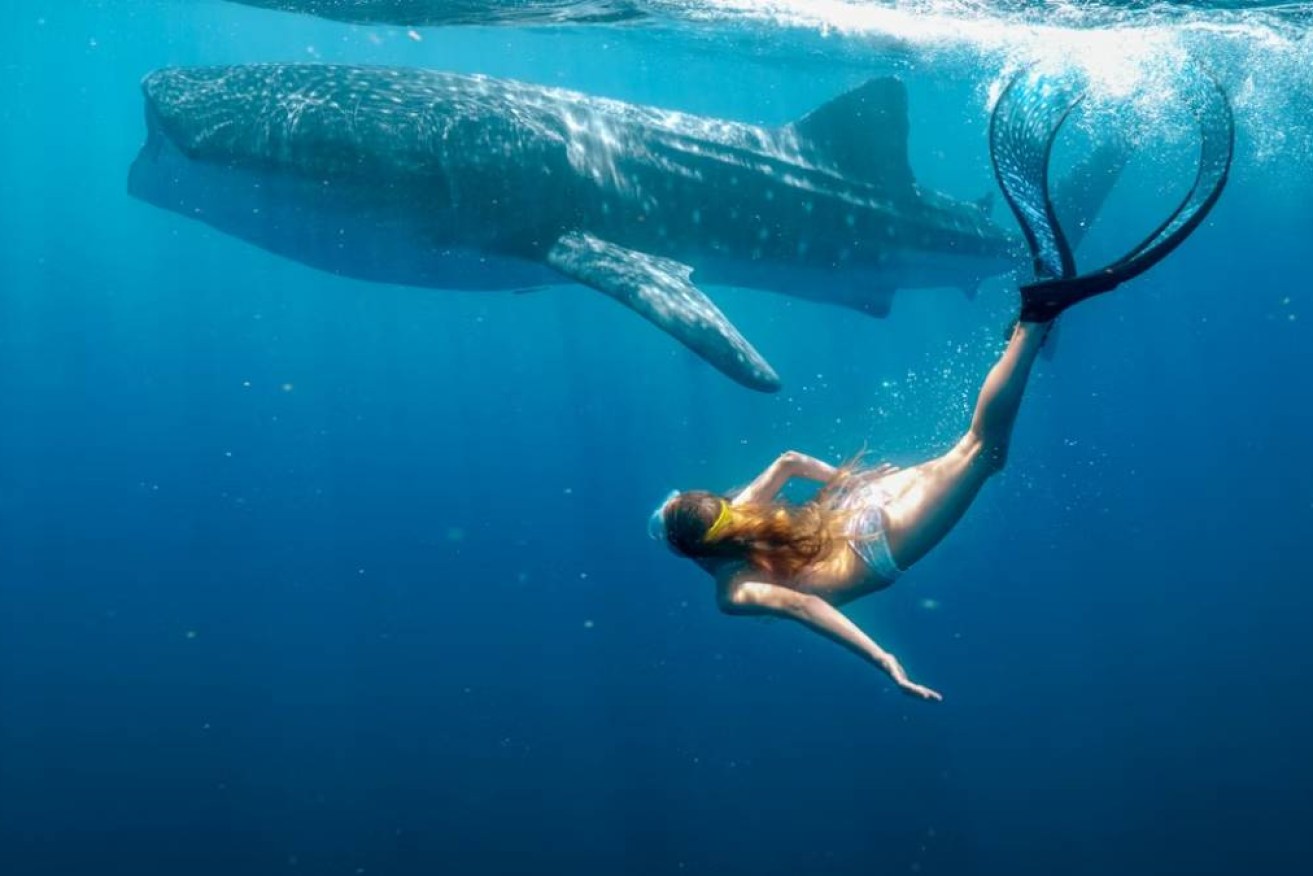
Visually impressive and with a solid cast, Ningaloo Reef is the real star. Photo: Stan
Whale Shark Jack is Stan’s heartfelt, kid-focused addition to the Australian wildlife movie canon.
Its brief run time and ambitious mix of genres means some elements are undercooked. Nonetheless, the film shines as a love letter to Western Australia’s coastline and its community.
Whale Shark Jack begins on WA’s world-heritage listed Ningaloo Reef.
The young Sarah (played by Alyla Browne as a 12-year-old, and by Emmi Williams as a younger child) lives on a boat with her parents, Nita (Abbie Cornish) and Marcus (Michael Dorman) – both of whom research whale sharks.
Sarah and her parents befriend and begin tracking a whale shark they call Jack. When Marcus is killed in a storm, Nita and Sarah return to the coastal town of Exmouth, where Sarah must attend school for the first time.
Sarah struggles to fit in at school, and tracks Jack against her mum’s wishes in the hope they can return to their life on the water.
Along the way, she teams up with schoolmates EJ and Ashleigh (newcomers Luca Miller and Giselle Philogene), and the three work together to find Jack when he might be in trouble.

Abbie Cornish (left), Alyla Browne and Michael Dorman star in the visually stunning movie. Photo: Stan
One story – many genres
The film follows Sarah and Nita as they they move forward and build a community after tragic loss. It’s also a coming-of-age story about a tween girl finding her place in a new environment. It has drama, comedy, adventure and a clear environmental message.
While the overall narrative is strong, some of the genre elements and tonal shifts work better than others.
Whale Shark Jack joins a well-established canon of Australian wildlife films. With support from the Australian Children’s Television Foundation, it seems to mainly want to attract a younger audience.
In doing so, the film is sometimes overly sentimental and occasionally didactic, particularly in early scenes with the younger Sarah.
Moments featuring Luca Miller’s straight-talking EJ and Karen O’Leary’s quirky coast guard, Rosie, bring some much-needed humour – but they are few and far between.
The film’s sombre moments are compelling, and Alyla Browne carries its most emotional scenes.
At just 85 minutes, the story is engaging and doesn’t overstay its welcome, but it does miss an opportunity to develop Sarah’s relationship with her father. So viewers might struggle to really mourn his loss, except through Browne and Cornish’s performances.
Showcasing Ningaloo
The film mostly succeeds as a showcase for the landscapes, wildlife and marine life of Ningaloo and Exmouth.
The flat, red earth makes for a striking contrast to the bright, blue ocean. Shots of Sarah swimming with Jack are visually impressive and show off Browne’s diving skills (she trained for two years in preparation for the role).
The production team uses spectacular puppetry and effects to create the whale sharks.
Whale sharks are considered endangered, and the filmmakers said they wanted to highlight the “fragile reality” these animals face due to “climate change, habitat loss, marine pollution, and unsustainable fishing practices”.
Whale Shark Jack doesn’t dwell much on these threats, but it may still inspire curiosity and care in its audience.
It’s also a thoughtful celebration of the local Baiyungu language and culture.
Screenwriter Kathryn Lefroy collaborated with associate producer and Baiyungu Traditional Owner Hazel Walgar to develop the characters of E.J. and his parents.

Whale Shark Jack showcases First Nations themes. Photo: Stan
Walgar and her sister, Gwen Peck, composed a healing song for the film in the Baiyungu language.
The piece is important to the film’s exploration of pain, grief and community, and the filmmakers proudly note this is the first time “Baiyungu language and song will be featured on the big screen”.
Whale Shark Jack showcases First Nations design in its costumes, which include Natalie Blacklock’s swimwear featuring First Nations art, and personal items from the cast themselves. These touches add richness and local specificity to the film.
Overall, it is a loving, kid-centred tribute to WA’s coastline and the people and creatures who call it home. What it lacks in depth, it makes up for in heart, spirit and spectacular landscapes.
It won’t leave your cheeks sore, but it might make you dream of Ningaloo’s colourful reef, white sand and awe-inspiring marine life.
Whale Shark Jack is on Stan now.
Ellie McFarlane is a PhD candidate in the School of Media and Communication at RMIT University
This article is republished from The Conversation under a Creative Commons licence. Read the original article
Want to see more stories from The New Daily in your Google search results?
- Click here to set The New Daily as a preferred source.
- Tick the box next to "The New Daily". That's it.