Why the Andrew scandal is the royal family’s worst since the death of Diana – and what must be done

Source: X/Chris Ship
The influential 19th century constitutionalist Walter Bagehot famously described the monarchy as the “dignified” part of the British constitution.
The royal family, he argued, is the “head of our morality” that can sustain popular support by demonstrating good “virtues” for people to follow.
This rationale seems to hold true today. Writing in 2024, professor of constitutional law and theory at Oxford University Nick Barber argued that, when democratic values make it hard to justify the existence of a hereditary family on the throne today, the best argument in favour of a constitutional monarchy is for it to “act as a prototypical leader” of a country that shows “exemplary” values. Lose that, he argues, and the monarchy loses its raison d’etre.
Barber thus sees monarchy as a mirror that reflects a nation back onto itself; as he writes, “in the prototypical leader [people] see an element of their own identity … perhaps an idealised element, reflected back to them”.
The monarchy has long sought to project the image of a dignified, exemplary monarchy. Clearly it is unrealistic for royals to, in Bagehot’s words, “do no wrong” all the time. But when a member has been mired in scandal that threatens to dirty the rest of the monarchy’s image, Buckingham Palace has been quick to take control – usually by removing the individual so they are out of sight, out of mind – to protect the institution. For example, when Edward VIII wanted to marry American divorcee Wallis Simpson, he was forced to abdicate the throne and quietly exiled to the Bahamas (and later Paris).
But when it comes to the Jeffrey Epstein saga, the palace has allowed Prince Andrew to try to control the narrative – and, in trying to continue to present an air of dignified respectability, he has failed spectacularly. First was his disastrous 2019 Newsnight interview in which he claimed the reason he did not end his friendship with Epstein sooner was because he was “too honourable”.
Source: BBC Newsnight
The car-crash interview forced him to step down as a working member of the royal family. But, rather than quietly removing himself from public life, Andrew has continued to take what he sees as his rightful place front and centre among the most senior royals at the grandest state occasions, such as the late queen’s funeral and the King’s coronation. He has also continued to live a life of entitled luxury, refusing to move out of the 30-room Royal Lodge mansion where he is regularly seen leisurely riding around on horseback.
The recent announcement that he would no longer use the title “Duke of York” was the latest misstep. Buckingham Palace allowed Andrew himself to release the statement which, by claiming that “I have decided, as I always have, to put my duty to my family and country first”, was hardly contrite. It also represented another missed opportunity for him to show any sympathy towards Epstein’s victims.
Clearly, in associating himself with a paedophile sex offender and failing to show remorse for his actions, Andrew has not demonstrated exemplary behaviour. Once his links with the disgraced financier became known, the palace should have promptly removed him and his titles. The failure to do so means that the palace is now out of step with the British public, 80 per cent of whom support Andrew being stripped of his dukedom.
This is why the Andrew story is the most poisonous PR disaster for the royal family since the death of Diana. Then, as now, the palace lost control of the narrative and failed to read the mood of the public, which wanted time to mourn the death of the “People’s Princess”.
For the palace, there is another worrying analogy that can be drawn with 1997.
In order to maintain its dignity, the political establishment has long shown deference to the monarchy and sought to avoid it being dragged into tawdry political scandals. Under long-standing rules, British MPs are not allowed to talk about the monarchy in Parliament, for example.
But, just as then-prime minister Tony Blair turned against Queen Elizabeth following the death of Diana, so too high-profile ministers are now publicly condemning Andrew. For example, the Chancellor of the Exchequer, Rachel Reeves, stated that Andrew “shouldn’t have been associated with a convicted paedophile”.
MPs are also trying to lodge a parliamentary motion to strip Prince Andrew of his dukedom and pushing to launch an inquiry questioning him about his Windsor Great Park residence, where he has paid no rent for more than 20 years.
Tellingly, Prime Minister Keir Starmer has publicly signalled his approval of the inquiry, which would be unprecedented. Bagehot himself strongly warned against any inquiry on a member of the royal family, believing that the “poking about” would reveal secrets that taint the entire family; as he cautioned, “when there is a select committee on the queen, the charm of royalty will be gone”.
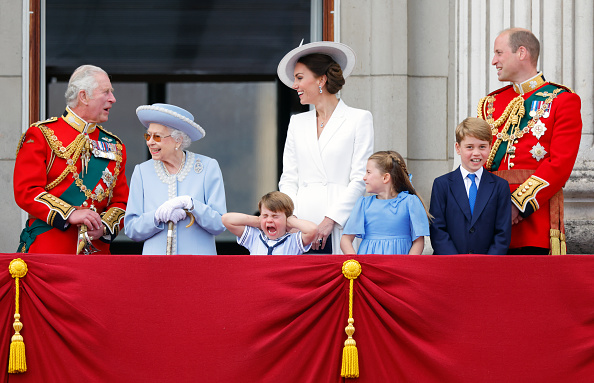
The wider monarchy risks become tainted unless the Andrew scandal is properly resolved.
Therefore, to avoid the rest of the institution being poisoned by association, the palace needs to take control of the Andrew scandal by removing him and any of his remaining royal links.
It should start with the King stripping Andrew of his “prince” title by issuing letters patent. Contrary to popular belief, this would be a relatively easy and quick process, and polls show that this is something that the public want Charles, rather than Parliament, to do. He should also evict Andrew from Royal Lodge and follow historical royal precedent by exiling his brother, with some suggestions being to Switzerland or the Middle East.
Bagehot argued that the monarchy needed to project a dignified image to survive. But Andrew has failed to realise that, once a royal has fallen from grace, he must accept his fate and move away from the public gaze. He has refused to go quietly himself – now the palace must act if it is to save the rest of the institution’s image.
Francesca Jackson, is a PhD candidate, Lancaster Law School, Lancaster University
Want to see more stories from The New Daily in your Google search results?
- Click here to set The New Daily as a preferred source.
- Tick the box next to "The New Daily". That's it.
Pork barrel rolls out again – it's time for a change
Long-awaited migrant plan reflects needs and fears