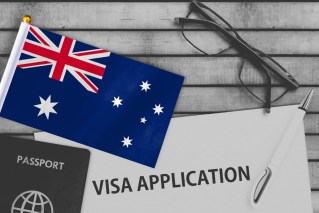
Ask the Expert: From saving to spending – the big retirement challenge


Money can provide you with many great memorable experiences and a good quality life. But only if you spend some. Photo: Dreamstime
Question 1
I have been retired for nearly five years and my super savings balance has actually gone up.
I have the money in an account-based pension and am drawing the minimum required.
I’m scared that ill run out of money so I don’t want to take too much out. Am I being too cautious?
Your issue is not uncommon.
The government’ss Retirement Income Review found that: “Most retirees die with the bulk of their wealth intact.”
Other industry reports have found similar results. You spend your whole working life being told to save for retirement, so you do. But then its not easy to flick a switch and then become a spender.
Note: If you are too much of a spender and not a saver, you have other issues and can ignore this!
Remember that most retirees spend less as they get older, so there are no more big expensive holidays or costly entertainment. Yes, you may have to spend more on healthcare but generally your overall costs go down.
Money can provide you with many great memorable experiences and a good quality life. But only if you spend some.
There are some great superannuation and money-smart calculators that you can run to see how long your money lasts.
Your super fund may even be able to provide some projections. This may give you some confidence to spend, if the numbers look good.
I get it though, as money also buys peace of mind if it’s sitting in your account. So even if you acknowledge everything above, it still might be hard for you to spend a bit more.
If that is the case, you could consider a lifetime income product (such as an annuity). These are offered by some superannuation funds and by life insurance companies. You hand them a lump sum and they give you an income for life.
They are very common outside of Australia and starting to gain more traction here too.
Depending on the product and options chosen, you may be locking your funds away, so you would never put all of your super into one of these products.
As well as proving a lifetime income, they provide tremendous peace of mind and give you permission to spend down on the rest of your super as you know you will always have this income coming in. These products may also have some Centrelink benefits if you qualify.
These products can be complex, so I suggest seeking some personal financial advice.
Question 2
Hi Craig,
I’m 53, married, earning $150,000 a year with a $350,000 mortgage and have approximately $650,000 in super.
I also have approximately $1.1 million in death/TPD coverage. Our youngest child has three years of school remaining (at fees of about $12,000 a year).
Back in 2001, I was diagnosed with multiple sclerosis. I’ve been really lucky that my symptoms and attacks aren’t extreme and that I’ve been able to work full time throughout this whole time.
But it is a degenerative disease, and if I wait until 65 to retire, my activities and mobility will be more much limited than they are currently.
My plan is to pull the TPD rip cord at the start of 2027, which will be 10 months before I turn 55. The TPD payout will decrease by 10 per cent every year after 55.
My neurologist has already said he will sign off on a TPD claim whenever I want to do it.
My thinking is that the TPD money will sustain us until somewhere in my early 60s, by which time I should be able to access my super.
I’ve made some initial inquiries about claiming TPD, but no one really wants to talk to me unless I’ve already been out of work for three months.
What other considerations do you think I need to be conscious of before I take this giant leap of faith?
In terms of the claims process, while there is a bit of paperwork required, your super fund should be able help you through the process.
Be careful, lawyers sometimes want to charge substantial amounts to help with the claims process. In most cases, for genuine claims, a lawyer is not required.
In relation to your overall financial situation, you need to plan ahead to give yourself some confidence that this is the right thing to do and that you can afford to retire as planned.
Speak with your super fund to see if it can assist.
Given the amounts involved and the complexity, it would be worth engaging with a financial adviser. They can model out different outcomes and come up with personalised strategies.
Its also worth noting that, contrary to popular belief, part of your TPD payments will be taxable.
It’s a balancing act of living your life now, while you are still able, and having adequate funds for the future. A financial adviser will give you the information and confidence to make the decisions required.
All the best with your future health.
Craig Sankey is a licensed financial adviser and head of Technical Services and Advice Enablement at Industry Fund Services.
Disclaimer: The responses provided are general in nature, and while they are prompted by the questions asked, they have been prepared without taking into consideration all your objectives, financial situation or needs.
Before relying on any of the information, please ensure that you consider the appropriateness of the information for your objectives, financial situation or needs. To the extent that it is permitted by law, no responsibility for errors or omissions is accepted by IFS and its representatives.
Want to see more stories from The New Daily in your Google search results?
- Click here to set The New Daily as a preferred source.
- Tick the box next to "The New Daily". That's it.


Pork barrel rolls out again – it's time for a change
Long-awaited migrant plan reflects needs and fears