Bunnings’ DIY home embrace sparks national planning push

Source: Elsewhere Pods
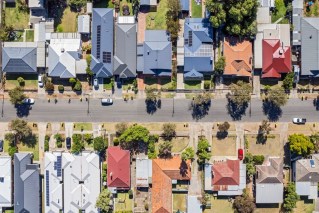
Australia’s “patchwork” of planning rules is preventing people taking up an innovative solution to the housing crisis, a leading body has warned.
The Housing Industry Association says modular homes and granny flats could help meet surging demand for houses – but state and local planning rules are holding them back.
“Inconsistent regulations across state and local government lines are adding unnecessary complexity and thousands of dollars in hidden costs, which often do not improve outcomes,” HIA executive director of planning and development Sam Heckel said on Thursday.
“We need a nationally consistent framework that allows secondary dwellings or granny flats up to 90 square metres to bypass lengthy planning queues through planning exemptions.”
HIA said a survey of its members found builders expected to construct 10 times the granny flats in 2026 that they did in 2022.
“The growing popularity of modular homes and other modern building systems, including those now available through major retailers, proves that many Australians want quick, modern and simple ways to add density to their backyards,” Heckel said.
“This exponential growth highlights the growing demand for smaller, affordable and modular living solutions.”
Just this week, the Tasmanian government announced plans to amend its state planning scheme to boost the allowable size of granny flats from 60 square metres to 90. It said the simple step would help improve housing options in the state – which has the country’s lowest rental vacancy rate.
“We need to be coming at housing from all angles,” Housing and Planning Minister Kerry Vincent said.
The bigger floor area is expected to allow more two-bedroom granny flats, along with bathrooms and kitchens.
“There is significant demand for one and two-bedroom homes across the state, and we need to make it easier to deliver this type of accommodation,” Vincent said.
“Having a small, self-contained dwelling located on existing blocks represents low-hanging fruit as we look to increase our medium-density housing stock.
“By expanding this size, we can create more diverse housing stock, giving Tasmanians greater options for where they can live.”

An Elsewhere Pods home in Peachester, Queensland. Photo: Elsewhere Pods
Tasmania’s shift comes just weeks after Bunnings began selling flat-pack tiny houses marketed as the “ultimate DIY project”. The Elsewhere Pods’ are available as a 2.7-metre by 2.4-metre pod priced at $26,100 and a larger 4-metre by 2.4-metre studio at $42,900.
Both are designed to potentially require no building permit (although check with your local council first) and take as little as two days to install.
Elsewhere Pods founder Matt Decarne came up with the idea after his mother lost her home in the 2020 northern NSW floods. He said his tiny buildings could be customised to suit buyers, were ideal for tricky sites and could be built without heavy machinery.
Retail behemoth Amazon also offers its own range of flat-pack houses.
It’s all part of a growing trend towards thinking inside the backyard. Property industry expert James Fitzgerald believes the publicity around the Bunnings kits has helped to normalise backyard density.
“As affordability worsens, more owners will look at their existing land and ask how to make it work harder. Backyard density is one of the few levers available that doesn’t require moving, subdividing, or taking on a second mortgage,” he recently wrote for Yahoo Finance.
“In many markets, granny-flat style setups are already renting for around $400-$500 per week. That’s not theoretical upside. That’s real income.”

Australia’s states all have their own rules for secondary dwellingsa. Photo: Unsplash
The HIA also points to changes across the Tasman that should be emulated. Under New Zealand laws, a building that meets standardised design rules automatically gets a planning exemption, which allows a more streamlined building process.
“The federal government should take the lead by establishing national design standards. By removing the need for costly, bespoke planning processes, we could unlock thousands of homes in established city suburbs and also regional areas,” Heckel said.
“With strong demand, major retailers now offering off-the-shelf solutions and many homeowners with underutilised land, the right nationwide policy shift could deliver a rapid injection of housing supply across Australia.”
Other Australian states are also catching on. Victoria changed its laws in 2023 to allow a secondary dwelling of up to 60 square metres on a block of at least 300 square metres without the need for a planning permit. It includes some heritage areas, as long as requirements such as height and colouring are met.
South Australia and Western Australia also recently eased regulations around issues such as floor space and setbacks, while. Queensland simplified its rules in 2024. NSW, however, still has strict requirements.
Would-be granny flat builders should check with their local council, wherever they are in Australia.
Want to see more stories from The New Daily in your Google search results?
- Click here to set The New Daily as a preferred source.
- Tick the box next to "The New Daily". That's it.