The hidden home costs rising faster than your mortgage


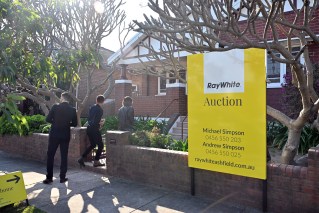
Even some of those who have paid off their mortgage are counting the cost of everyday life. Photo: Getty
Home owners facing another rate rise might be wondering how they’re going to make ends meet.
But even those who have paid off their mortgage are counting the cost of everyday life and hoping to keep the bills paid.
Last week, the Reserve Bank of Australia lifted the cash rate by 25 basis points to 4.10 per cent, the second of back-to-back hikes amid persistent inflationary pressures.
The cash rate hike will have a major impact on borrowers, making it a tough time financially as higher mortgage repayments become the norm. Calculations from Finder based on the average loan repayments for a loan of $736,259 suggest that the average borrower will have to pay $118 more a month, or $1416 a year.
But beyond the mortgage, the cost of everything else related to home ownership has been rising as well, and there is simply nothing left in the budget to absorb it.
In fact, every major household cost has outpaced wages. Home and contents insurance alone has risen by nearly three times the rate of pay.
Not keeping up
While wages have risen by 19.2 per cent since 2020, inflation has risen by 29.7 per cent, meaning Australians have lost about 10 percentage points of purchasing power in five years.
Analysis of data from the Australian Bureau of Statistics data paints a pretty grim picture.
The standout cost increases include:
- Home and contents insurance up 51 per cent, from $1940 to $2938 annually;
- Electricity up 23.4 per cent out of pocket, but 44.1 per cent at true market price, with a record 32.2 per cent spike in the past year alone as government rebates ended;
- Health insurance up 19.33 per cent since 2021, with the 2026 rise of 4.41 per cent the steepest yet;
- Internet up 23.2 per cent since 2020, with the sharpest jump between 2024 and 2025
The monthly cost of home internet rose 23.2 per cent between 2020 and 2025, electricity was up 23.4 per cent, while home and contents insurance premiums have experienced a rapid surge since 2020, with average costs rising by 51 per cent between 2020 and early 2026.

Among household utility costs, internet charges are up 23.2 per cent since 2020. Photo: Canva
Stress test
The cost of living in a house has become so expensive that a staggering 84 per cent of Australians experiencing bill stress in the past 12 months, with three in 10 reporting extreme levels.
ING research into bill shock follows a significant rise in utility costs in the past year, including electricity bills up 13 per cent and gas bills by 4.3 per cent.
The data also reveals the point at which the average Australian begins to feel financially stressed about their monthly household bills (including rent, electricity, insurance, water etc) is when the total bill exceeds $2021.
No rent relief
Ray White chief economist Nerida Conisbee said higher interest rates that will follow from last week’s RBA rise will do nothing to calm rental growth and may also further discourage new housing construction.
The good news was that those who could hold on would see the value of their home continue to rise, Conisbee said.
“Australia’s housing market has remained resilient despite higher interest rates, Prices rose strongly in 2025, supported by population growth and constrained supply,” she said.
“Higher borrowing costs will limit borrowing capacity and slow price growth in 2026, but the underlying shortage of homes means upward pressure on prices and rents is likely to continue.”
Power in switching
Making the switch between electricity and insurance providers at least once annually can save homeowners hundreds a year, Compare Club head of research and insights Kate Browne said.
“The rule of thumb with energy is that if you’ve been with the same energy supplier for more than a year, then there’s a very good chance that you’re overpaying for your electricity,” she said.
“In deregulated markets, we’re seeing savings of $600 a year in NSW, $300 in Victoria and around $502 in the Australian Capital Territory.”
Republished from view.com.au
Want to see more stories from The New Daily in your Google search results?
- Click here to set The New Daily as a preferred source.
- Tick the box next to "The New Daily". That's it.