Budget changes left us in real-world red/blue button dilemma

Source: Mike Bowers
There has been a viral question racing around social media lately, which has become known as the “red/blue button dilemma”.
The thought experiment involves people being asked a variation of a question:
Everyone on Earth takes a private vote by pressing a red or blue button. If more than 50 per cent of people press the blue button, everyone survives. If less than 50 per cent of people press the blue button, only people who pressed the red button survive. Which button would you press?
Everyone who presses the red button is guaranteed to survive in the second scenario, but pressing the blue button involves faith that enough people will do the same.
In short – which are you putting a primacy on? Individuals or the collective? Would you stake your life on people caring about more than themselves?
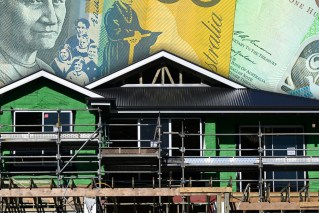
The response to the overdue structural changes to the housing tax concessions announced in Tuesday’s federal budget seems a real-world red/blue button question.
The number of people jumping to ‘I’m screwed’ because they’ll have to pay slightly more tax on any potential sale, based on any gain – the profit – they made on their purchase, is as individualistic as you can get.
Anyone who currently owns an investment property will be able to continue to negatively gear it or, put another way, have the taxpayer subsidise them for their loss.
If you’re upset about not being able to negatively gear an established investment property in the future, perhaps there is a misunderstanding over what it means in reality – you can only do it if you are making a loss. So you have to be prepared to make a loss, which the taxpayer will then subsidise.
Anyone who has ever watched an accountant work out that loss – depreciating everything from curtains to carpets and in-between – knows all the tricks employed to ensure it.
But even that isn’t the point. What we are seeing is the haves telling the have-nots that rebalancing a tax system that has weighed heavily in their favour for 30 years is inherently unfair.
This has been derided as “communism” by right-wing media and it’s akin to Count Dracula’s fanatically devoted servant, Renfields, in politics.
Multimillionaire Pauline Hanson was particularly incensed, telling a press conference the housing tax changes were “nothing but communism, taking over and redistributing wealth”.
This echoed The Daily Telegraph’s “Your capital, his gain” front page – if tilting tax settings that have had a demonstrable effect in increasing inequity is communism, someone needs to read a few books.
But the bigger revelation in all of this is that the right has been left with nothing but faux cries of communism because, for the most part, it agrees with the budget.
The cuts to the NDIS will be life-changing for many, but the right agrees with them.
Cuts to environment funding and to climate change investment and the human rights commission are straight from the right’s wishlist.
It would spend more money on defence if possible and, given the meagre tax cuts have been pushed off into the next budget cycle, there can be no cries over inflationary measures.
And so it fall backs on a scare campaign a grade-eight social science student could see through – any attempt to make the tax system fairer is communism.
Those who understand it’s not, but who also hoped to either benefit from it themselves or to continue to make as much money as possible from a stacked system, are left with a “broken promise”.
Most of the senior reporters in the federal press gallery have one or two houses.
Their children are set. It is not unusual to meet a younger member of the press gallery whose parent has either contributed to their housing, or bought them a property in Canberra so they can concentrate on building their career.
For these people, the politics around a “broken promise” is the priority – but it also negates the fact that they were the ones who set up the promise in the first place.
Media is not a neutral player in this – it plays the rule in, rule out game every election, and then holds governments to whatever the conditions were at that time.
That is not to say that things are materially different now when it comes to housing affordability – obviously the landscape is the same. But the anger, the discontent and the fracturing around the social contract is now white hot, fuelled by 30 years of unfairness and another round of inflation punishing those who are barely holding on.
That side is rarely given the same airtime as those “upset” that tax settings are changing.
In the game of red button, blue button, you can see who is pressing what.
Amy Remeikis is a contributing editor for The New Daily and chief political analyst for The Australia Institute
Want to see more stories from The New Daily in your Google search results?
- Click here to set The New Daily as a preferred source.
- Tick the box next to "The New Daily". That's it.


Pork barrel rolls out again – it's time for a change

Long-awaited migrant plan reflects needs and fears