‘Poorer’ Australians slugged for Middle East war: Bullock

Source: Reserve Bank of Australia
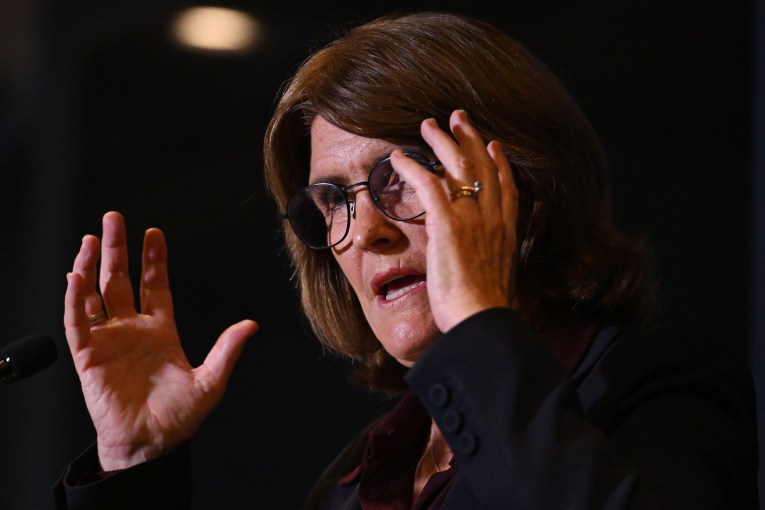
Australians are poorer because of the ripple effect on prices from the conflict in the Middle East, Reserve Bank governor Michele Bullock has warned.
The Reserve Bank lifted interest rates for a third straight meeting on Tuesday, amid fears the oil crisis sparked by the war could make inflation worse before it gets better.
“We’ve had this shock which has lowered our real incomes, so yes we are all feeling poorer. That’s what this has done, this war on the other side of the world,” Bullock said in her post-meeting media conference.
“Yes it’s possible that we have given too much weight to the inflationary risks, and haven’t given enough wait to the possibility that consumption will pull back a lot … there’s always that risk.”
The central bank’s monetary policy board voted in a split 8-1 decision to raise the official cash rate by 25 basis points to 4.35 per cent, as it wrapped up its two-day meeting on Tuesday.
For an average borrower with a $600,000 mortgage, the three consecutive hikes since February will cumulatively add more than $270 a month in interest repayments.
Tuesday’s decision has returned the official interest rate to where it was in January 2025, wiping out all of the cuts delivered last year.
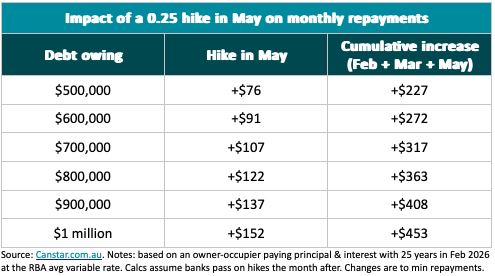
The effect of this year’s rate hikes. Image: Canstar
The move had been tipped by the majority of economists and financial markets, which had priced in the chance of a hike at about three quarters.
Bullock said this year’s third interest rate rise might not have been needed without the spiralling oil prices driving by the Middle East conflict.
“Certainly what the war has done is it’s made the trade-off much, much worse,” she said.
“We can’t look through everything, we’ve got to be cognisant of the potential inflation implications.”
Bullock also warned that effects of the spike in oil prices and their effect on inflation would last throughout the rest of 2026, even if the Strait of Hormuz opened immediately.
“We’re already seeing that in many firms that are facing cost pressures,” she said.
“They’re looking to increase prices of their goods and services if left unchecked, higher costs get embedded into price and wage setting decisions.
“These second-round effects could lead to even higher and persistent inflation, and if so, would require even more tightening in monetary policy to get inflation under control.”
Ahead of delivering his fifth budget next week, federal Treasurer Jim Chalmers said “those people” who considered it the “sole driver” of inflation were wrong.
“I think that’s an important bit of perspective, as is the statement today which does not reference public spending as a factor in the Reserve Bank’s decision to lift interest rates today,” he said.
It follows reports in The Australian on Tuesday that next week’s budget will include an earned income offset of between $200 and $300 for every person in Australia who gets a wage or salary and pays tax.
Chalmers said the budget would be “responsible”.
“We have an inflation challenge in our economy, which is made worse by the war in the Middle East,” he said.
“We know that some of the costs and consequences of this conflict on the other side of the world are that Australians are paying more, particularly for fuel.”
Shadow treasurer Tim Wilson again accused Chalmers of having “consistently poured petrol on the inflation fire”.
“The Iran conflict wasn’t around in the second half of last year, public spending continues to fuel the demand that is driving Australia’s inflation pressure,” he said on Tuesday.
Inflation was well above target before the Middle East conflict effectively closed the Strait of Hormuz, sending global energy markets into chaos.
Surging fuel prices have only amplified the central bank’s inflation headache.
Headline inflation surged to 4.6 per cent in the year to March, although many analysts believe the worst is yet to come as fuel prices flow through across the economy in coming months.
Tuesday’s decision was announced as the Reserve Bank released updated economic forecasts, in which its staff economists lifted their near-term predictions for inflation.
-with AAP
Want to see more stories from The New Daily in your Google search results?
- Click here to set The New Daily as a preferred source.
- Tick the box next to "The New Daily". That's it.
RBA’s inflation warning stokes rate rise fears
More pain as IMF backs rate rises
More millions as Whyalla Steelworks jobs slashed

Fresh rate fears as economy outruns forecasts