Rate rise is ‘tough news’, but could be worse, RBA boss warns

Source: Reserve Bank of Australia
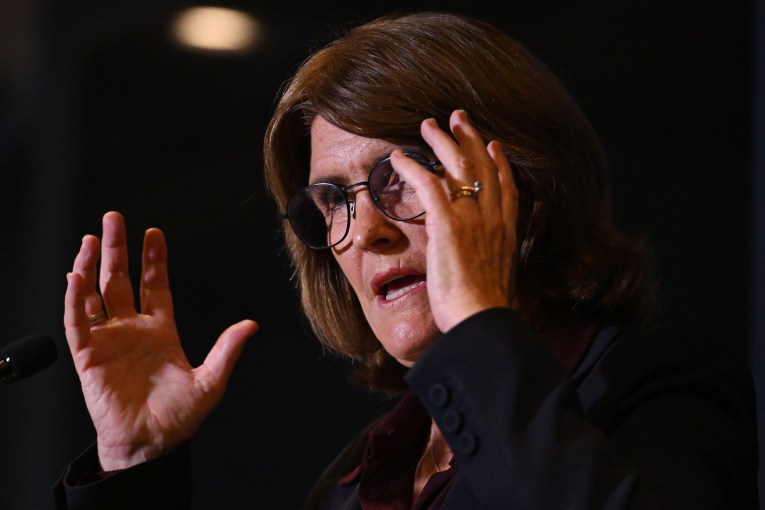
The Reserve Bank’s decision to hike rates on Tuesday was “tough news” for many Australians, governor Michele Bullock says.
The RBA’s monetary policy board lifted the cash rate by 25 basis points to 4.1 per cent on Tuesday in a split five-four decision.
It is the tightest decision since the board started publishing vote tallies.
Tuesday’s hike is the second rise in consecutive months as war in the Middle East compounds inflation concerns. It had been tipped by a majority of economists and money markets, which had priced in the chance of a hike at more than two-thirds.
But Bullock said the board had been split between “hawkish” members who wanted to hold until their next meeting and those who wanted to act this week.
“I understand that this is tough news for people with mortgages. I understand that petrol prices are up substantially as well, another problem,” she said in her post-meeting media conference.
“My issue, though … we don’t bring the excess demand down, then businesses are just going to build that into their costs. So it’s going to be even worse for everyone.”
Bullock said the discussion about lifting or holding rates was “robust”.
She said the double hit from rising fuel prices and the latest official cash rate rise would be particularly hard for some people.
“It’ll be much worse with inflation, we will see the costs of everything going up – and that will be much worse,” she said.
“It is hard, I understand that, but [interest rates are] the only instrument we have and it is important that we get inflation down.”
Source: AAP
Domestic price pressures, including a tight labour market and strong economic growth, were already pushing inflation too high for the RBA’s liking before US-Israeli strikes on Iran.
The war and Iran’s retaliatory attacks led to the closing of the Strait of Hormuz, a key oil channel, and plunged global energy markets into chaos.
Headline inflation rose 3.8 per cent in the year to January, according to monthly data released by the Australian Bureau of Statistics, above the RBA’s 2-3 per cent target band.
The central bank has been loath to move rates at meetings that don’t immediately follow the release of quarterly inflation figures, when it can gauge its preferred measure of underlying price growth.
But as the benchmark oil price spiked from about $US70 ($A99) a barrel to as high as $US119 ($A168) a barrel and inflation expectations soared, precedent went out the window.
In its statement after the meeting, the board said short-term measures of inflation expectations had already risen.
“As a result, the board judged that there is a material risk that inflation will remain above target for longer than previously anticipated,” it said.
Ahead of the decision, money markets were almost fully priced in for two further rate rises in 2026, which would bring the cash rate to 4.6 per cent by Christmas.
Each 25 basis point rise adds about $90 in monthly repayments to a typical loan of $600,000 on an owner-occupied property.

Treasurer Jim Chalmers also acknowledged the decision would be tough news for millions of Australians with a mortgage.
“Inflation has moderated significantly from its peak, but it is higher than we would like and conflict overseas has put upward pressure on global fuel prices,” he said.
“The duration of the conflict will be the primary determinant of how much pressure it adds to global inflation and how much it is a hit to growth.”
CreditorWatch chief economist Ivan Colhoun said the RBA’s decision was justified.
“While this is news that is unwelcome for both households and businesses, neither is the situation where inflation is allowed to run above-target for a further extended period,” he said.
Australian Chamber of Commerce and Industry chief executive Andrew McKellar said the decision might be the final nail in the coffin for many businesses already stretched by years of weak economic activity and tight margins.
“The current fuel crisis only elevates the need to pursue economic reforms that will drive productivity growth, by making it easier to do business and encouraging businesses to invest,” he said.
-with AAP
Want to see more stories from The New Daily in your Google search results?
- Click here to set The New Daily as a preferred source.
- Tick the box next to "The New Daily". That's it.
RBA’s inflation warning stokes rate rise fears

More pain as IMF backs rate rises

More millions as Whyalla Steelworks jobs slashed


Fresh rate fears as economy outruns forecasts