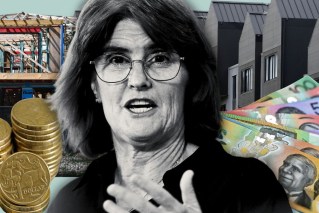
‘Right thing’: Bank boss defends world-first shift on interest

Source: Sunrise
Reserve Bank boss Michele Bullock says Tuesday’s hike to official interest rates is the “right thing for the economy”, despite the inevitable pain for mortgage-holders.
The central bank board lifted the cash rate by 25 basis points on Tuesday, taking it from 3.6 per cent to 3.85 per cent.
It is the first rise in Australia’s official interest rates since November 2023 and comes after data that showed the RBA’s preferred measure of inflation, the quarterly trimmed mean, is at 3.4 per cent – well above the central bank’s 2.5 per cent target point. It also followed a fall in the jobless rate in December to 4.1 per cent, along with a continued lift in employment.
“I know this is not the news that Australians with mortgages want to hear, but it is the right thing for the economy,” Bullock said in her post-meeting press conference.
“I said in December that the board had been alert to signs of a pick up in inflation and we cannot allow inflation to get away from us again.
What the rise will cost you

Source: Canstar
Bullock said financial conditions had eased and their outlook remained uncertain.
“The recent pick-up in inflation and credit growth are enough to make us question this. So taking all these factors together, the board decided it was necessary to raise the rate,” she said.
“We remain focused on returning inflation to target. The board will continue to be driven by what the incoming data tells us about where the economy has been and what this means for the outlook.”
Bullock said the bank board was concerned that the inflation trend didn’t become more solid – though she wouldn’t commit to whether there are more rate rises to come this year.
“I’m not making any predictions for what it might involve going forward, but for moment, we are concerned that we don’t want this higher level inflation entrenched,” she said.
“I do understand that, for mortgage-holders, this isn’t a great outcome … what’s also not great for them or for anyone else is if inflation remains elevated because every time they go to the shop, every time they go to buy their groceries, every time they go to get personal services, medical, if inflation is high, that’s going to keep going up.”
She said that, despite the negative view of a rate rise, Australia was doing well.
“We are actually in a really good position. The labour market is really strong … and domestic demand is recovering. These are good things. But it’s just that we’re supply-constrained,” she said.
Tuesday’s decision had been expected by most economists and expected by financial markets. But, while unanimous, it was difficult for the RBA board which cut interest rates as recently as August.
After bucking the trend of peer economies by intentionally keeping rates lower for longer to prevent a spike in unemployment, the RBA becomes the first major central bank to return to interest rate rises since the pandemic.
Domain chief economist Nicola Powell said the hike would take some momentum out of the housing market as it reduced buyers’ borrowing power.
In updated economic forecasts also released on Tuesday, central bank staff revised up their inflation assumptions, with core inflation expected to come in at 3.2 per cent by the end of 2026, up from a November prediction of 2.7 per cent.
The board said it would use upcoming data about the global economy, domestic demand, inflation and the labour market to guide future decisions.
Treasurer Jim Chalmers said the decision was widely expected, but that didn’t make it any easier for homeowners.
“This will be difficult news for millions of Australians with a mortgage and we understand the pressure that this will put on families and businesses,” he said.
Chalmers was quick to point out the board statement did not mention government spending as a driver of inflation.
“It makes it very clear the pressure on inflation is coming from private demand,” he said.
But the Australian Chamber of Commerce and Industry urged governments to cut spending to take pressure off interest rates.
“The extraordinary growth in government spending has been contributing to three serious problems for business – higher inflation, higher interest rates and pressure for future tax increases,” the chamber’s David Alexander said.
-with AAP
Want to see more stories from The New Daily in your Google search results?
- Click here to set The New Daily as a preferred source.
- Tick the box next to "The New Daily". That's it.


Houses, town water supply sold in mining deal
RBA hike wipes out more than a year of savings

Rates hikes won't fix inflation from fuel prices