Magic number that could decide an interest rate hike
Source: Reserve Bank of Australia
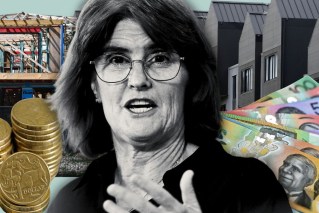
Reserve Bank governor Michele Bullock and the members of her interest-rate-setting board are likely to be glued to the Australian Bureau of Statistics website this week.
The focus of their fixation on Wednesday will ultimately boil down to a single number: The trimmed mean inflation figure for the December quarter.
Traders have put their money on a Reserve Bank rate hike at its next meeting – now just a week away – after last week’s surprise labour force report raised fears the jobs market shows no signs of softening and will contribute to inflation staying above the central bank’s 2-3 per cent target band.
December’s unexpected fall in the unemployment rate to 4.1 per cent and stronger-than-expected employment growth of 65,200, reported by the statistics bureau last Thursday, made a rate hike on February 3 more likely at the margin, ANZ economists Adam Boyton and Aaron Luk said.

Better-than-expected employment figures have heightened concerns about inflation. Image: AAP
But the inflation figures are still the main factor for the RBA, particularly the trimmed mean. It strips out volatile items such as electricity costs to provide an underlying measure of inflation.
A trimmed mean of 0.8 per cent or less for the December quarter would likely result in a Reserve Bank hold, Boyton and Luk said.
But a figure of 0.9 per cent or more would likely put borrowers on track for more mortgage pain, depending on the detail of the print.
NAB senior economist Taylor Nugent predicts a trimmed mean of 0.9 per cent, driven by higher new car prices and a strong seasonal rise in travel prices.
The most hawkish of the big banks, NAB expects rate hikes in February and May as a result.
But there are still reasons for the doves to remain hopeful. AMP economists Diana Mousina and My Bui said the large, one-off spike in employment growth compared to the gradual softening in growth during most of 2025 suggested “some unreliability” in Thursday’s jobs data.
The outsized jump in 15 to 24-year-olds moving into employment also suggested there was some seasonality around Christmas hiring, which could bring payback in January’s data.
Forward indicators such as falling job vacancies and job ads, as well as a predicted slowdown in growth of health care, education and government-related jobs, should take some steam out of the labour market in 2026, Mousina and Bui said.
They maintained their view that inflation’s resurgence is only temporary and the central bank will keep rates on hold this year, but acknowledged the risk of a rate hike in February was high.
That view is becoming increasingly unpopular among market economists and bond traders.

NAB – the most hawkish of the big banks – expects rate hikes in February and May. Photo: Pexels
Money markets are pricing a 60 per cent chance of a February rate hike, with almost two hikes priced in before the end of the year.
Following the labour force print, the Aussie dollar jumped to trade above US68c for the first time since October 2024.
Meanwhile, banks have already begun hiking interest rates in anticipation. Commonwealth Bank and Macquarie hiked fixed home loan rates by up to 0.7 percentage points earlier in January.
“The fixed rate tide is on the way out, but there’s still a smattering of lenders still offering rates under 5 per cent,” Canstar data insights director Sally Tindall said.
“How long they’ll hold on is a different question.”
-AAP
Want to see more stories from The New Daily in your Google search results?
- Click here to set The New Daily as a preferred source.
- Tick the box next to "The New Daily". That's it.


Houses, town water supply sold in mining deal
RBA hike wipes out more than a year of savings

Rates hikes won't fix inflation from fuel prices