How do airlines set bag and weight limits? An ex-pilot explains changes on the way

Source: CASA
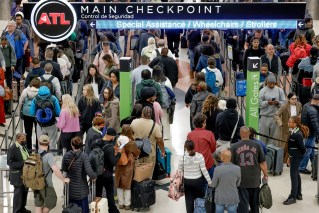
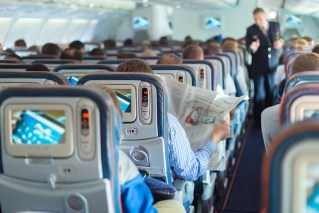
You arrive at the airport in plenty of time to check in. You reach the departure gate early. You board, walking down to your seat – and that’s when you discover the overhead lockers are already full.
Too much carry-on baggage can significantly delay departures, as cabin crew try to squeeze everything in – or send bags down to the hold.
As a former pilot turned aviation safety researcher, clearer rules for carry-on baggage are welcome, not least because too much cabin baggage is a real safety concern.
But as more airlines set carry-on limits, why are there different baggage rules for different airlines?
New rules for carry-on in Australia and beyond
From Monday, February 2, Virgin Australia will change its carry-on baggage policy for domestic flights.
Economy passengers will be limited to one standard-sized cabin bag for the overhead locker, weighing up to eight kilograms. A small, personal item that can fit under a seat will also be allowed.
International airlines are also adjusting carry-on baggage rules. About a year ago, Air Canada restricted basic fare passengers to just one personal article for flights across North and Central America.
But the rules are confusing.
You could fly on the same type of plane from Sydney to Melbourne – such as a widely-used Boeing 737 – but depending on the airline and what you paid for your ticket, you’ll have completely different bag and weight restrictions.
If you fly with Qantas within Australia, your carry-on needs to be:
- one small personal item plus one standard piece of 10 kilograms, or
- two smaller pieces, where each piece must not exceed 10 kilograms, and the total weight of both pieces is 14 kilograms, or
- one small piece and a garment bag, where each piece must not exceed 10 kilograms and the total weight of both pieces is 14 kilograms.
Budget carrier Jetstar is different again, allowing up to seven kilograms of carry-on luggage allowance, shared across two items.
So how do airlines actually set bag and weight limits?
Why passenger and baggage weight matters
Each aircraft has a maximum take-off weight, which can’t be exceeded to ensure it’s a safe flight. That total includes the weight of the plane, plus fuel, food and drink supplies in the galley, any cargo, the weight of the pilots and cabin crew, and the weight of the passengers and baggage.
Checked baggage is weighed at the check-in desk or bag drop. But what about carry-on bags?
If a plane is small, with fewer than seven passengers, actual passenger weights are needed. If you fly in remote parts of Australia – such as island-hopping in the Torres Strait – you have to weigh yourself, along with your bags, at the airport.
But for bigger planes on busier routes, Australian regulations allow an average passenger weight to calculate total passenger weight.
At the start of my flying career in 1998, the regulated standard weight for passengers flying in Australia was 77 kilograms per person (excluding carry-on baggage).
But as people’s average weight has increased, the law has tried to keep up.
For planes with a maximum seating capacity of 150-299 seats, like a Boeing 737, the current standard weight of an adult male passenger is assumed to be 81.8 kilograms, while it’s 66.7 kilograms for adult women.
Then the standard weight for carry-on baggage is seven kilograms per passenger.
However, the law also allows individual airlines to seek approval for their own passenger and cabin baggage weights. That has to be approved by the regulator, the Civil Aviation Safety Authority.
That allows different airlines to have different rules around cabin baggage.
Billions of dollars for bags and other extras
Carry-on baggage rules used to be much more standard.
But the rise of low-cost airlines changed all that, charging for extra luggage, in-flight Wi-Fi and food and drink as ancillary revenue: basically anything beyond the basic ticket.
The International Air Transport Association forecast ancillary revenue (including for extra baggage) will be worth US$144 billion (about A$220 billion) this year. That’s more than the value of transporting cargo around the world by air.
Today, how much you can pack usually depends on the fare or upgrades you choose.
Many passengers try to avoid ancillary fees by taking everything as carry-on. But airlines know this, so charge passengers extra for exceeding carry-on limits.
Lighten your load for a safer trip
Carry-on baggage is literal pain for cabin crew, who frequently suffer back and lifting injuries while helping passengers stow heavy bags in overhead compartments.
Source: CASA
Beyond physical risk, crew members have to deal with the time-consuming congestion of passengers struggling with large items during boarding.
In an emergency, passengers stopping to grab bags rather than leaving them behind has been proven to slow down evacuations.
So the next time you’re getting ready to travel, remember: if you want to take off on time and be safer in an emergency, pack lighter.
Your cabin crew will thank you for it.
Natasha Heap, program director for the Bachelor of Aviation
This article is republished from The Conversation under a Creative Commons licence. Read the original article.
Want to see more stories from The New Daily in your Google search results?
- Click here to set The New Daily as a preferred source.
- Tick the box next to "The New Daily". That's it.
Seven ways to make budget flights work in Europe

Compared to driving, flying is extraordinarily safe
Revealed: Australians' No.1 hate about air travel

Flying to Europe? Long-haul travel tips you need
App can predict flight delays up to 25 hours ahead

Naked hiking and other travel etiquette offences
Revealed: Cheapest days to book and fly in 2026