Where the stars align for an amazing night-sky light show
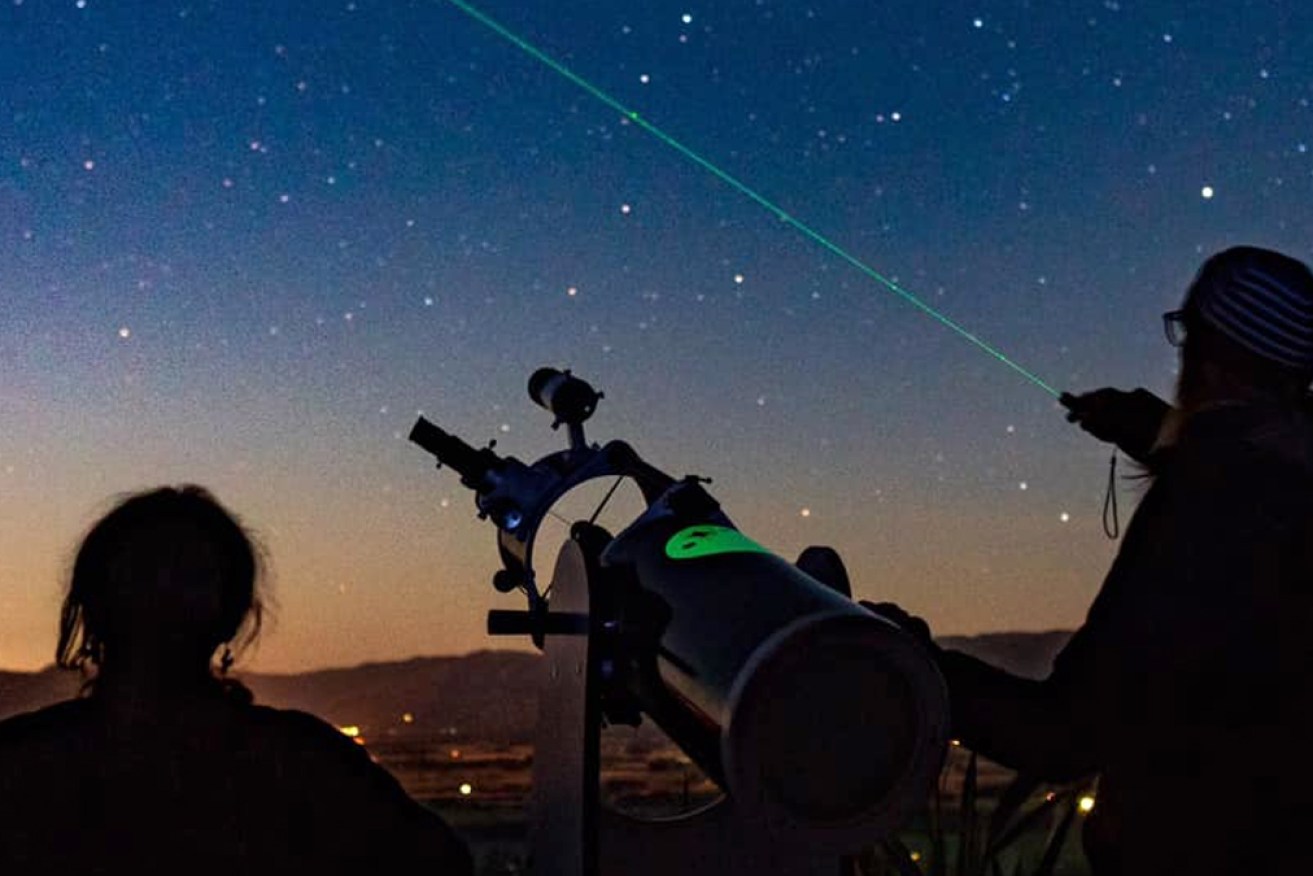
Local company Under the Stars will bring a telescope and laser pointer for a bespoke night-sky experience. Photo: Facebook/Under the Stars
Known for its clear skies and brilliant stars, New Zealand is on track to become the world’s first “dark sky nation”.
This is particularly evident in the Wairarapa – a region of vineyards and historic villages just outside Wellington – where the stars have aligned to result in one of the country’s most accessible stargazing experiences.
Go where the night shines
To become the world’s first dark sky nation is an audacious goal. In fact, it’s a certification that doesn’t even exist yet. If it did, the first country in line to receive it (after tiny Niue in the South Pacific) would be New Zealand.
Already, Aotearoa (the country’s Māori-language name) offers nine certified DarkSky places (with 17 more working towards certification through Arizona-based DarkSky International), where light pollution is nonexistent or drastically limited. Among them are the South Island’s Aoraki Mackenzie International Dark Sky Reserve, one of the world’s largest at 4367 square kilometres, and Tāhuna Glenorchy, one of the country’s newest, having achieved certification in 2025.
Follow the stars
But nowhere else in the country do the stars shine quite as brightly as they do in the Wairarapa, NZ’s most accessible dark-sky destination.
Situated just over an hour north-east of Wellington, most of the Wairarapa Dark Sky Reserve’s 3665 square kilometres is easily explored by foot, bike or car – but you don’t have to leave your accommodation to experience its best feature.
Instead, book a room at one of the region’s countless countryside Airbnbs or lodges. An experienced astronomer from tour company Under the Stars will bring their telescope and laser pointer right to you for a bespoke stargazing experience, with special packages (and pricing) available for smaller groups and couples.
If you’d prefer to situate yourself in one of the main centres, get away from the city lights at the Star Safari Observatory outside Martinborough. There, you can gaze out towards the galaxies using the largest telescopes for public use in the Wairarapa.
And no stargazing trip to the region is complete without a stop at Stonehenge Aotearoa. On a “Star Trek” here, you’ll learn how the massive stone circle was constructed for the southern hemisphere’s specific celestial patterns before seeing firsthand how it all aligns in the dark of night.
The best time to visit is in mid-June, when Matariki – a cluster of stars also known as the Pleiades – rises over the horizon. Its appearance in the early morning sky marks the Māori new year and is celebrated throughout the Wairarapa with community festivals, markets, hāngī (meals cooked in underground firepits) and light shows.
If you time a visit for Carterton Space Week in October, you can participate in an astrophotography or celestial navigation workshop.

Stonehenge Aotearoa was built to make the most of the southern hemisphere’s celestial patterns. Photo: Facebook
Book your days, too
The Wairarapa isn’t just an after-hours destination: Its villages are a beloved weekend getaway for Wellingtonians. On any given Saturday or Sunday in Greytown – a scenic 75-minute drive north-east of Wellington through the Remutaka Ranges – the carefully preserved Victorian-era main street hums with visitors perusing boutiques and gift shops.
In nearby Martinborough, oenophiles can cycle from winery to winery, with more than 20 cellar doors pouring samples of the good
drop, including pinot noir and sauvignon blanc.
For families, Masterton – the region’s largest town – offers a bird sanctuary and kiwi hatchery (Pūkaha National Wildlife Centre); arguably one of the country’s best playgrounds (Queen Elizabeth Park); and an art gallery, Aratoi, with a modern and Māori art collection that wouldn’t be out of place in a much bigger city.

It’s tempting to pack your days with outdoor adventure, too: Visit the seal colony and lighthouse at Cape Palliser, or hike through a hidden limestone chasm at Patuna Farm.
Don’t forget to nap, though. You’ll need to stay awake when
the night skies come alive.
This is an edited extract from Lonely Planet’s Best in Travel 2026, RRP $32.99, shop.lonelyplanet.com
Want to see more stories from The New Daily in your Google search results?
- Click here to set The New Daily as a preferred source.
- Tick the box next to "The New Daily". That's it.
Australia’s coolest neighbourhood


New Aussie bucket-list holiday is a white Xmas