Acropolis … wow! First-time in Athens

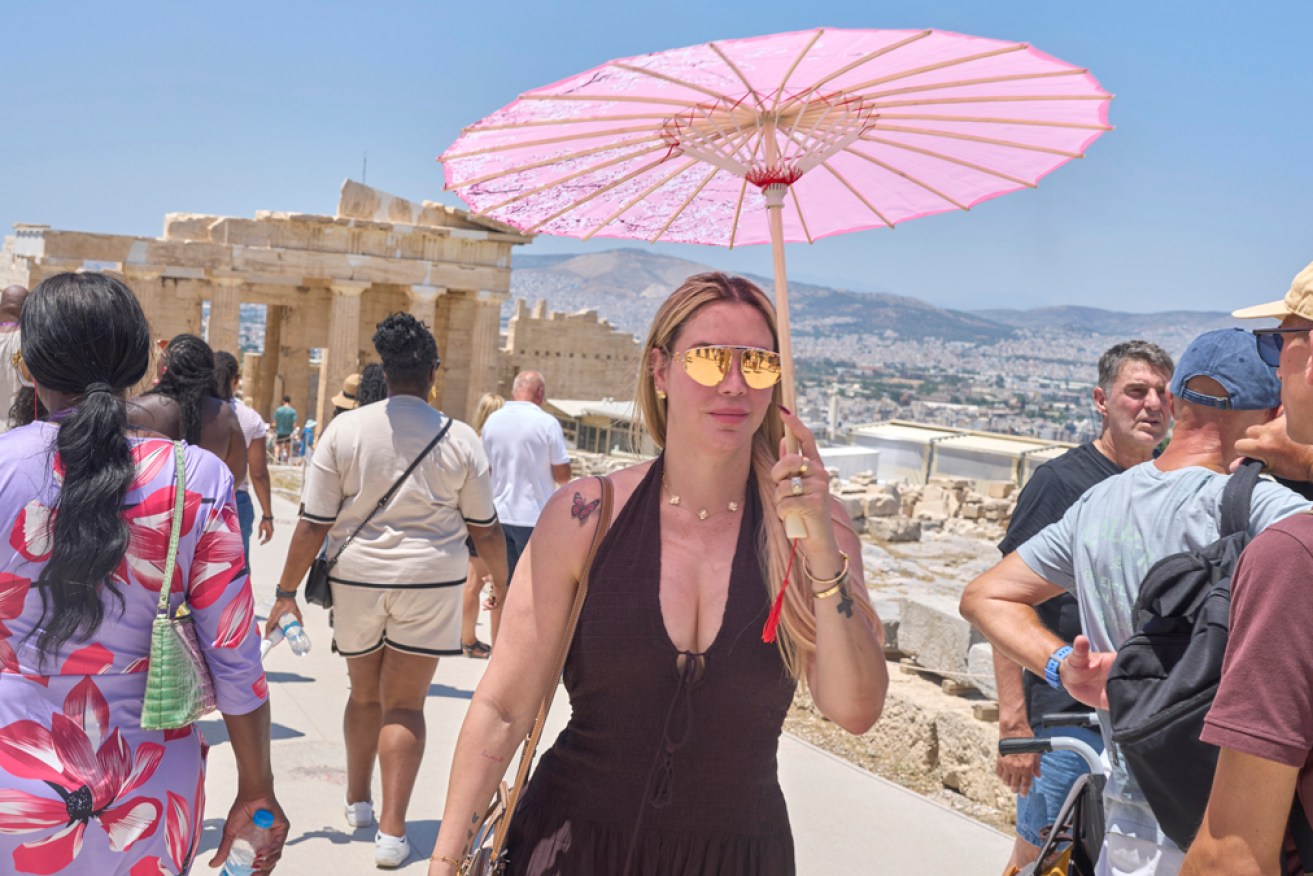
The Acropolis should be No.1 on any first-timer's list when they arrive in Athens. Photo: AAP
Sitting at breakfast watching the morning light play across the Parthenon and other ruins atop the Acropolis, you tend to pinch yourself.
It’s my first time in Athens, a city many people use as a stopover on their way to various Greek islands. But stay awhile and discover its charms.
Athens spreads out from the Acropolis in all directions, a sea of white low-rise buildings that dazzle in the sunlight. It’s a city for walking and discovering your inner flaneur with museums, gardens, ancient ruins and funky side streets with cool cafes and shops.
Our hotel, the Electra Metropolis, is on the edge of Syntagma and Plaka, the famed tourist area where you must run the gauntlet of souvenir shops and crowds. The top floor gives us stunning views of the Acropolis.
Nearby Ermou Street, near Syntagma Square, is the shopping heart of the city, where the surprising array of footwear will satisfy anyone’s shoe fetish. It seemed only right that I should buy a pair of Nike runners there. (Nike, in Greek mythology, is the goddess of victory.)
After a few days in this city, we fell in love with it. If you’re contemplating being a first-timer too, here are some highlights.
The Acropolis
How to tackle this “sacred rock” that is home to some of the most important monuments in the Western world? The Temple of Athena Nike, the Parthenon, the epitome of Greek classical art, the grand entrance, the Propylaia – these will all take your breath away as you gaze in wonder.
Peak season can be busy, so be prepared for a full stadium effect atop the rock when you get there.
We booked a two-hour tour with Athens Walks, which turned out to be a good idea. You can do it on your own but we had a guide, a young archeology student, who gave us history and context as we followed her coloured umbrella held aloft amid the madding crowd.
Wear sensible shoes because it gets slippery and dangerous if your footwear is not adequate.
When it’s all over and you’re back on the street there are ancient Greek warriors (well, they said they were!) who will pose for a photo with you for a couple of euros.
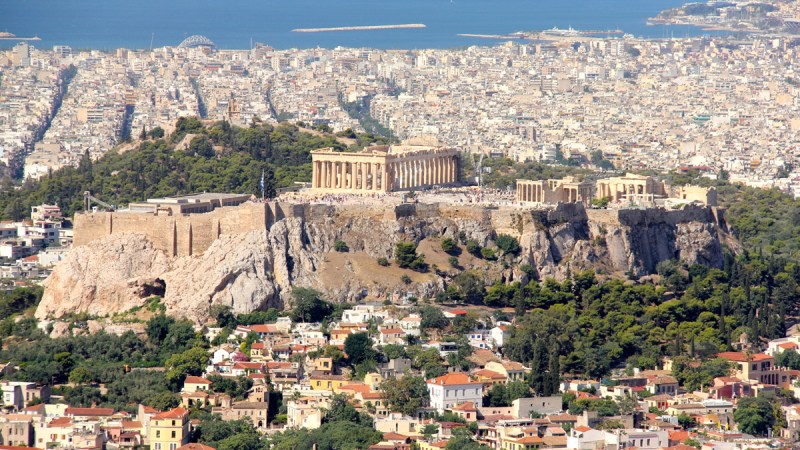
The Acropolis dominates the city from all angles. Photo: PXHere
Acropolis Museum
After your descent from the Acropolis, it’s a short stroll to the Acropolis Museum, which is a must on any visit. This state-of-the-art museum is spacious and relaxing, despite the crowds that tend to flock from late morning.
Book online before you go and skip the queue – and if you’re there when it opens at 9am (spring and summer), you will dodge the rush.
Finds from the slopes of the Acropolis fill the foyer and glass reveals the ruins beneath the museum, which you can tour after a wander inside.
On the mezzanine of the first floor you’ll find the Caryatids, the world-famous maiden columns that held up the porch of the Erectheion atop the Acropolis. The sixth Caryatid is in the British Museum, which also holds many of the friezes famously (or infamously) collected by Lord Elgin.
The missing friezes are represented by casts and in the British Museum they also have casts of the originals held in Athens. That’s a prickly subject.
It’s important to note the museum has a café with a great view of the Acropolis, while the surrounding streets also offer plenty of dining options.

A couple of the stray cats that are common across Athens chill in the neighbourhood of Anafiotika. Photo: Unsplash
Anafiotika
This sleepy historic suburb clings to the north slope of the Acropolis and is less known but well worth exploring. It’s part of Plaka but quite different architecturally, and the houses here tend to look like they should be a on a Greek island.
The streets are narrow and the white houses are fringed with bougainvillea.
We found ourselves alone here at times, looking down across Plaka. It’s a lovely diversion within the Plaka and Syntagma neighbourhood where you can wander through on your way back to downtown Athens.
Benaki Museum
This gorgeous museum was recommended to us by a Greek Australian before we went. Put it next on your list of things to do after the Acropolis Museum.
The Benaki Museum was once the home of collector Antonis Benakis and it allows you to immerse yourself in Greek culture across several levels. It takes you from ancient Greece to contemporary times, with fascinating information about the war for Greek independence.
Like any good museum, it has a cafe – this one is on a terrace overlooking the National Gardens and the Acropolis.
National Gardens
This slightly unkempt green space is a welcome respite from the traffic and the heat if you are visiting in summer.
The gardens were originally planted in 1839 by Queen Amalia of Greece and first served as the Royal Garden. They were opened to the public in 1923.
There are duck ponds, free-ranging tortoises, a playground and a shady café. The National Parliament Building is just next door.
Kolonaki
If you are visiting the National Gardens or the Benaki Museum, you should stroll into Kolonaki afterwards.
If you are au fait with any Greek celebrities, you will spot them in this chic neighbourhood, which has cafes, restaurants and shopping. It’s a bit of South Yarra or Double Bay in Athens and is easy to stroll around, a pleasant respite from the tourist trap that Plaka has become at times.
You can walk to Kolonaki’s high point, Lykavittos Hill, for panoramas of the city. The hill is capped by the Chapel of Agios Georgios. You can also get to the top by taking the Lycabettus Funicular, a funicular railway from a lower terminus at Kolonaki (Aristippou Street).

Equine power and tourist traffic on the island of Hydra – but no cars. Photo: Phil Brown
Hydra
We felt we should visit at least one Greek island and we chose Hydra for obvious reasons, to some of you at least.
This is where poet and musician Leonard Cohen lived with his muse Marianne, whom he met on Hydra in 1960. If you have watched the series So Long, Marianne you will be familiar with the story, warts and all. Of course, two of its characters were Australian authors George Johnston and Charmian Clift, who are legends on Hydra.
We felt we should make a pilgrimage to Cohen’s house but nobody seemed to know where it was and apparently the owners try to dissuade locals from revealing the location. We at least made it to the Leonard Cohen memorial bench.
The island is an hour and a bit by fast catamaran from the port of Piraeus (just 20 minutes from the city), and a visit to the port is worthwhile. You really get the sense of Greece as a seagoing nation here.
There are no cars on Hydra but lots of donkeys laden with tourist luggage. The harbourfront is lined with cafes.
A day trip will at least introduce you to what life is like on a Greek island and you will be back in Athens for dinner.
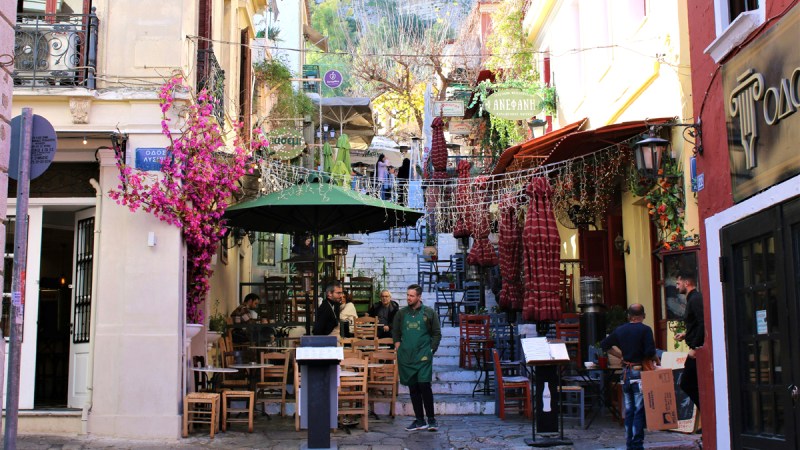
Athens also offers delightful neighbourhoods to explore. Photo: Unsplash
Who knew?
Athens is a charmingly low-rise capital city due to a combination of factors, including historical building styles, earthquake-prone geography and strict zoning laws. Building regulations stipulate that views of the Acropolis are unimpeded so there are no skyscrapers here, folks.
Athens (and Greece in general, as I understand it) is home to hordes of stray cats that seem to be loved and well fed and around every corner or lazing in front of shops and cafes.
Greeks haven’t yet got the memo about smoking. At some cafes, you may have to change tables a few times to get away from the cigarette smoke. Mind you, if you’re a smoker I imagine it’s heaven.
It sounds counterintuitive but in Greece mostly (not in our hotel, thank God), toilet paper is not to be put into the toilet but rather into a basket nearby once you are done. This is because of old pipes that can’t cope with getting clogged. I was reminded of the travel book by Peter Moore that got its title from a sign he saw in China – No Shitting in the Toilet.
Traffic in Athens is chaotic, which is why walking is a good idea. Taxis are a good way to get around too, although you may have to close your eyes at times. There’s a lot of merging going on.
We threw ourselves into a cab after our visit to the Acropolis Museum, only to hear an Australian accent ask us where we would like to go. “Where are you from?” I asked the driver. “Dubbo,” he said. Like many Greek Australians he had returned to the country of his ancestors.
There are a surprising number of Japanese restaurants and vinyl record shops in side streets. We discovered one that combines both. Ekiben Kitchen at 15 Skoufou Street has its own vinyl shop attached and music is pumped into the restaurant for diners to enjoy. How cool.
The semi-arid landscape will remind you of Australia when you land. In fact, at first it looked like Townsville. Until we saw some Ancient Greek ruins.
More info at visitgreece.gr
Want to see more stories from The New Daily in your Google search results?
- Click here to set The New Daily as a preferred source.
- Tick the box next to "The New Daily". That's it.
Australia’s coolest neighbourhood may surprise


New Aussie bucket-list holiday is a white Xmas