Australia to feel the heat at Pacific Island talks
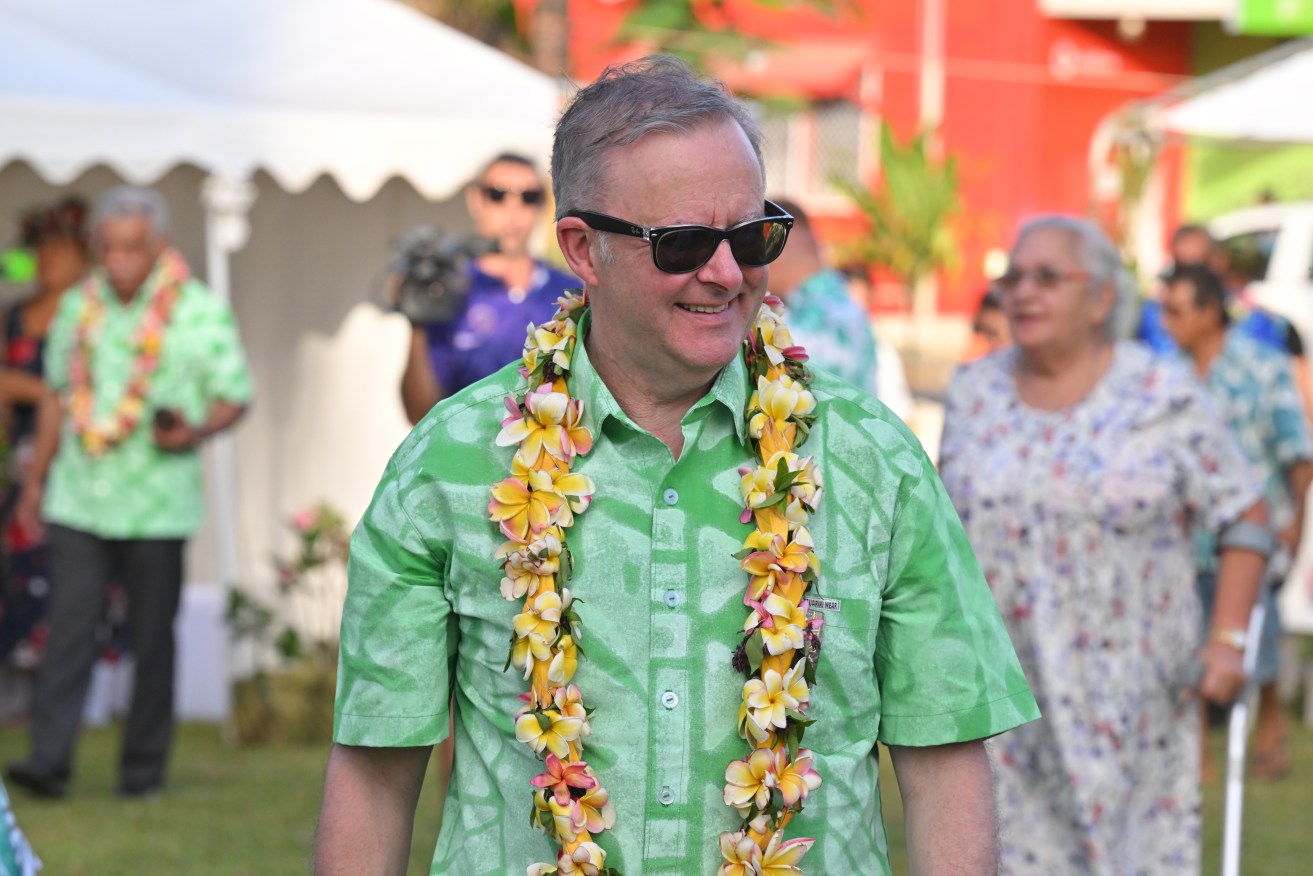
Anthony Albanese spoke with Mahmoud Abbas by phone from the Cook Islands. Photo: AAP
The climate justice movement’s biggest win since the Paris agreement and its influence on major emitters, including Australia, is about to be put to the test.
Vishal Prasad was one of the young Pacific leaders who instigated the historic advisory opinion on climate change from the world’s highest court.
He views the hard-fought legal opinion from the International Court of Justice, delivered in July to wide acclaim from small island states vulnerable to sea level rises and severe weather, as a blueprint for climate diplomacy.
“For the first time, the world has legal clarity on what the obligations of countries are,” Prasad, who is campaign director of the Pacific Islands Students Fighting Climate Change, said.
He expects the World Court’s advice to feature in this week’s annual talks with regional leaders at the Pacific Island Forum in the Solomon Islands. Prime Minister Anthony Albanese will be among the participants.
Australia, which is pursuing an ambitious agenda on renewables and clean manufacturing while remaining a major exporter of fossil fuels, has been broadly supportive of the Vanuatu-led campaign for a World Court advisory opinion on climate change.
But Prasad said Australia’s long-held argument that it is not responsible for the emissions from its coal and gas exports could face fresh scrutiny.
This especially holds now that the ICJ judges have specified fossil fuel production could count towards the host country and constitute an “internationally wrongful act”.
Led by Vanuatu and Tuvalu, an increasing number of Pacific nations are adopting a position to oppose all new fossil fuel production.
These countries have at times been critical of Australia’s decision to keep green-lighting extensions for coal and gas projects, moves the Albanese government defends as important in supporting the net zero energy transitions of its Asian partners.
These tensions threaten to undermine Australia’s move to host global climate talks alongside its Pacific neighbours in 2026. Its push to host the talks in Adelaide is yet to be locked in, while a rival bid from Turkey is also being considered.
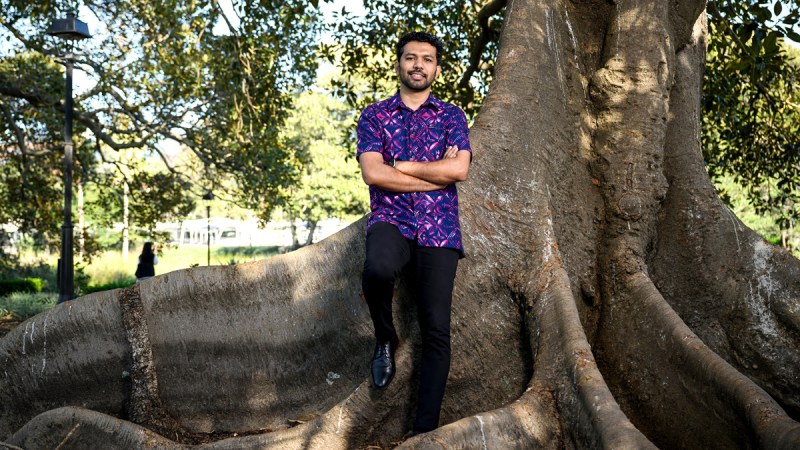
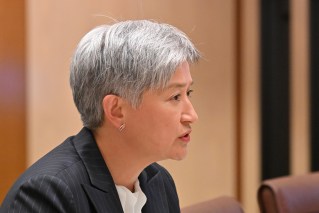
Vishal Prasad said the ruling makes clear the legal obligations of richer nations to those suffering the effects of climate change. Photo: AAP
Prasad said the credibility of Australia’s bid to co-host Cop 31, or the Conference of the Parties, rested on its demonstration of “real climate leadership”.
As well as the Pacific Island Forum providing an opportunity to press Australia on its fossil fuel policies and support for the ICJ opinion, the country’s appetite for climate ambition will be further tested by its 2035 emissions reduction target.
Refreshed targets and pathways to get there are must-dos under the Paris Agreement. They are due from all signatory nations by the end of September.
Climate and environmental groups have urged the Australian government to be ambitious and some businesses – although not all – are broadly in favour of the higher end of the 65-75 per cent reduction range floated by the Climate Change Authority.
Australian Climate Change Minister Chris Bowen has repeatedly said he will set a target that’s “ambitious but achievable”. Last week he told the ABC he will assess whether there is a pathway to legislate the 2035 climate target.
“We don’t need to [legislate the target] under the Paris rules, of course,” Bowen said. “It’s not technically necessary.
Prasad, from Fiji, was instrumental in agitating for an advisory opinion from the ICJ. It followed an initiative from other Pacific law students, fuelled by the injustice of island nations contributing very little to emissions but being extremely vulnerable to climate change.
The non-binding advisory opinion from the United Nation’s top court states countries are obligated to prevent harm from climate change and redress damage caused by greenhouse gas emissions. The ruling paves the way to require high carbon-emitting countries to pay reparations to low-emitting countries.
The young Pacific leaders are still refining their next steps but are focused on resetting the climate discussion around the legal obligations of states. November’s COP30 in Brazil is an obvious next forum for their work.
-AAP
Want to see more stories from The New Daily in your Google search results?
- Click here to set The New Daily as a preferred source.
- Tick the box next to "The New Daily". That's it.