King, Pope, Jedi, Superman: Decoding Trump’s bizarre social media images

White House social media amplifies dramatic, emotionally charged content. Photo: Truth Social
A grim-faced President Donald J Trump looks out at the reader, under the headline “LAW AND ORDER”. Graffiti pictured in the corner of the White House Facebook post reads “Death to ICE”.
Beneath that, a photo of protesters, choking on tear gas. And underneath it all, a smaller headline: “President Trump deploys 2000 National Guard after ICE agents attacked, no mercy for lawless riots and looters”.
The official communication from the White House appeared on Facebook in June 2025, after Trump sent in troops to quell protests against Immigration and Customs Enforcement agents in Los Angeles.
Visually, it is melodramatic, almost campy, resembling a TV promotion.
The post is not an outlier.
In the Trump administration, White House social media posts often blur the lines between politics and entertainment, and between reality and illusion.
The White House has released AI images of Trump as the pope, as Superman and as a Star Wars Jedi, ready to do battle with “radical left lunatics” who would bring “murderers, drug lords … and well-known MS-13 gang members” into the country.

Visually, it is melodramatic, almost campy. Photo: Facebook/White House
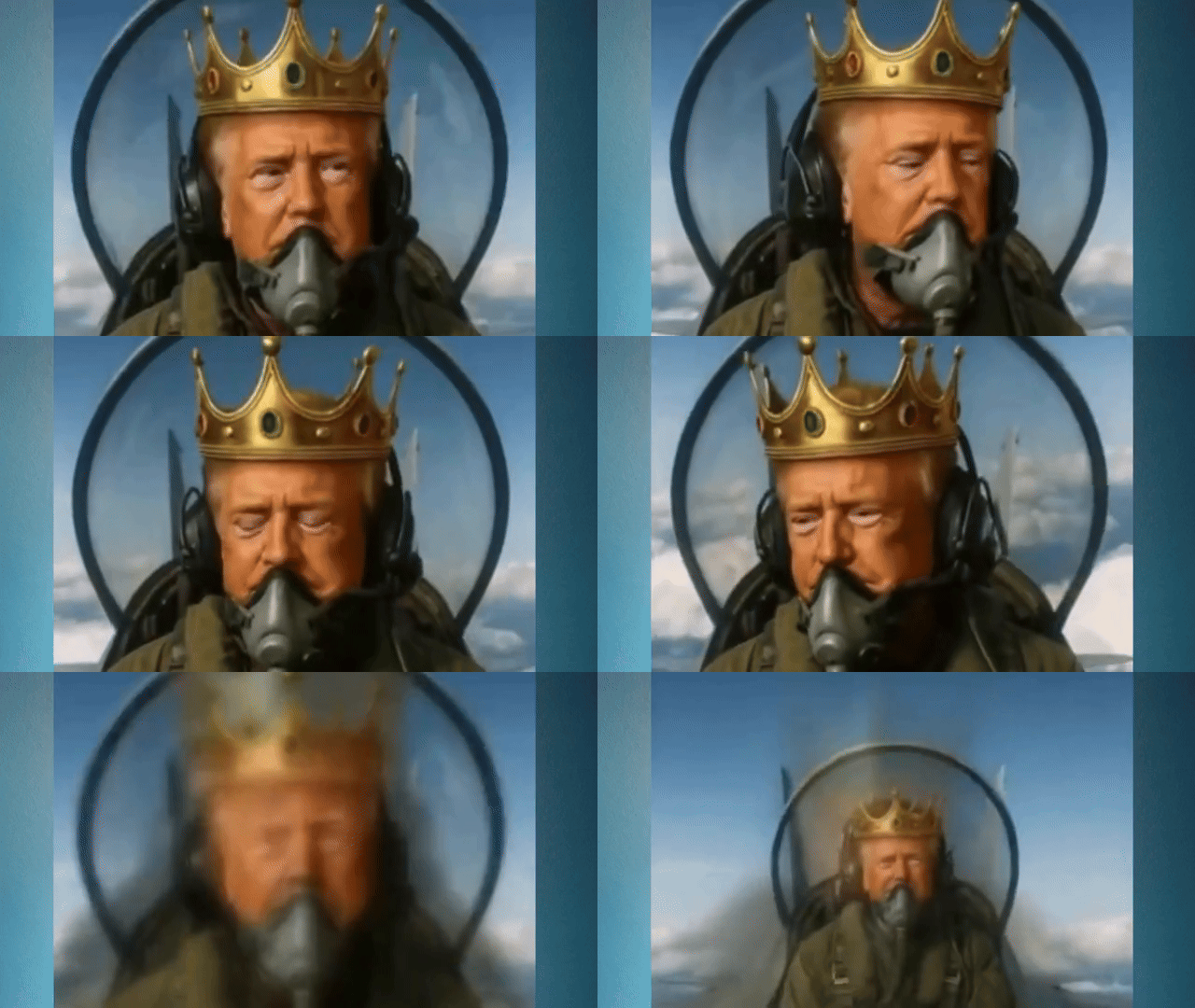
Most recently, on the weekend of the No Kings protests, both Trump and the White House released a video of the President wearing a crown and piloting a fighter jet, from which he dispenses faeces onto a crowd of protesters below.
Underpinning it all is a calculated political strategy – an appeal to Trump’s political base, largely white, working-class, rural or small-town, evangelical and culturally conservative.
As scholars who study communication in politics and the media, we believe the White House’s rhetoric and style is part of a broader global change often found in countries experiencing increased polarisation and democratic backsliding.
White House style
In the past, national leaders generally favoured a professional tone, whether on social or traditional media. Their language was neutral and polished, laced with political jargon.
While populist political communication has become more common along with the proliferation of social media, the norms are further altered in Trump White House social media posts.
They are partisan, theatrical and exaggerated. Their tone is almost circus-like. The process of governing is portrayed as a reality TV show, in which political roles are performed with little regard for real-world consequences.
Vivid colour schemes and stylised imagery convert political messaging into visual spectacle. The language is colloquial, down-to-earth.
Just as other influencers in a variety of domains might create an emotional bond by tailoring social media messages, content, products and services to the needs and likes of individual customers, the White House tailors its content to the beliefs, language and worldview of Trump’s political base.
In doing so, the White House echoes a broad, growing trend in political communication, portraying Trump as “a champion of the people” and using direct and informal communication that appeals to fear and resentment.
Trump White House social media makes no effort to promote social unity or constructive dialogue, or reduce polarisation – and often heightens it. Undocumented immigrants, for example, are often portrayed as inherently evil.
In one video, Trump recites a poem about a kind woman who takes in a snake, a stand-in for an immigrant who in reality is a dangerous serpent. “Instead of saying thanks, that snake gave her a vicious bite,” Trump recites.
Talking to the base
While some scholars have called the White House social media style “amateurish”, that hasn’t resulted in change.
The lack of response to negative feedback is partially explained by the strategic goal of these communications – to appeal to the frustrations of Trump’s deeply disaffected political base, which seems to revel in the White House social media style.
Scholars identify a large number of these voters as “the precariat”, a group whose once-stable, union-protected jobs have been outsourced or replaced with low-wage, insecure service work.
These workers, many former Democrats, can no longer count on a regular pay cheque, benefits or work they can identify with.
As a result, they are more likely to support political candidates whom they believe will respond to their economic instability.
In addition, many of these voters blame a breakdown in what they perceive as the racial pecking order for a loss of social status, especially when compared with more highly educated workers.
Many of these workers distrust the media and other elite institutions they feel have failed them. Research shows that they are highly receptive to messages that confirm their grievances and that many regard Trump as their champion.
Trump and the White House social media play to this audience.
On social media, the President is free to violate norms that anger his critics but have little effect on his supporters, who view the current political system as flawed.
One example – A White House Valentine’s Day communication that said “Roses are red, violets are blue, come here illegally, and we’ll deport you”.
In addition, Trump and the White House social media use the President’s status as a celebrity, coupled with comedy and spectacle, to immunise the administration from fallout, even among some of its critics.
Trump’s exaggerated gestures, over-the-top language, his lampooning of opponents and his use of caricature to ridicule whole categories of people – including Democrats, the disabled, Muslims, Mexicans and women – is read by his political base as a playful and entertaining take down of political correctness. It may form a sturdy pillar of his support.
But prioritising entertainment over facts has long-term significance.
Trump’s communication strategies are already setting a global precedent, encouraging other politicians to adopt similar theatrical and polarising tactics that distort or deny facts.
These methods may energise some audiences, but risk alienating others. Informed political engagement is reduced, and democratic backsliding is increasingly a reality.
Although the communication style of the White House is playful and irreverent, it has a serious goal – the diffusion of ideological messages whose intent is to create a sense of strength and righteousness among its supporters.
In simple terms, this is propaganda designed to persuade citizens that the government is strong, its enemies evil and that fellow citizens – “real Americans” – think the same way.
Scholars observe that the White House projection of the often comical images of authority echoes the visual style of authoritarian governments. Both seek to be seen as in control of the social and political order and thereby to discourage dissent.
The chief difference between the two is that in a deeply polarised democracy such as the US, citizens interpret these displays of authority in sharply different ways: They build opposition among Trump opponents but support among supporters.
The rising intolerance that results erodes social cohesion, undermines support for democratic norms and weakens trust in institutions. And that opens the door to democratic backsliding.
Andrew Rojecki is Professor of Communication and Tanja Aitamurto is Associate Professor of Communication at the University of Illinois Chicago
Want to see more stories from The New Daily in your Google search results?
- Click here to set The New Daily as a preferred source.
- Tick the box next to "The New Daily". That's it.
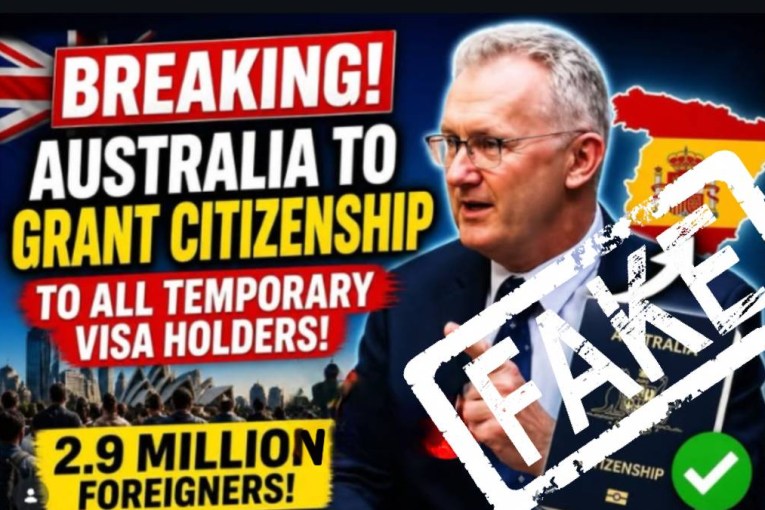
Citizenship fast-track 'pledge' is a social media lie

Pauline Hanson hugger misidentified as neo-Nazi
Fake Trump post stirs US-Australia tensions


Disinformation pages target tennis star de Minaur