Trump’s higher tariffs spark defiance and concern
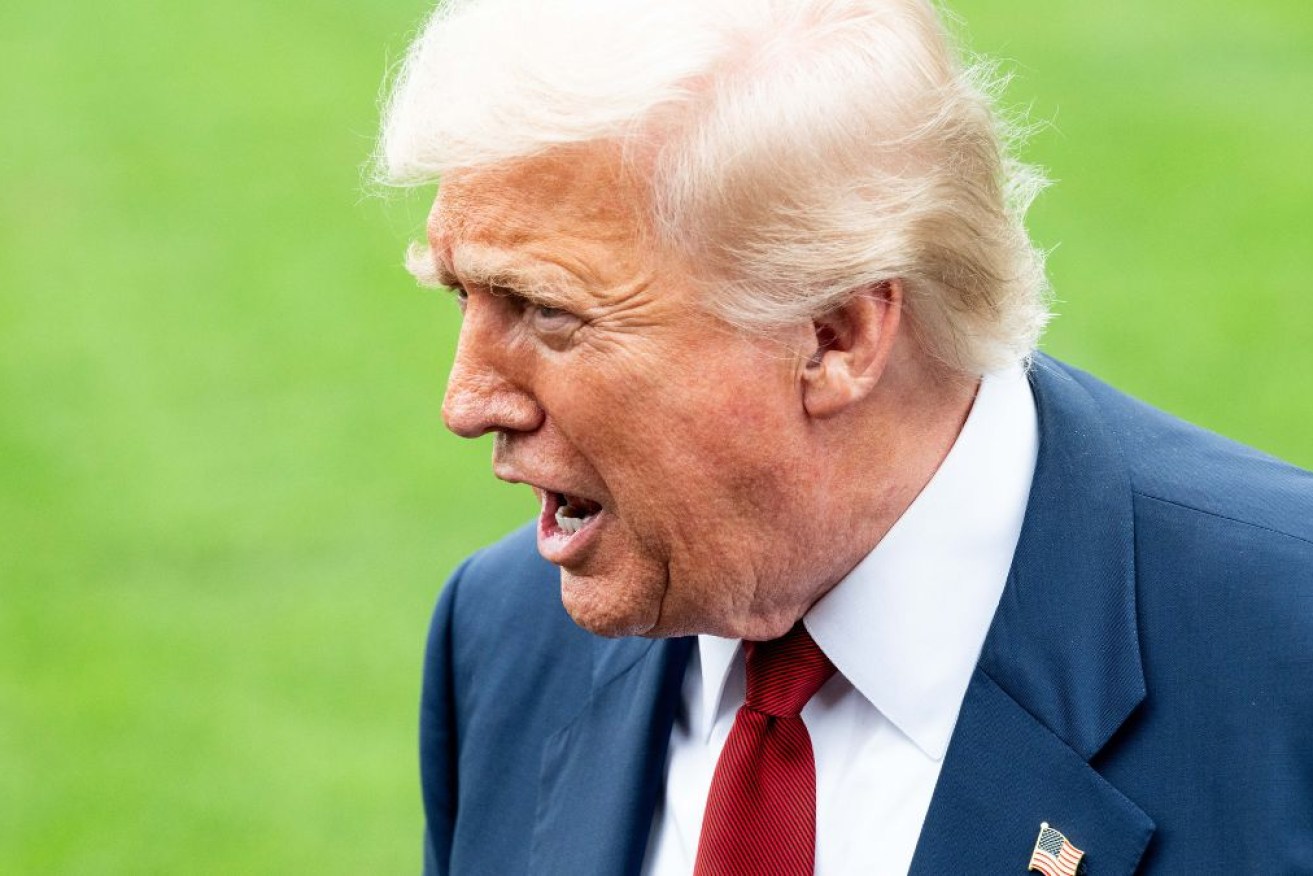
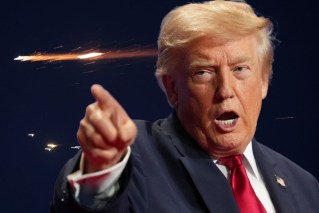
US President Donald Trump has taken a hardline bargaining position. Photo: AAP
US President Donald Trump’s higher tariffs on imports from dozens of countries have kicked in, raising the average US import duty to its highest in a century.
The US Customs and Border Protection agency began collecting the higher tariffs of 10 per cent to 50 per cent on Thursday after weeks of suspense over Trump’s final tariff rates and frantic negotiations with countries seeking to lower them.
The leaders of Brazil and India vowed not to be cowed by Trump’s hardline bargaining position, even while their negotiators sought a reprieve from the highest tariff levels.
The new rates will test Trump’s strategy for shrinking US trade deficits without causing massive disruptions to global supply chains or provoking higher inflation and stiff retaliation from trading partners.
After unveiling his “liberation day” tariffs in April, Trump has frequently modified his plans, slapping much higher rates on imports from some countries.
These include 50 per cent for goods from Brazil, 39 per cent from Switzerland, 35 per cent from Canada and 25 per cent from India.
He announced on Wednesday a further 25 per cent tariff on Indian goods, to be implemented in 21 days over India’s purchases of Russian oil, on top of the 25 per cent already imposed.
Tariffs are ultimately paid by companies importing the goods and passed on in full or in part to consumers of end products.
China’s exports up
China made the most of the truce by boosting its shipping before tariffs kicked in.
China’s exports beat forecasts in July, with outbound shipments rising 7.2 per cent year-on-year in July.
That beat a forecast 5.4 per cent increase in a Reuters poll of economists and accelerated from June’s 5.8 per cent growth.
Global traders and investors are waiting to see whether the world’s two largest economies can agree on a durable trade deal by August 12 or if global supply chains will again be upended by the return of import levies exceeding 100 per cent.
China’s truce with the US — the world’s top consumer market — ends next week. Trump has hinted further tariffs may come Beijing’s way because it buys Russian hydrocarbons.
Trump said on Tuesday the US was close to a trade deal with China and that he would meet his Chinese counterpart Xi Jinping before the end of the year if the world’s two largest economies could come to an agreement.
China’s July trade surplus narrowed to $US98.24 billion ($A151.02 billion) from $US114.77 billion in June.
Trump reshapes global trade
Trump’s top trade negotiator, Jamieson Greer, said the US was working to reverse decades of policies that had weakened its manufacturing capacity and workforce, and that many other countries shared concerns about macroeconomic imbalances.
“The rules of international trade cannot be a suicide pact,” he wrote in a column published by The New York Times.
“By imposing tariffs to rebalance the trade deficit and negotiating significant reforms that form the basis of a new international system, the United States has shown bold leadership,” Greer said.
Eight major trading partners accounting for about 40 per cent of US trade flows have reached framework deals for trade and investment concessions to Trump, including the European Union, Japan and South Korea, reducing their base tariff rates to 15 per cent.
Britain won a 10 per cent rate, while Vietnam, Indonesia, Pakistan and the Philippines secured rate reductions to 19 per cent or 20 per cent.
Countries with punishingly high duties, such as India and Canada, “will continue to scramble around trying to fix this”, Greer said.
Switzerland’s President Karin Keller-Sutter said on Thursday that talks with the US would continue after she returned home empty-handed from an 11th-hour trip to Washington aimed at averting the crippling US import tariff on Swiss goods.
A last-minute attempt by South Africa to improve its offer in exchange for a lower tariff rate also failed.
The two countries’ trade negotiating teams would have more talks, South African President Cyril Ramaphosa’s office said.
Meanwhile, Brazil’s President Luis Inacio Lula da Silva told Reuters on Wednesday he would not humiliate himself by seeking a phone call with Trump even as he said his government would continue cabinet-level talks to lower a 50 per cent tariff rate.
Indian Prime Minister Narendra Modi was similarly defiant, saying he would not compromise the interests of the country’s farmers.
The pressure has also strengthened India’s commitment to a “strategic partnership” with Russia, with Russian President Vladimir Putin to visit by the end of the year.
Some countries were also rallying together to confront Trump, with Brazil’s Lula saying he would call the leaders of India and China to discuss a joint BRICS response to tariffs.
Trump has repeatedly railed against BRICS members and recently threatened to subject their imports to an additional 10 per cent tariff.
Want to see more stories from The New Daily in your Google search results?
- Click here to set The New Daily as a preferred source.
- Tick the box next to "The New Daily". That's it.