Direct hit: Cyclone leaves luxury resort in ruins
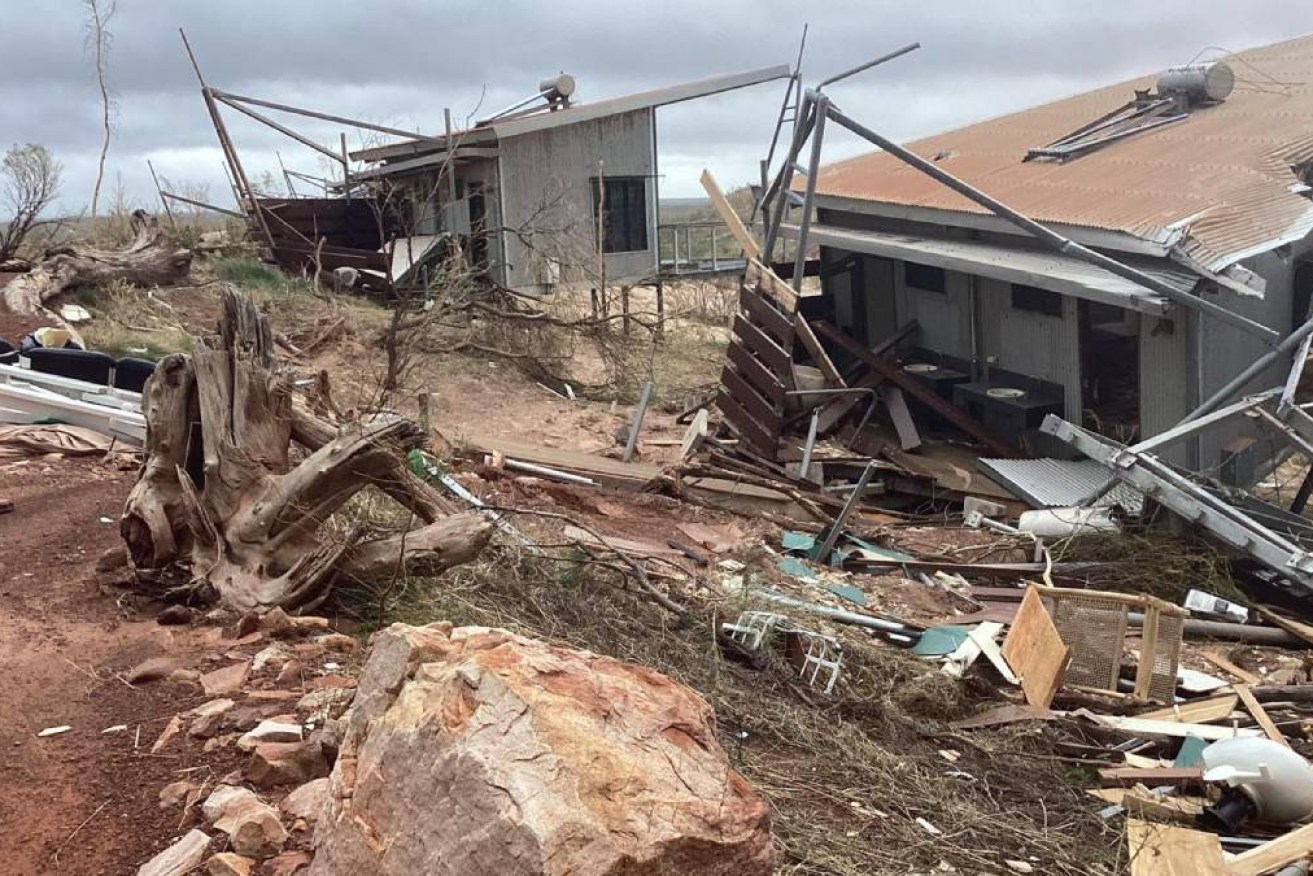
Cyclone Fina did major damage to the Berkeley River Lodge in the Kimberley region of Western Australia. Photo: AAP Photo: AAP
A luxury wilderness resort that took a direct hit from a tropical cyclone has been partially destroyed, while two caretakers sheltering in an underground bunker have escaped unharmed.
Tropical Cyclone Fina, which rampaged across the Northern Territory, all but flattened the Berkeley River Lodge as it crossed the Western Australian coast on Monday night as a category three system.
The exclusive resort, accessible only by sea or air, sustained extensive damage to its accommodation villas and infrastructure.
“The property has sustained significant damage,” owner Chris Banson said on Tuesday.

The resort’s accommodation villas and other structures were badly damaged in the cyclone. Photo: AAP
“Importantly, our two on-site caretakers are safe.”
Fina destroyed three of 18 villas and damaged others, along with the resort’s central lodge and staff accommodation.
“Water and power services are no longer operating [and the] surrounding vegetation has also been impacted,” Banson said.
No guests were at the resort, which is described as offering “barefoot luxury in one of the planet’s most untouched frontiers” on its website.
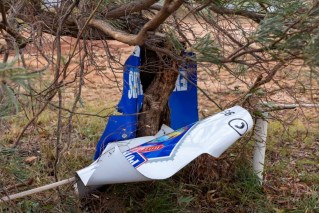
Photos of the damaged resort show a villa toppled on its side, debris strewn across the coastal landscape and trees stripped of their leaves.
The WA Department of Fire and Emergency Services will evacuate the pair, who were among only four people in the cyclone warning area when it crossed the coast, when it is safe to do so.

Debris was strewn across the area and trees stripped of their leaves as Fina tore through. Photo: AAP
Fina has since been downgraded from a category one system to a tropical low as it tracks south-west through WA’s north.
On Tuesday afternoon WA time, it was about 115 kilometres north-west of the town of Wyndham, the Bureau of Meteorology said.
A severe weather warning was issued in the region for heavy rainf, flash flooding and high tides and waves. Wind gusts up to 85km/h and six-hourly rainfall totals up to 200 millimetres were possible.
In the NT, where power was cut to about 17,000 homes and properties, PowerWater said 85 per cent of customers had been reconnected. Work continued to restore the remaining 3000 still blacked out.
The NT government said it would make $250 disaster recovery hardship payment available to those affected by the cyclone on Wednesday.
The Tiwi Islands, north of Darwin, were among the areas hardest hit, with power cut, trees felled and a school closed.
Tiwi College on Melville Island has been shut until further notice after suffering significant structural damage, with school staff reportedly evacuated after some buildings lost their roof.
Ceilings caved in and a tree damaged a school water tank but no one was injured in the storm.
Worst bushfire risk in years
Forecasts of soaring temperatures and damaging wind gusts have prompted authorities to raise bushfire alerts to their highest levels in more than two years.
More than 20 public schools across central NSW will close on Wednesday after the state’s Rural Fire Service issued a warning for catastrophic fire danger.
The lower central-west plains – including the regional hubs of Dubbo, Parkes and Forbes – faces the highest level of bushfire conditions, meaning people there should consider leaving fire risk areas and stay out of paddocks and bushland.
No region of NSW has had a catastrophic fire danger forecast since September 2023.
Extreme danger warnings and total fire bans have also been declared for millions of residents, including those in metropolitan Sydney, as wind gusts of more than 90km/h are expected on Wednesday in southern NSW and Victoria.
“[Winds are] combining with warm to hot temperatures and really dry air and that is elevating fire dangers across the region,” the Bureau of Meteorology’s Sarah Scully said.
Temperatures up to 37 degrees are forecast for Dubbo on Wednesday after maximums of 38 took their toll on Tuesday.
There are total fire bans for a further 10 regions of NSW, including greater Sydney, Illawarra and the Hunter.
An elevated fire danger is also forecast in the southern interior of Queensland.
The warnings of increased bushfire danger come as the country is still reeling from a deadly start to bushfire season.
Country Fire Service member and 30-year firefighter Peter Curtis died on Sunday while battling a scrub fire on the Eyre Peninsula in South Australia.
Another bushfire in north-east Tasmania has burned since Saturday. Authorities have advised people in the Curries River Reservoir area to monitor conditions.
Source: Network Ten
Insurers declare catastrophic storm event
Elsewhere, a catastrophe has been declared on the east coast after dangerous superstorms left thousands without power and inundating insurers with damage claims.
Severe thunderstorms hammered northern NSW and south-east Queensland on Monday, dropping giant baseball-sized hail in the worst-affected areas.
The Insurance Council of Australia received more than 16,000 claims across more than 140 postcodes on Tuesday. The damage bill is yet to be tallied.
Declaring the event a catastrophe enables insurers to streamline the response and direct urgent assistance to the worst-impacted property owners.
“While it’s too early to estimate the insurance damage bill, we expect to see claims numbers continue to rise over the coming days as power returns to homes,” Insurance Council’s Kylie Macfarlane said.
“This event comes off the back of recent widespread rainfall and storm activity across similarly impacted regions, and insurers are focused on processing claims from these events as quickly as possible.”
Emergency crews have worked through heatwave conditions to restore power ahead of another round of dangerous superstorms.
Giant hail and cyclonic winds swept Queensland’s south-east on Monday, leaving a wild trail of destruction that damaged homes, shut down public transport and closed schools.
More than 162,000 properties were left at one stage without power, with extra crews called in from across the region to help.
About 95,000 were still to be restored on Tuesday morning, amid warnings some areas may not have power restored for another 24 hours.
Thousands of properties remained without power on Tuesday afternoon.
“There were more than 600 powerlines down, and Energex counted more than 880,000 lightning strikes during the storms,” an Energex spokesman said.
At least two homes lost their roof in the wild weather, with more than 2200 urgent calls to emergency services at the storm’s peak.
“We did see hail of 11 to 12 centimetres in diameter at places like Manly [in Brisbane’s east],” the weather bureau’s Jonathan How said.
Thousands of commuters were affected as trees and power lines were brought down, bringing the rail network to a halt.
Disruptions continued on Tuesday, with major rail delays and 11 schools closed for storm repair, while repair work resumed in high humidity with more storms on the way.
Large parts of Queensland are sweltering in heatwave conditions, with temperatures set to soar across much of the state in the week ahead.
Want to see more stories from The New Daily in your Google search results?
- Click here to set The New Daily as a preferred source.
- Tick the box next to "The New Daily". That's it.
Crops flattened, towns smashed by brutal cyclone
TC Narelle to make yet another land crossing