Plan for sea lions as toll from toxic SA algal bloom surges

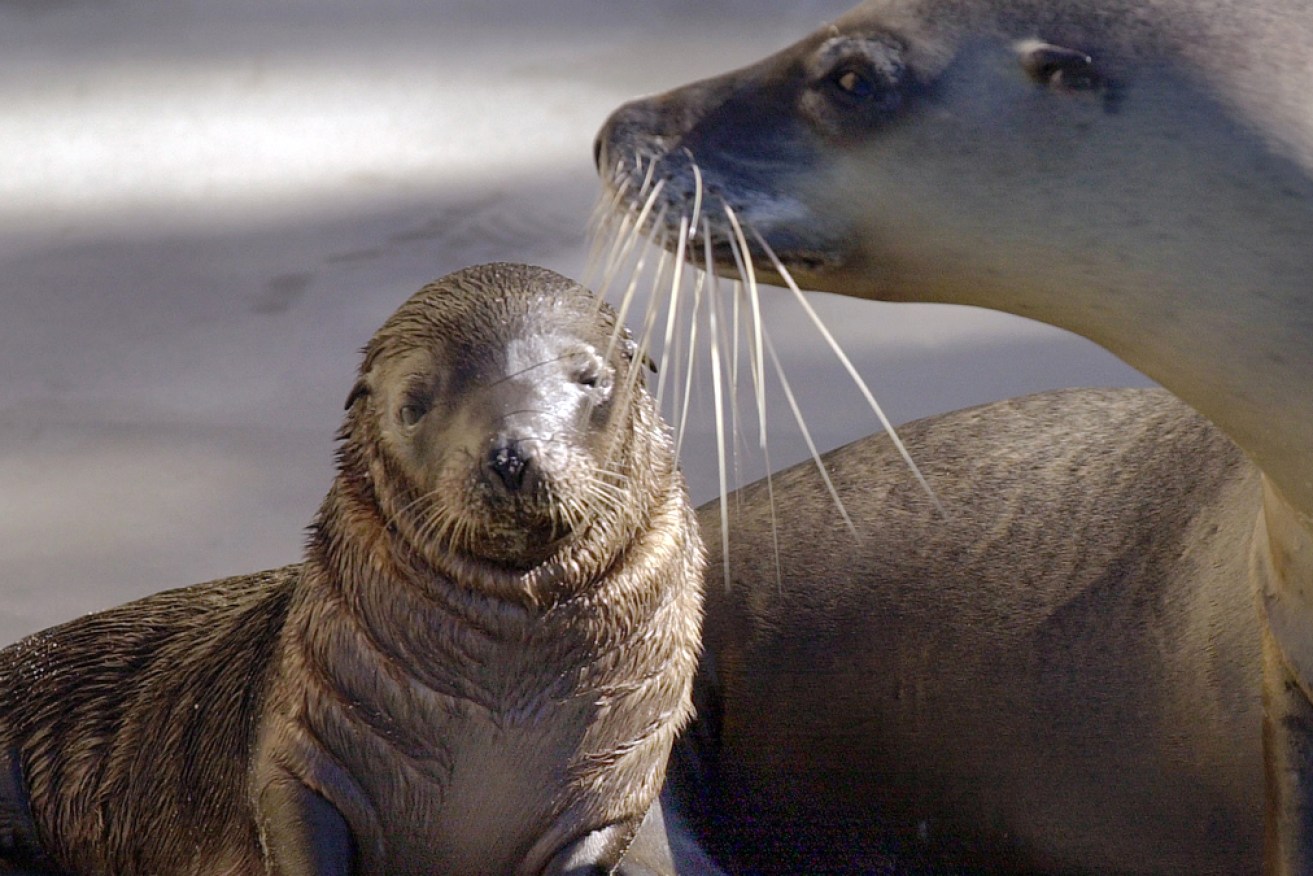
Australian sea lions are endangered, with up to 80 per cent of them living in SA waters. Photo: AAP
A $1.4 million plan will help protect sea lions at risk from South Australia’s algal bloom, as tonnes of dead sea life is collected from the state’s beaches.
Last week’s 1600-kilogram tally included long snout boar fish, whiting and leatherjacket fish, according to an algal bloom briefing to the Adelaide Coastal Councils Network last Friday.
A week earlier, two tonnes of dead sea life was collected by hand.
Now, the state and federal governments have announced a $1.4 million program to protect sea lions, saying 80 per cent of the endangered population lives in SA waters.
The comprehensive plan announced last Friday by federal Environment Minister Murray Watt and his SA counterpart Lucy Hood would involve inoculating sea lion pups against hookworms to improve their survival, controlling feral cats to reduce disease spread and installing shelters at high-risk sites, including the Spencer Gulf’s Seal Bay.
“The Australian sea lion is an iconic marine species, drawing visitors from around the world to our shores, and these measures are vital to help their recovery during this unprecedented algal bloom,” Hood said.
“We are determined to protect and regenerate Australian sea lion numbers and this program is supporting targeted conservation efforts.
“A more resilient sea lion population will play a critical role in the next breeding season after such an impactful event.”
The mass of dead sea life was collected by about 36 people each day – including members of the Goolwa Pipi Co, who are out of work due to the ongoing algal bloom. Machine retrieval and volunteer groups also work to collect dead creatures across the state.
Adelaide Coastal Councils Network chair Gretel Wilkes said the clean-up was a “big task”.
“There were leatherjackets strewn across our beach, and there would have been thousands of them, easily,” she said.
The reference group heard schools have arranged backup aquatic programs for this coming summer. Wilkes, who is also a schoolteacher, said it was a discussion point in classrooms.
“It’s quite concerning to see the kids and how worried they are about what’s going on and whether or not they’ll be able to swim, all the dead fish washing up on the beach, and trying to understand what summer is going to look like for them,” Wilkes, who is also an Onkaparinga councillor, said.
About 550 different species have been reported to have died from the bloom, according to the iNaturalist SA Marine Mortality Events page, a citizen scientist project created by marine biologist Janine Baker.
SA’s new algal bloom hotline opened at 9am last Friday. It took its first call at 9.01am with 15 calls in the first 20 minutes, most concerning swim safety, health and beach closure concerns.
A state government spokesperson said further beach clean-up work was being considered for SA’s regions ahead of summer.
“The state government has put significant effort into establishing regular beach clean-up crews covering metropolitan beaches, the Fleurieu Peninsula and South Coast,” the spokesperson said.
After joining state ministers to announce the phone hotline, Watt posed with Disaster Relief Australia volunteers at Largs Bay.
The group is veteran-led and has made almost 270 trips to 24 SA beaches in the past three weeks in a clean-up effort dubbed “Operation Harris”. It has 109 volunteers in their fourth week of clean-up, supported by $38 million in federal government funding.
“Unlike previous traditional disaster recovery operations, Operation Harris demonstrates Disaster Relief Australia’s adaptability, flexibility, and agility to assist in a range of disaster and all-hazards scenarios,” chief exectuvie Dave Smith said.
This article first appeared in InDaily. Read the original here
Want to see more stories from The New Daily in your Google search results?
- Click here to set The New Daily as a preferred source.
- Tick the box next to "The New Daily". That's it.

More millions as Whyalla Steelworks jobs slashed