Liberal senators falsely claim Australia has never taxed unrealised gains

Source: Sky News
Liberal Party senators Andrew Bragg and Jane Hume are falsely claiming there has never been a tax on unrealised gains or “paper profits” in Australian history.
However, experts confirm there are existing taxes encompassing unrealised gains, including current land taxes levied by the states, and historically by the Commonwealth.
Bragg made his claim on Sky News in May as part of an argument against Labor’s proposed changes to superannuation tax.
The Coalition opposes the Albanese government’s plans to raise tax on super earnings for accounts valued at more than $3 million, including unrealised gains.
Unrealised gains are paper profits, which reflect an increase in the valuation of an asset that hasn’t been liquidated (sold), including things such as property and shares.
“We’ve never had a tax in Australian history on money that isn’t actually in existence,” Bragg said.
“Many of these profits will be just paper profits that could be there one year and just disappear the next. It is a very unfair concept.”
His colleague Senator Jane Hume made a similar claim in May, reported by Sky News.
“We’ve never had a tax on unrealised capital gains before,” she said.
Miranda Stewart, a tax law expert at the University of Melbourne, said Australia had a long history of taxing the value of held assets without needing them to be sold.
That includes land taxes, which are levied at a state level in Queensland, NSW, Victoria, Tasmania and South Australia.
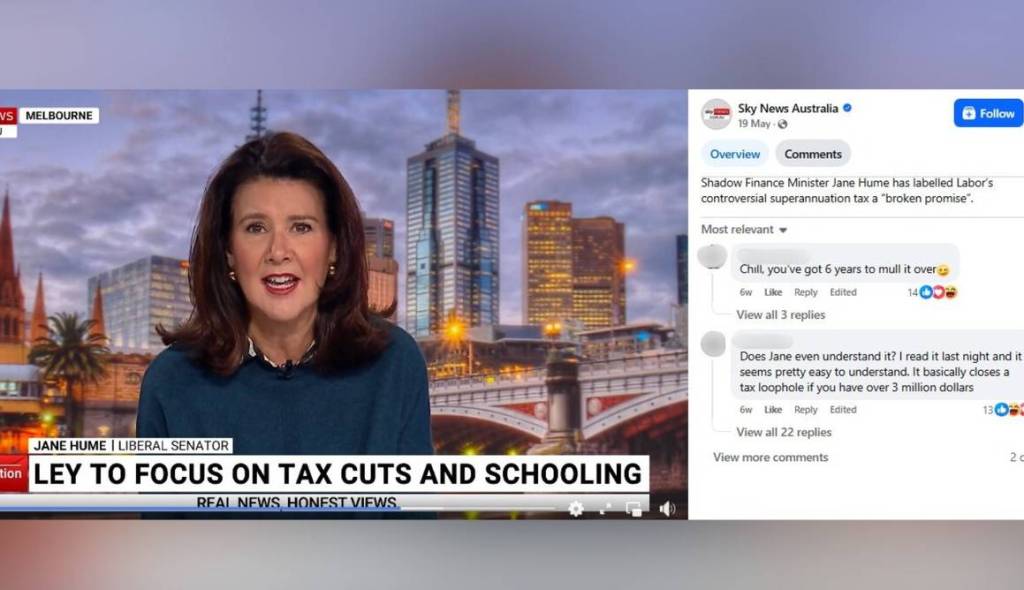
Hume made the claim in an interview after the federal election. Photo:Facebook/AAP
From 1910 to 1953, the federal government also levied a tax on the value of “unimproved” land, which generally refers to vacant land that’s left undeveloped, and could include a residential block with no habitable dwellings.
“These are actually some of our simplest taxes, and they do require valuation of assets each year,” Stewart said.
“Basing a tax on a value without the asset being ‘realised’ or sold is nothing new.”
Hume did not respond to a request for evidence supporting the claim.
Bragg said that as a federal politician, his claim about taxes in Australian history related to Commonwealth legislation, not state law.
He also argued the value of land had risen consistently throughout history, which “muddies the water” around whether land tax is on an unrealised gain.
“Knowing that the value of land [and property] is going to increase makes a land tax a much more sound proposition,” Bragg said.
“Land- and homeowners can make the necessary financial arrangements, be it saving, increasing income, or indeed borrowing against the increasing value of the asset, to finance the taxation.”
Statistical evidence does show land values have risen consistently throughout Australian history. But Stewart said this didn’t change what was being taxed.
“It is still a tax on unrealised [appreciated] value,” she said.
“Without selling the asset, owners do still need to find other cashflow to pay the tax.”
Michael Dirkis, a taxation law expert at the University of Sydney, said land taxes are levied on the value of land rather than explicitly targeting unrealised gains.
But unrealised gains were captured because the tax was based on asset values, he explained.
“That increase in value is subject to tax, but at a rating level, not at the income-earning level,” Dirkis said.
“There are unrealised gains through that evaluation process.”
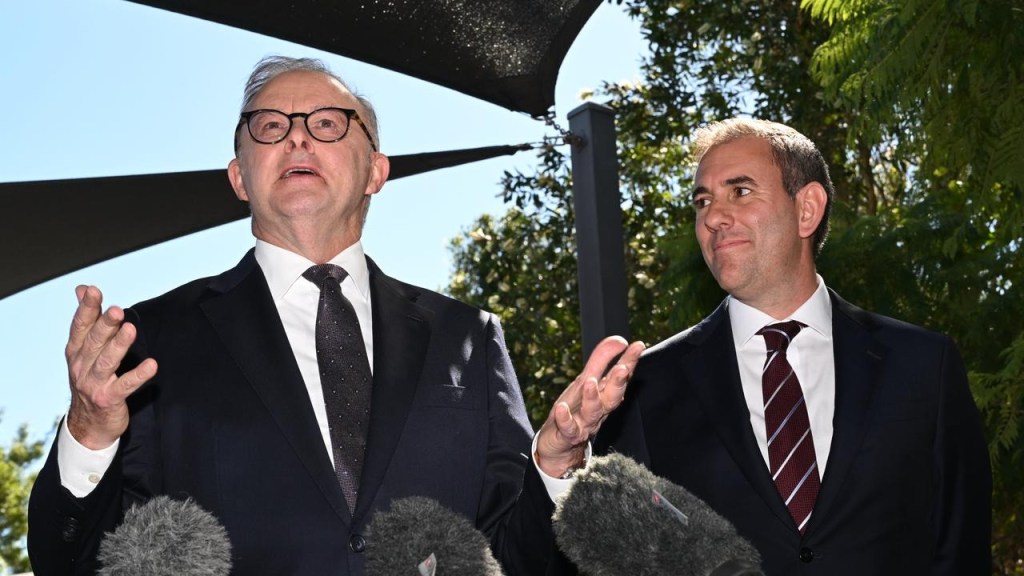
The Albanese government is proposing a new tax on super earnings. Photo: AAP
Dirkis also pointed to the federal government’s 1910-1953 land tax, which encompassed unrealised gains.
Chris Evans, a tax expert at the University of NSW, said the Commonwealth had also levied tax on unrealised gains outside of land taxes.
He said the capital gains tax regime encompassed unrealised gains in cases where an individual or company exited Australia’s tax regime.
When the person or company ceases to be an Australian resident, they’re deemed to have disposed of assets that incur CGT for their market value at the time.
“There is an ‘exit tax’ on that person based on the unrealised capital gain,” Evans said.
Individuals can avoid if if they treat their taxable assets as remaining “within the Australian tax net until they eventually do sell the assets”. Companies, however, had “no such choice”, Evans said, and suffered tax on unrealised gains.
“I’m afraid Andrew Bragg is not correct in his assertion,” Evans said.
A Treasury spokesperson confirmed there are numerous examples of taxes on unrealised gains in Australia, including the CGT rules Evans pointed to and land taxes at a state level.
Another example is the rules for taxing financial arrangements for large superannuation funds, which allow for taxes to be levied on an “accruals basis” rather than on a “realised basis”.
Stewart said the rules applied to super funds with assets of $100 million or more.
“These rules bring in gains/losses on financial arrangements on the basis of a ‘deemed rate of return’ on the asset, even if the amount is not yet paid,” she said.
Stewart said that while it was uncommon to have “market value or unrealised gain” approaches in tax law, it was nevertheless something Australia had experience with.
-AAP
Want to see more stories from The New Daily in your Google search results?
- Click here to set The New Daily as a preferred source.
- Tick the box next to "The New Daily". That's it.


‘Structurally sound’: Paul Keating backs budget

Are budget changes really an ‘assault on aspiration’?

Houses, town water supply sold in mining deal


Labor digs in as voters give budget thumbs-down