Colombia to cull its Pablo Escobar hippos problem

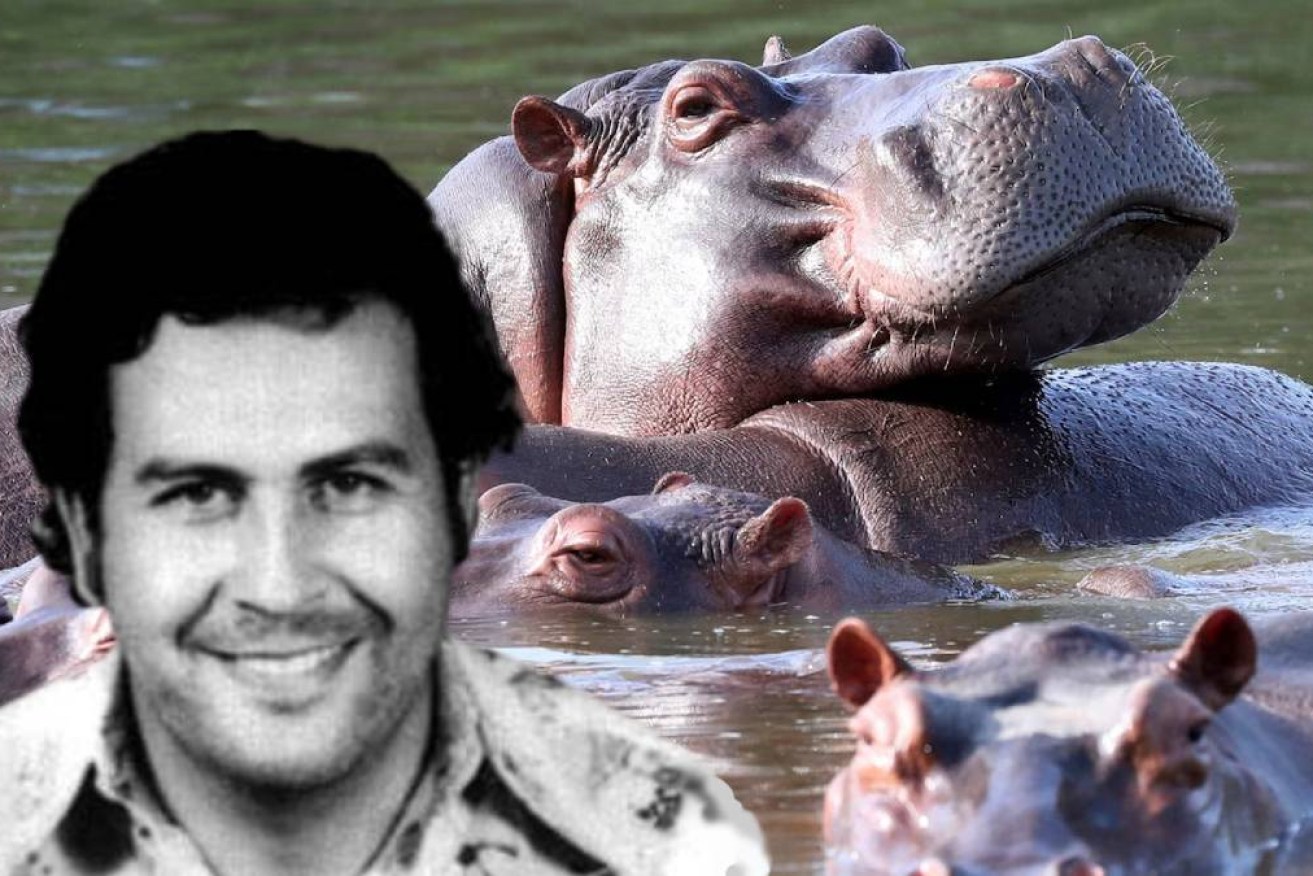
The hippos are descended from the drug lord's zoo animals. Photo: TND/AAP
Colombian officials have authorised the cull of dozens of hippos descended from a group of animals imported by the late drug lord Pablo Escobar.
An original group of four hippopotamuses once housed in Escobar’s private zoo in the 1980s has since bred to become a herd of almost 200 now-feral animals blamed for displacing native species and threatening local villagers.
Colombian Environment Minister Irene Vélez said the decision to cull the animals was reached because other methods to control their population – including neutering some or moving them to zoos –had been expensive and unsuccessful.
Vélez said up to 80 of the so-called “cocaine hippos” would be affected.
“If we don’t do this, we will not be able to control the population,” she said. “We have to take this action to preserve our ecosystems.”
Thanks to Escobar and his former zoo at the gigantic Hacienda Nápoles ranch in the Magdalena River valley, Colombia is the only country outside Africa with a wild hippo population.
In 2022, Colombia’s National University estimated that about 170 hippos were roaming freely in the country. That number is thought to be much larger now.
Environmental authorities in Colombia say the large African mammals pose a threat to villagers who have encountered them in farms and rivers.
They say they also compete for food and space against local species such as river manatees.
As the herd – or bloat – grows, some hippos have recently been spotted in areas more than 100 kilometres north of the Nápoles ranch.
The ranch, which was confiscated the Colombian government along with Escobar’s numerous other properties, is now a theme park with swimming pools, water slides and a zoo.

Some of the hippos are a tourist attraction. Photo: AAP
Villages surrounding Hacienda Nápoles also offer hippo-spotting tours and sell hippo-themed souvenirs.
Animal welfare activists have long opposed proposals to cull the hippos, arguing they deserve to live.
Andrea Padilla, a Colombian senator and animal rights activist, described the plan to kill the animals as “cruel”, and accused government officials of trying to take the easy way out.
“Killings and massacres will never be acceptable,” Padilla posted on X.
“These are healthy creatures who are victims of the negligence” of the government.
Colombia has previously attempted to address its hippo problem by de-sexing the animals, with limited success. Because they are descended from a limited gene pool and may carry diseases, returning them to Africa is also unfeasible.
Dubbed the “King of Cocaine”, Escobar was behind a drug cartel that monopolised the cocaine trade into the US in the 1980s and early 1990s.
He was one of the wealthiest criminals in history, amassing an estimated net worth of US$30 billion ($42 billion) by his death at the hands of police in 1993.
His Hacienda Nápoles was a sprawling personal property that featured a soccer field, dinosaur statues, artificial lakes, a bullfighting arena, an airstrip and a tennis court.
As well hippos, its zoo housed giraffes, elephants, camels and exotic birds.
While many of the animals were relocated to other zoos after Escobar’s death, the hippos were deemed too difficult to seize and were left on the untended estate.
Want to see more stories from The New Daily in your Google search results?
- Click here to set The New Daily as a preferred source.
- Tick the box next to "The New Daily". That's it.