PM to make Covid-style address on fuel crisis
Source: Mike Bowers
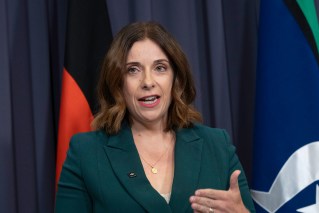
Prime Minister Anthony Albanese will make a pandemic-style address to the nation on the fuel supply crisis, as a cut to the fuel excise kicks in.
The televised address at 7pm on Wednesday will be broadcast on all TV and radio networks simultaneously, reminiscent of the regular Covid-19 speeches made during the pandemic.
It is expected to touch on the federal government’s response to the Middle East conflict and urge Australians to save fuel for regions and industries where the need is greatest.
A simultaneous address to the nation has not been delivered since the height of the Covid-19 pandemic. There were others during the global financial crisis in 2008.
The speech coincides with the federal government temporarily halving the fuel tax, shaving 26.3 cents a litre off wholesale prices in to try to head off the worst economic effects of war in the Middle East.
It also comes as President Donald Trump said the United States could end its military attacks on Iran within “two to three weeks” and that Tehran does not have to make a deal as a prerequisite for the conflict winding down.
The NSW government’s FuelCheck website showed average prices for E10 unleaded petrol had dropped more than 14 cents on Wednesday, the first day of the excise cut.
Diesel prices were down a more modest six cents as many service stations experienced shortages.
Regional service stations were unlikely to introduce lower prices for a couple of weeks as they needed to sell their older, higher-taxed stock before bringing in cheaper fuel, NRMA spokesman Peter Khoury said.
That process would likely take anything from a day or two for high-turnover metro stations to two or more weeks for some regional sites, he said.
“Once they buy new fuel, they will pass the discount on at that point.”
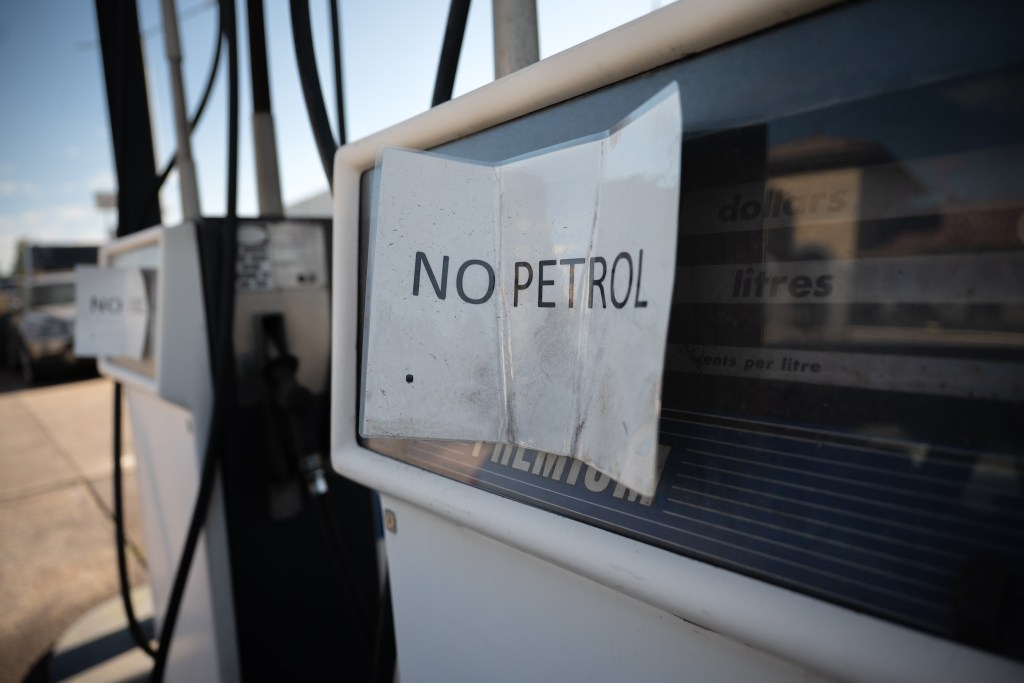
Hundreds of petrol stations across regional Australia have run out of fuel. Photo: AAP
Data from the Tourism and Transport Forum compiled in late March found 41 per cent of Australians had already cancelled or scaled back their Easter travel plans during the fuel crisis.
“Measures like the fuel excise cut are designed to ease pressure and we’ll see over the coming days how much that shifts behaviour,” forum chief executive Margy Osmond said.
“What we do know is that most Australians aren’t giving up on holidays. They’re adapting to make them work.”
The consumer watchdog would be checking to ensure service stations passed on the price cuts to consumers, Treasurer Jim Chalmers said.
But he reiterated the change would not kick in straight away.
The Northern Territory government has triggered a 77-year-old law to force fuel retailers to front up with their cost structures to prove they aren’t ripping off consumers.
It was the first time the Price Exploitation Prevention Act had been enacted since its inception in 1949, NT Treasurer Bill Yan said.
“Under the Act, we can request an open-ended amount of data from retailers, prohibit transactions and, if there is evidence of price exploitation, we can intervene,” he said.
Former Australian Competition and Consumer Commission boss Allan Fels said there was no law against price-gouging, but public shaming would be a powerful tool to force fuel companies to do the right thing.
“The ACCC has no direct powers either to set maximum prices or to fine companies for excessive pricing or price-gouging,” he said.
“But the ACCC can publicly criticise someone that’s not passing on the benefit.”
The watchdog would also need to keep a close eye on the “rocket and feather” effect on fuel prices, Fels said.
“When costs go up, prices go up like a rocket. When costs go down, prices fall slowly like a feather to the ground,” he said.
Meanwhile, Donald Trump latest remarks underscored the shifting and at times contradictory statements from Washington about how the war, now in its fifth week, might end.
“We’ll be leaving very soon,” Trump told reporters at the White House on Tuesday (local time), saying the exit could take place “within two weeks, maybe two weeks, maybe three”.
Asked if successful diplomacy with Iran was a prerequisite to the US winding down what it has dubbed Operation Epic Fury, Trump said it was not.
“Iran doesn’t have to make a deal, no,” he said. “No, they don’t have to make a deal with me.”
In a social media post, he said that in response to the global fuel shortage, these countries should buy energy from the US or find “some delayed courage, go to the strait and just TAKE IT”.
–AAP
Want to see more stories from The New Daily in your Google search results?
- Click here to set The New Daily as a preferred source.
- Tick the box next to "The New Daily". That's it.