Fuel excise halved, states rule out free fares
Source: Mike Bowers
Taxes on fuel will be slashed as part of an Australia-wide coordinated response, while some state governments reject calls to offer free public transport.
The federal government will halve the fuel excise and pause road-user charges for trucks for three months, Prime Minister Anthony Albanese said following a national cabinet meeting on Monday.
“The longer this war goes on, the worse the impacts will be,” he said.
“I and the government understand that people are really worried but we have a plan to get through this.”
The measures will reduce the cost of fuel by 26.3 cents a litre.
Albanese said the meeting of state and territory leaders had also agreed to a national fuel security plan “to coordinate a consistent response” across the country. It is a four-stage plan that dictates roles and responsibilities between governments and industry partners.
He said the country was at level two, “Keeping Australia moving”, having already moved through a “Plan and prepare” stage.
Source: Mike Bowers
Along with cutting the fuel excise, the government will also cut the road-user charge, which affects heavy vehicles.
Treasurer Jim Chalmers said the two measures would work in tandem to provide cost-of-living relief.
Together, the reduced tax and levy incomes will cost the budget $2.55 billion over the three-month period.
A scheduled increase to the heavy vehicle road user charge will also be delayed by six months, costing an additional $53 million in foregone revenue.
Trucking companies welcomed Monday’s announcement. National Road Transport Association chief executive Warren Clark said they were an important step in supporting the nation’s freight and logistics sector during a challenging period.
“These are very welcome measures and a clear sign the government is listening to the concerns of our industry,” he said.
“Ensuring reliable fuel supply is essential, because without trucks, Australia stops.”
Clark said the focus must turn to ensuring trucking businesses had the support they needed to manage ongoing cost pressures.
“These companies still have March’s fuel bill to pay. While these measures are an important step forward, many operators are still facing significant financial pressure on the ground,” he said.
“Fuel prices remain high, cash flow is tight, and businesses are working hard to stay on the road.”
But Peter Khoury, a spokesman the country’s biggest road user group, the NRMA, said the cut would make little difference as petrol prices had risen about 33 cents a litre in the past two weeks alone.
“It’s not a tax that’s putting up the price, it’s oil prices,” he said.
“The Australian economy runs on diesel. Most of our foods and services are delivered by heavy vehicles, and they run on diesel.”
Khoury said motorists barely noticed a similar tax cut after Russia’s full-scale invasion of Ukraine in 2022.
“I think they are desperate for change, but what we saw last time is [that] it just didn’t register at the bowser,” he said.
Source: AAP
Earlier, Energy Minister Chris Bowen introduced emergency legislation to parliament to boost fuel stocks, stating the crisis served as a reminder that Australia was not immune from the impacts of war.
“The risk premium for purchasing discretionary cargoes is rising,” he told parliament.
“Work to scope deals and secure additional fuel is already under way.”
“That’s why today’s bill is so urgent. This bill creates a strategic reserve to secure the supply of strategic materials that are vital for Australia’s economy.”
The laws are expected to pass the lower house with bipartisan support on Monday. They will be debated in the Senate on Tuesday.
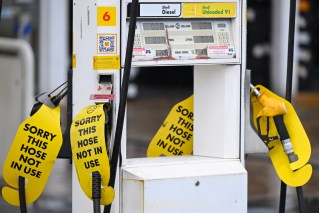
Australia’s fuel stocks remain at normal levels, but fears of future shortages and price spikes caused by the ongoing blockage of the Strait of Hormuz have spurred users to bulk-buy petrol and diesel, leading to localised shortfalls.
Also on Monday, the South Australian government has ruled out making public transport free amid the conflict in the Middle East Transport Minister Joe Szakacs said it was still cheaper to catch the bus than drive.
The NSW government has also refused to follow Victoria and Tasmania in removing public transport fares.
Victoria has offered relief throughout April while Tasmania’s fares will be free until the end of June.
Queensland is sticking with its 50 cent fares. In Western Australia, Premier Roger Cook said at the weekend that fares were already “historically low”.
-with AAP
Want to see more stories from The New Daily in your Google search results?
- Click here to set The New Daily as a preferred source.
- Tick the box next to "The New Daily". That's it.