Iran-linked group hacks FBI director’s emails

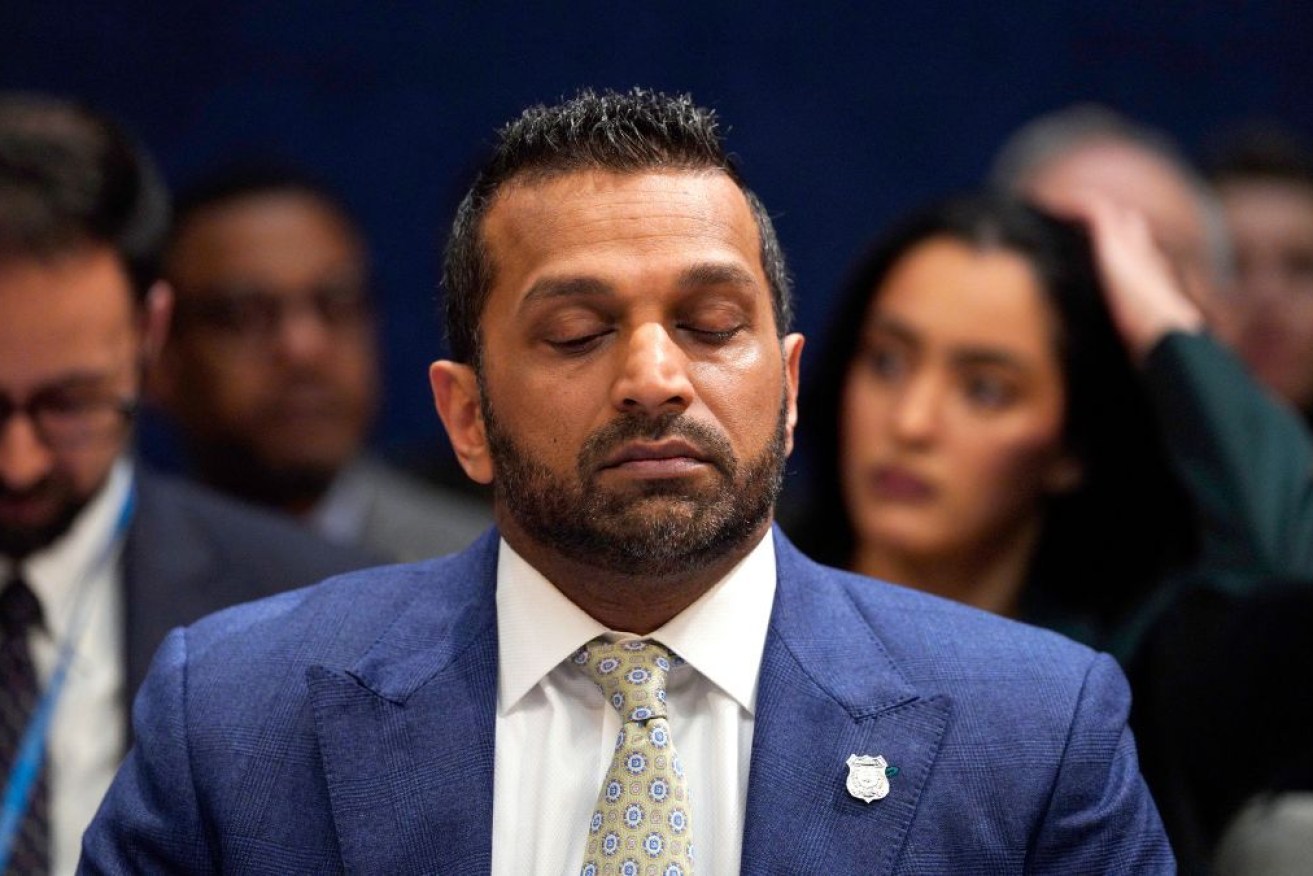
FBI director Kash Patel was the target of Iranian hackers. Photo: AAP
Iran-linked hackers claim to have breached FBI director Kash Patel’s personal email and warned: ‘This is just our beginning.”
The group, known as Handala Hack Team, got into Patel’s private photos and resume and shared the material online with their watermark.
The trove included personal pictures of Patel smoking cigars, riding in an antique convertible and making a face while taking a picture of himself in the mirror with a large bottle of rum.
“If your director can be compromised this easily, what do you expect from your lower-level employees?,” the hackers posted with the pictures.
The Handala group said it had brought the FBI’s “so-called ‘impenetrable'” systems “to their knees within hours”.
“This is the security that the US government boasts about?! This is the cyber giant that thinks threats and bribes can silence the voice of resistance?!”
On their website, the hacker group said Patel “will now find his name among the list of successfully hacked victims”.
Many of the records appeared to relate to his personal travels and business from more than 10 years ago.
A US Justice Department official confirmed that Patel’s email had been breached and said the material published online appeared authentic.
Handala, which presents itself as a group of pro-Palestinian vigilante hackers, is considered by some researchers to be one of several personas used by Iranian government cyberintelligence units.
Handala recently claimed the hack of Michigan-based medical devices and services provider Stryker on March 11, saying they had deleted a massive trove of company data.
Alongside the photographs of Patel, the hackers published a sample of more than 300 emails, which appear to show a mix of personal and work correspondence dating between 2010 and 2019.
Reuters was not able to independently authenticate the Patel messages but the personal Gmail address that Handala claims to have broken into matches the address linked to Patel in previous data breaches preserved by the dark web intelligence firm District 4 Labs.
Alphabet-owned Google, which runs Gmail, did not immediately respond to a request for comment.
Iran-linked hackers — who initially kept a low profile after the United States and Israel launched co-ordinated strikes against the Islamic Republic last month — have increasingly boasted of their cyber operations as the conflict drags on.
In addition to the hack against Stryker, Handala on Thursday claimed to have published the personal data of dozens of defence company Lockheed Martin employees stationed in the Middle East.
In a statement, Lockheed Martin said it was aware of the reports and had policies and procedures in place “to mitigate cyber threats to our business”.
Gil Messing, chief of staff at Israeli cybersecurity company Check Point, said the hack-and-leak operation against Patel was part of Iran’s strategy to embarrass US officials and “make them feel vulnerable”.
In 2015, teenage hackers broke into then-CIA director John Brennan’s personal AOL account and leaked data about US intelligence officials.
Iran war to last ‘weeks not months’
Meanwhile, US President Donald Trump claimed talks on ending the war were going well and gave Iran more time to open the Strait of Hormuz.
Iranian authorities have given no public sign of backing down.
When asked how long the US operation would continue, Secretary of State Rubio told reporters at the G7 summit in Paris: “We are talking weeks, not months”.
Iran said its nuclear facilities had been attacked hours after Israel threatened to “escalate and expand” its military campaign against Iran.
A heavy-water plant and a yellowcake production plant were struck, Iranian state TV reported.
Yellowcake is a concentrated form of uranium after impurities are removed from the raw ore.
Heavy water is used as a moderator in nuclear reactors.
Iran’s Atomic Energy Organisation said the Shahid Khondab Heavy Water Complex in Arak and the Ardakan yellowcake production plant in Yazd Province were targeted, the agency said.
The strikes did not cause any casualties and there was no risk of contamination, it said.
Israel also attacked the Arak plant last June.
Word of the attacks came after
Iran’s response to a US peace proposal aimed at ending the war was expected later on Friday, according to a source briefed on the matter.
Trump and top White House officials have been told via interlocutors that Iran’s counter-proposal would likely arrive on Friday, the source said.
The war, which began when the US and Israel attacked Iran on February 28, has spread across the Middle East.
Iran had been reviewing a 15 point proposal, sent via Pakistan, that included demands ranging from dismantling Iran’s nuclear program to curbing its missile development and effectively handing over control of the Strait of Hormuz, according to sources and reports.
An Iranian official told Reuters on Thursday that senior officials had reviewed the proposal and felt it served only US and Israeli interests.
But the official said diplomacy had not ended.
Air raid sirens sounded in Israel and the military said it has been intercepting Iranian missiles on a daily basis.
Defence Minister Israel Katz said Iran “will pay heavy, increasing prices for this war crime”.
“Despite the warnings, the firing continues,” Katz said.
“And therefore attacks in Iran will escalate and expand to additional targets and areas that assist the regime in building and operating weapons against Israeli citizens.”
Israel’s military said its attacks on Friday targeted sites “in the heart of Tehran” where ballistic missiles and other weapons are produced.
It said it also hit missile launchers and storage sites in western Iran.
The United Nations Security Council will engage in a closed consultation on Iran on Friday, according to two UN diplomats who spoke on condition of anonymity because the meeting is not public.
They said Russia requested the meeting and that the US – which holds the Security Council presidency – scheduled it.
Jan Egeland, secretary general of the Norwegian Refugee Council, said its teams in Iran have reported “countless homes, hospitals and schools have been damaged or destroyed” and that nearly every neighbourhood in Tehran has sustained damage.
“Civilians are paying the highest price for this war – it must end,” Egeland said in a statement.
The UN’s International Organisation for Migration said on Friday that 82,000 civilian buildings in Iran, including hospitals and the homes of 180,000 people, are damaged.
“If this war continues, we risk a far wider humanitarian disaster,” Egeland said.
“Millions could be forced to flee across borders, placing immense pressure on an already overstretched region.”
-with AAP/AP
Want to see more stories from The New Daily in your Google search results?
- Click here to set The New Daily as a preferred source.
- Tick the box next to "The New Daily". That's it.
Gagging and blacklisting: What's going on in the NT


How Pauline Hanson might have finally gone too far