Harry and Meghan respond to Australia’s social media ban

Source: CBS Sunday Morning
Prince Harry and Meghan Markle have praised Australia’s “bold” step to ban kids from social media, but lamented: “It shouldn’t have come to this.”
The couple issued a statement via their Archewell Foundation on Thursday (Australian time), warning that social media is killing young people in the quest of companies to make money.
They said the world would be watching to see if these companies finally took responsibility.
In Australia, platforms such as Instagram, TikTok and Snapchat are now required by law to kick off kids. They face fines of up to $49.5 million if they fail to take reasonable steps to do so.
Big tech companies have said they will use a range of methods to verify a user’s age, including face scans with artificial intelligence, sophisticated analysis of people’s posting patterns, and digital IDs.
The Duke and Duchess of Sussex said keeping kids off social media was an “urgent intervention” to deal with unsafe and addictive platforms like TikTok, Twitter (X), Instagram, Facebook, and Snapchat.
“We celebrate Australia’s leadership for seeing and acting on how these technology companies are negatively impacting young people with little to no recourse or accountability, and feeble efforts from the companies to stem the flow of harms,” said their statement.
“This bold, decisive action to protect children at a critical moment in their development sends a strong signal that a child’s mind is not a commodity to be exploited.
“It buys young people valuable time back in their childhoods, but it doesn’t fix the fundamental issue we all still face with social media platforms.”
The duke and duchess – the parents of two young children – said children had become “collateral” in the companies quest to make more money.
“We’ve heard from too many grieving parents. Too many families devastated by cyberbullying, feeds that radicalise kids toward self-harm, and algorithmic manipulation designed to maximise engagement at any cost,” they said.
“There is too much loss of life and livelihood.”
“We hope this ban is only the start of a reckoning between society and the tech companies that built these platforms with growth as their first principle instead of safety.
“We look forward to the next step to hold tech accountable for its design choices and hope leaders of new technologies learn the lessons of failing to prioritise the well-being of young people.”
Cultural shift could take generation
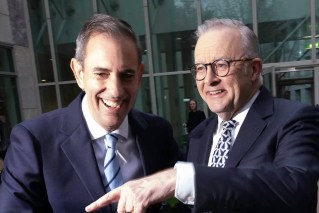
Prime Minister Anthony Albanese hopes the teen social media ban will spark a cultural change for Australians but one expert believes it could take a generation for this to occur.
Albanese said Australia could “take back control” from social media companies and the reform would make an enormous difference to young people’s lives.
Rachael Sharman, senior lecturer in psychology at the University of the Sunshine Coast, is “hugely in favour” of the ban, but said its success would be difficult to measure.
“We know that taking teens off screens and putting them in a camp shows improvements in their social ability and emotional recognition skills within a matter of a week,” Sharman said.
“But let’s be honest, parents aren’t going to race their kids off to a nature camp. It’s going to be a process.”
Sharman said she expected under-16s would become less hooked on social media within three years, but it could take a generation for a real cultural shift.
“Kids who are nature babies will start to outnumber the kids hanging on for dear life to their apps, but it won’t happen overnight,” she said.
“I’m old enough to remember the smoking bans and that probably took 10 to 20 years to change attitudes. It was a lot longer than what people had hoped.
“I would suggest this will take a generation or two.”
RMIT University information sciences professor Lisa Given has heard from teens who circumvented age assurance checks, including a 13-year-old who was detected as being 34.
“If success looks like getting us talking about these issues and identifying a problem, I think that’s been successful,” Given said.
“I think if parents are looking for this as a silver bullet to help them deal with the harm their kids are facing, this isn’t really the solution they were hoping it would be.”
One teenager said he had been kicked off platforms owned by Meta, but still had access to Snapchat.
But 13-year-old Ballarat girl Pippa Martin’s attempts at putting on extra make-up to look older failed to circumvent Snapchat’s facial verification.
“I got some make-up and put it around my wrinkle lines trying to make myself look really old,” she said.
Despite teens finding workarounds, Albanese has already hailed the ban a success as parents and children are discussing the impacts of social media.
-with AAP
Want to see more stories from The New Daily in your Google search results?
- Click here to set The New Daily as a preferred source.
- Tick the box next to "The New Daily". That's it.
Tony Abbott to be named new Liberal Party president