‘Lost passion’: For these women, Mother’s Day has a different meaning
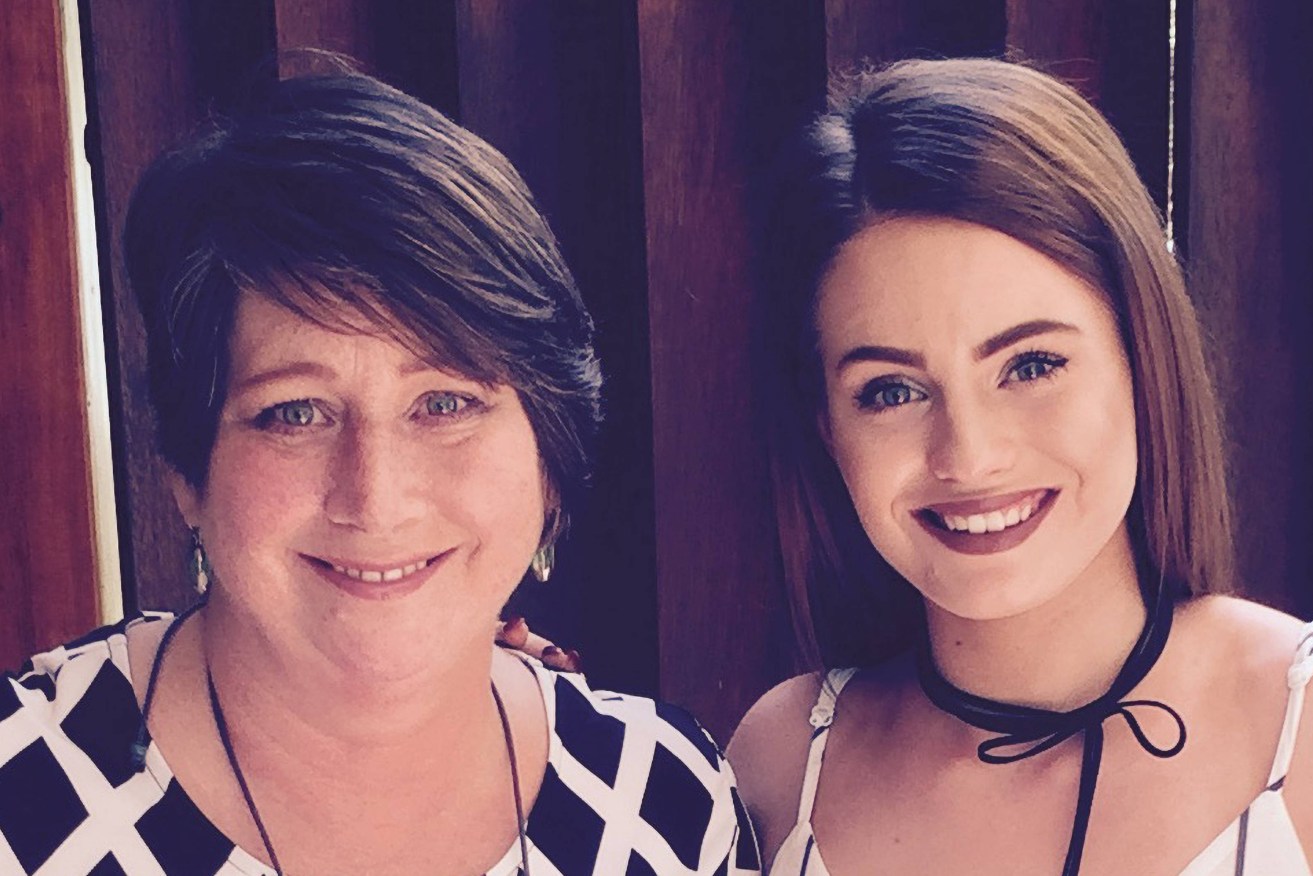
Hilary Boyce was still in high school when her mother Mary-Ellen died. Photo: AAP
The grief that follows the death of a loved one, let alone a mother, has never left Hilary Boyce.
Now 28, she is preparing to embark on her first solo overseas trip, one her mother never had the chance to take before dying from cancer.
The past 10 years, Boyce admits, have been tough. She said she could barely remember how she managed to hold it together for her brother and father.
“I feel like since mum passed, time doesn’t really have meaning,” she said.
“There are some days where I just did it because I wasn’t allowed to break, to crumble, and I knew I had to get through it.”
Her mother, Mary-Ellen, was diagnosed with colon cancer while Boyce was still in high school. The bad news seemed, at the time, never-ending.
“It was years of hospital visits, of getting told she was getting better, then a month later being told, ‘sorry, we found something more’,” she said.
Beyond the deep emotional toll, the impact was also financial.
Boyce quickly took on responsibility for her family, ensuring the bills were paid while continuing her studies and building her career.
“No one teaches a 19-year-old girl how to do those kind of things,” she said.
“[There was] this almost unspoken expectation that I found, being her daughter, that I should know how to handle everything.
“But a lot of people forgot that I’d just lost my mum.”
Nearly three in four grieving daughters report major career disruption following their mother’s death.
Some 91 per cent reduce their working hours up to 50 per cent, and almost half say this alone has cost them more than $10,000 in lost income.
Research by advocacy group Motherless Daughters Australia reveals, that with everything taken into account, daughters who lose mums, on average, face a $412,000 lifetime impact.
The hit during the first year alone, amounts to $24,000.
Danielle Snelling had only just completed her education degree when her mother, Rosa, died from a rare form of gynaecological cancer in 2012.
Snelling quickly went part-time at work, saying her experience mirrored that of many other women who had lost their mothers.
“My whole teaching career is paired with my mum having cancer,” she said.
“It’s been difficult because it’s something that, unfortunately, I just lost passion for because it’s paired with that time in my life.”
She and Boyce are among 3.9 million Australian women who have lost their mother.
That includes 1.2 million who experienced the loss before the age of 44.
That’s why Snelling founded the advocacy group Motherless Daughters Australia, calling for greater recognition of the financial setbacks involved.
She said workplace support often extended to only a few days of bereavement leave, leaving many daughters to navigate both the emotional and financial burden of grief in silence and without respite.
“Too often, grief is expected to be short-lived or kept out of sight but the reality is very different,” she said.
“Giving grieving daughters permission to say, ‘I’m still grieving and that’s OK’, is an important step.
“Grief is not something to be ashamed of and doesn’t disappear after the funeral so neither should support.”
The right support can make a significant difference: Research suggests some social services can improve emotional wellbeing by 90 per cent.
Motherless Daughters has more than 50,000 members, many of them who gather each May to mark mother-loss awareness week.
Michelle Cox, who is the organisation’s chair, lost her mum Jan in her early 20s.
“We are terrible with grief in this country and not good at supporting those who are grieving,” she said.
“Grief is different for everybody and every person navigates it a different way, and you don’t have to be apologetic for the way you grieve.”

Michelle Cox says Australians are terrible with grief. Photo: AAP
Boyce recently discovered Motherless Daughters Australia through social media and said connecting with its members was the first time she didn’t feel alone.
“There’s so many other women that are feeling this exact same way. I’m not alone in this grief,” she said.
“Grief is just the reminder that we’ve loved somebody and that’s it.
“I am grieving because I loved her and I feel empty because of how much she loved me.”
Less than well known is that Mother’s Day was, in fact, inspired by a daughter’s grief.
It began in 1908, when American Anna Jarvis held a memorial to honour her late mum, Ann Reeves Jarvis.
In the years that followed, she embarked upon a campaign to make Mother’s Day a recognised holiday.
She came upon the idea after remembering that her mother, a social activist, had advocated that someone should found a day commemorating mothers for their “matchless service … to humanity in every field of life”.
Lifeline 131 114
beyondblue 1300 224 636
-AAP
Want to see more stories from The New Daily in your Google search results?
- Click here to set The New Daily as a preferred source.
- Tick the box next to "The New Daily". That's it.