‘Like a horror story’: Farmers warn of looming mouse plague
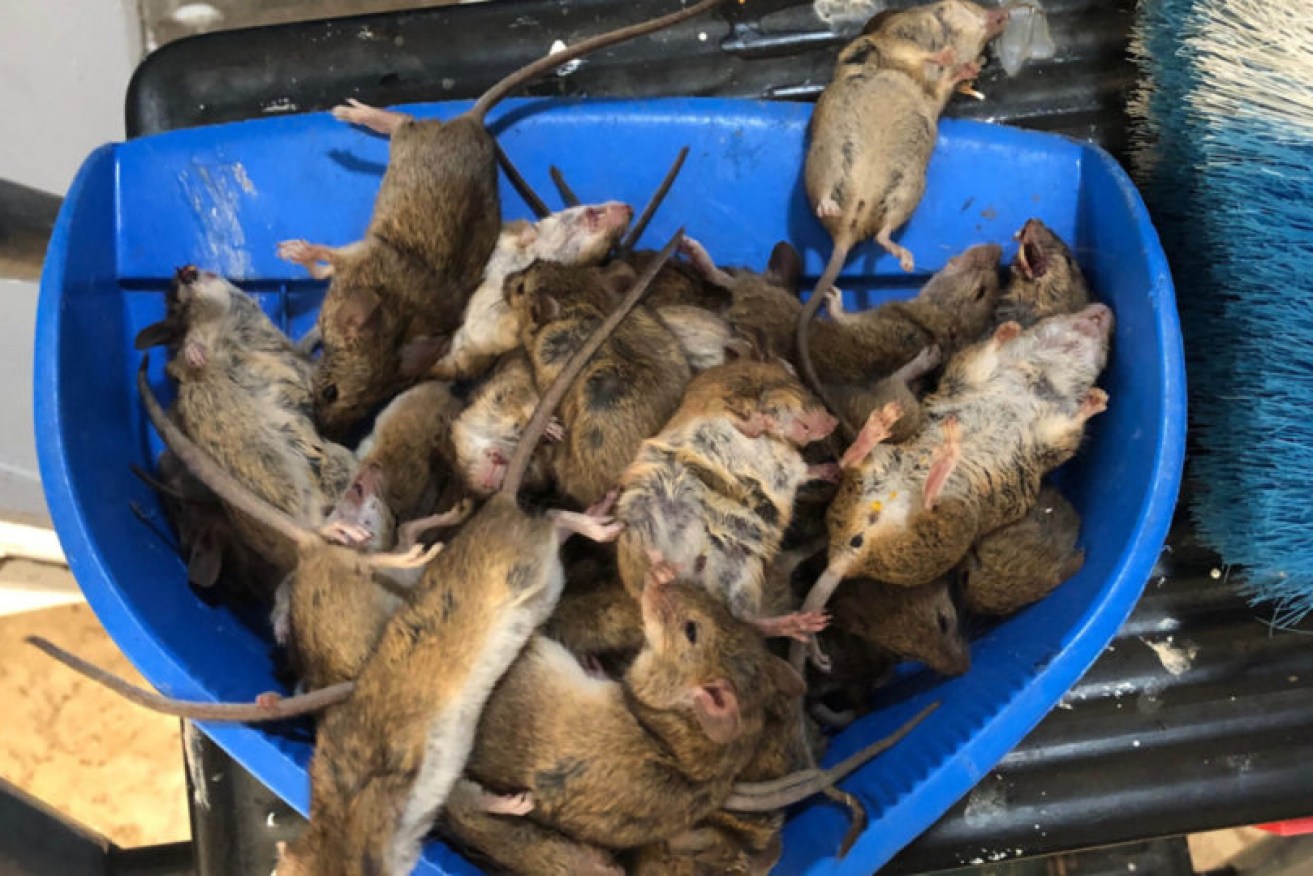
The last mouse plague, five years ago, caused $1 billion of dollars of damage. Photo: AAP
Mouse populations are reaching plague proportions across Australia’s key cropping zones, with scientists warning farmers to remain on high alert.
CSIRO research points to concerning mouse numbers in paddocks stretching from Geraldton to Esperance in Western Australia.
Monitoring zones have also found increased numbers across South Australia’s Adelaide Plains, Yorke Peninsula and Eyre Peninsula, along with parts of southern Queensland.
Wimmera farmer and Grain Producers Australia research and development spokesperson Andrew Weidemann has urged farmers to be prepared to bait for mice at sowing time in autumn.
He said rising pest numbers were the latest challenge for farmers, who have reduced paddock movements to conserve fuel amid ongoing shortages and spiralling prices.
“This warning comes as grain producers are already dealing with increasing uncertainty about fuel and fertiliser access due to escalating global conflict affecting trade routes,” Weidemann said.
Authorities warn that mouse populations can increase rapidly, with small numbers turning into large infestations within weeks.
“Growers around Geraldton and Ravensthorpe have been sharing photos and short videos showing mice moving through paddocks and stubbles ahead of the coming season,” Weidemann said.
“These are firsthand observations from growers on the ground and, while it is too early to draw conclusions about how widespread the issue may become, the level of activity being reported has clearly raised concern.”
CSIRO rapid assessment monitoring also suggests there is high risk for Western Australia’s Kwinana West region.
CSIRO research officer Steve Henry said the figures were alarming.
“I’m really concerned,” he told the ABC last week.
“When you’re getting over two to three hundred mice per hectare, then you’ve really got cause for concern.
“They’re counting between three and four thousand burrows [six to eight thousand mice] per hectare in some locations.”
Henry said he visited WA in 2022 when numbers were high, but this year the problem was worse.
The problem is obvious in the small grain-growing community of Morawa, 360 kilometres north-east of Perth. Long-term resident and pest controller, Peter Cekanauskas, came home from a week away to find mice had taken root in his pantry.
“It was like a horror story,” he told the ABC.
“A dozen mice were visibly running over everything, among torn bags of self-raising flour and sugar.”
Cekanauskas said he put 7.5 kilograms of bait around his property – an amount he estimated would be deadly to about 75 kilograms of mice. It was consumed in less than three days.
Cekanauskas said a local had told him mice had eaten their way through a plastic container of rolled oats, and through UHT milk containers.
Mouse numbers are reportedly lower across Victoria and southern and central-west parts of NSW, at least so far.
Farmers have been urged to harvest as cleanly as possible to limit the rodents’ food supply, then watch out for increased mice numbers in crop stubble.
Henry said the agriculture industry was better prepared for another disaster after the 2021 mouse plague, which caused an estimated $1 billion worth of damage across several states.
“We don’t want this to spiral completely out of control and we end up seeing something like we saw in NSW in 2021,” he said.
Subsequent lab tests and field trials had helped scientists better understand how the toxin zinc phosphide worked to eradicate mice.
A single rodent had to eat two or three poison-coated grains to receive a lethal dose.
Research after the 2021 disaster calculated the cost of damage to rural NSW alone was $660 million, a figure that informs action to prepare for another plague.
-AAP
Want to see more stories from The New Daily in your Google search results?
- Click here to set The New Daily as a preferred source.
- Tick the box next to "The New Daily". That's it.