‘High sensitivity’: Trained dogs sniff out Parkinson’s disease

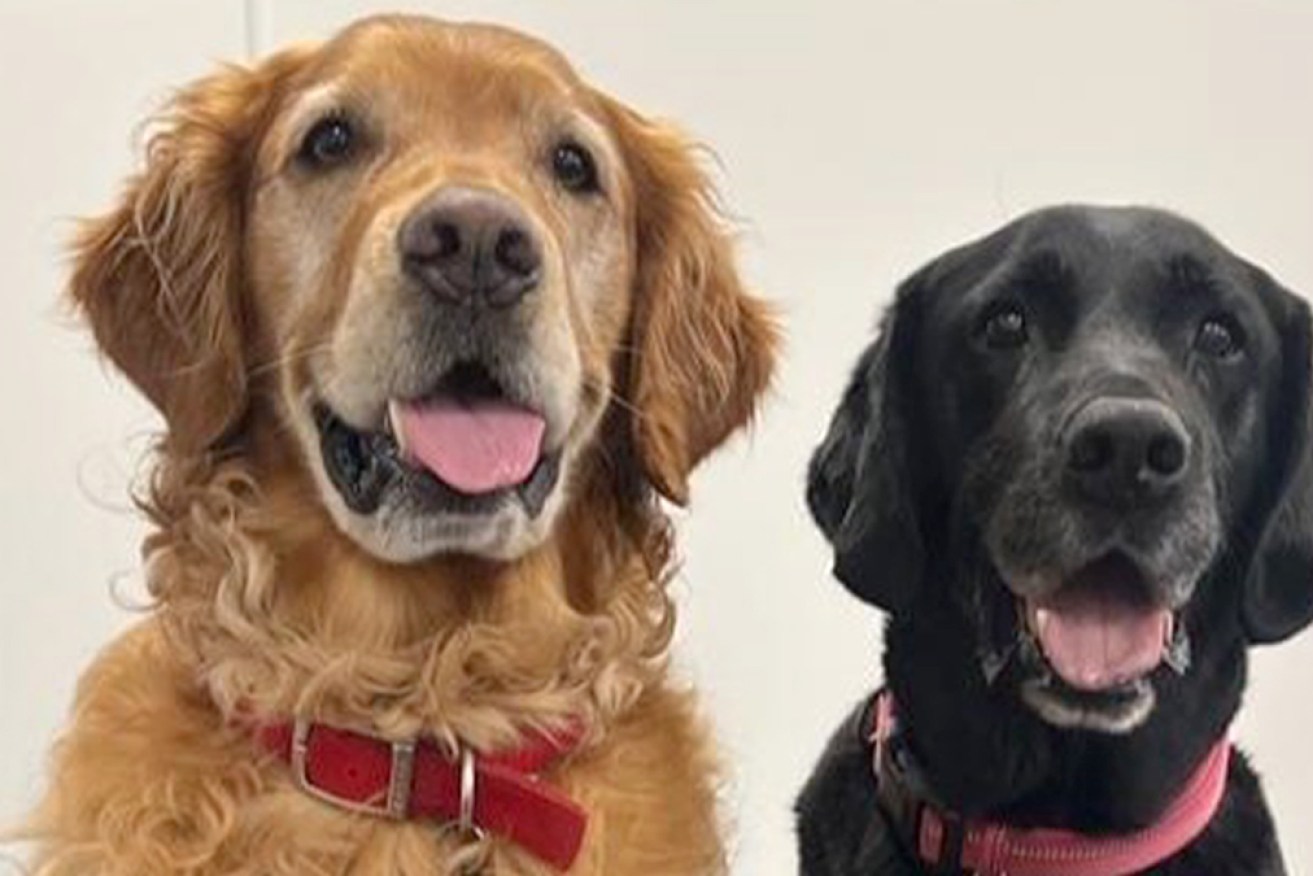
Bumper (left) and Peanut have excited researchers with their ability to detect Parkinson's symptoms. Photo: Medical Detection Dogs
A golden retriever named Bumper and a black Labrador called Peanut have been trained to pick up the scent of Parkinson’s disease – a progressive neurological condition affecting more than 8.5 million people worldwide.
The dogs were taught to distinguish between sebum swabs from people with and without Parkinson’s.
Their efforts, published in a study in the Journal of Parkinson’s Disease, bring scientists a step closer to developing a faster and more accessible method for early Parkinson’s detection.
“There is currently no early test for Parkinson’s disease and symptoms may start up to 20 years before they become visible and persistent leading to a confirmed diagnosis,” said Claire Guest, the chief executive and and chief scientific officer of British charity Medical Detection Dogs, which trained Bumper and Peanut.
“Timely diagnosis is key as subsequent treatment could slow down the progression of the disease and reduce the intensity of symptoms.”
Lead author Nicola Rooney, an associate professor of wildlife health and conservation at the University of Bristol, said: “Identifying diagnostic biomarkers of Parkinson’s, particularly those that may predict development or help diagnose disease earlier, is the subject of much ongoing research.”
Dogs have powerful olfactory senses and have been trained to detect the odours of many diseases, from prostate cancer to malaria and Covid-19. They pick up on changes in volatile organic compounds released by urine, faeces, skin swabs and breath samples in response to changes happening in the body.
An early, non-motor symptom of Parkinson’s is “seborrheic dermatitis” in which excessive sebum (a waxy, oily fluid) is excreted from the sebaceous glands.
“This is associated with lipid dysregulation and could potentially be used as an indicator for the disease,” the study’s authors wrote.
The findings support earlier research that found that dogs can be trained to detect the smell of Parkinson’s disease in sebum swabs. However, according to the authors, these previous efforts “provided limited information on the dogs’ training and testing”.
“Since the dogs are effectively the measuring instrument, it is important to provide full details of their training, calibration and testing,” they write.
In this study, Bumper and Peanut were trained by a professional using an established protocol. They were trained on skin swabs taken from patients shortly after Parkinson’s diagnosis, and from a control group that ranged from healthy individuals to patients with other neurological conditions.
The samples were presented on a stand system. The dogs were rewarded for correctly indicating a positive sample and for correctly ignoring a negative sample.
They were then tested in double-blind trials where the dogs, trainers and researchers did not know which samples were which.
“The dogs in this study achieved high sensitivity and specificity and showed there is an olfactory signature distinct to patients with the disease,” Rooney said.
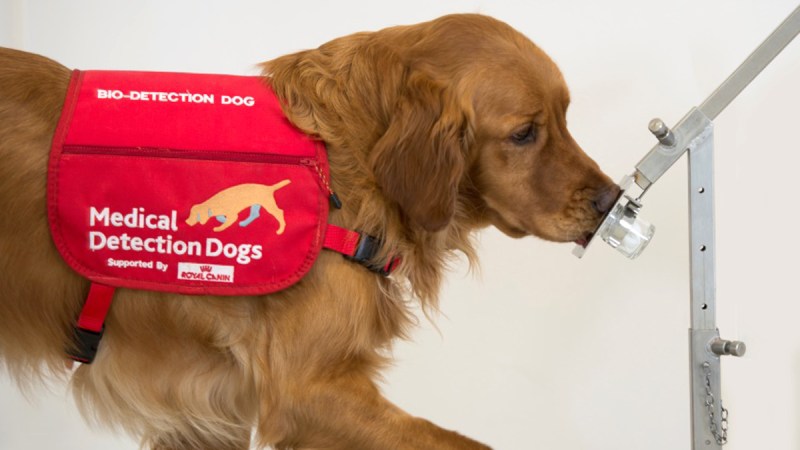
Bumper sniffs a skin sample during the study. Photo: Medical Detection Dogs
Bumper and Peanut correctly identified samples taken from patients with Parkinson’s (sensitivity) 70 per cent and 80 per cent of the time, and from patients without Parkinson’s (specificity) 90 per cent and 98 per cent of the time.
Bumper was slightly less adept at the task, which the researchers said “may reflect personality variations or subtle differences in training” between the two dogs.
Rooney said sensitivity levels of 70 per cent and 80 per cent were well above chance.
“I believe that dogs could help us to develop a quick non-invasive and cost-effective method to identify patients with Parkinson’s disease,” she said.
Perdita Barran, professor of mass spectrometry at the University of Manchester and study co-author said: “This study adds to the growing body of evidence showing that simple, non-invasive skin swabs can be used to diagnose Parkinson’s disease, offering a faster and more accessible method for early detection.”
This article first appeared in Cosmos. Read the original here
Want to see more stories from The New Daily in your Google search results?
- Click here to set The New Daily as a preferred source.
- Tick the box next to "The New Daily". That's it.