The mosquito-borne chikungunya outbreak is spreading. What is it and is it a threat to Australia?

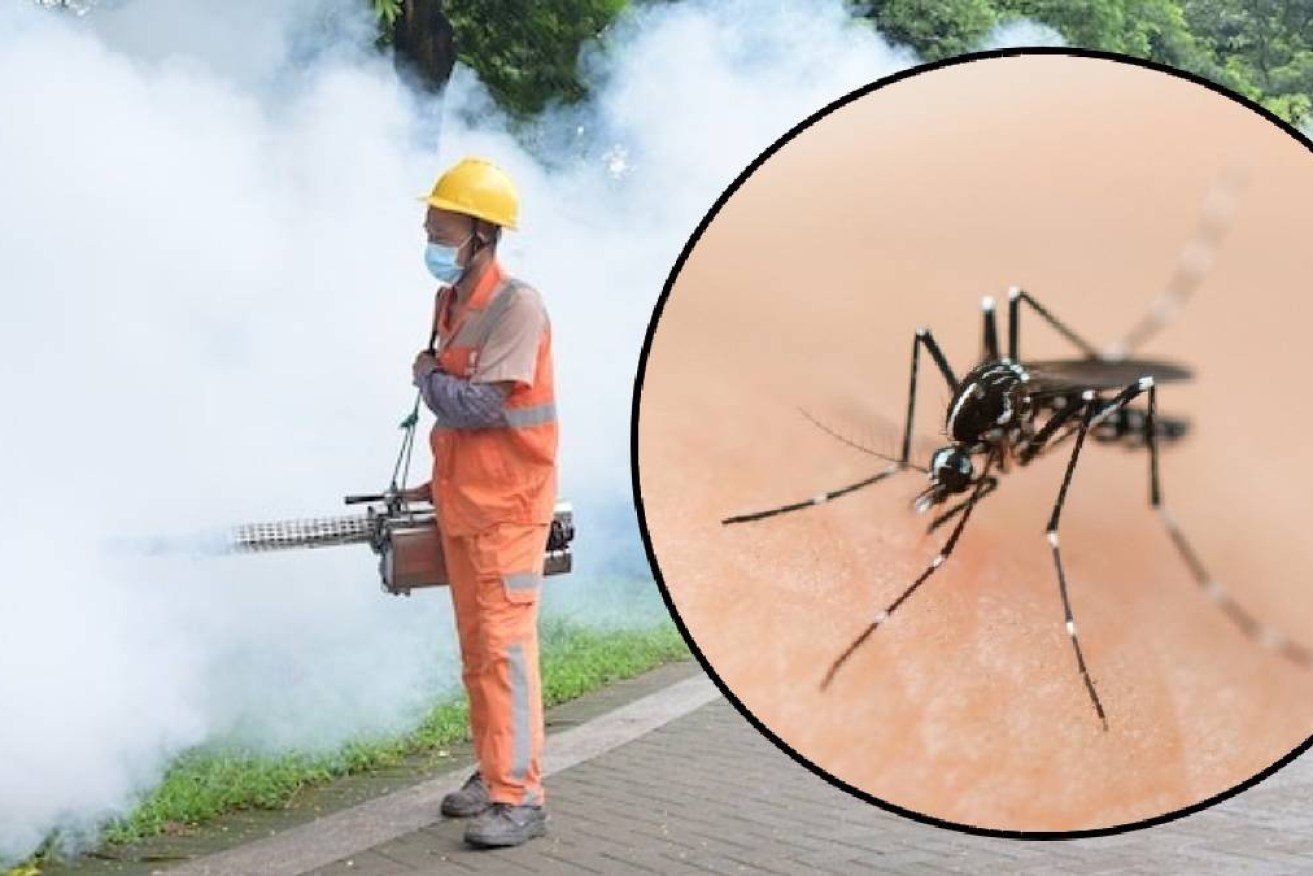
Cases of chikungunya more than doubled to 16,500 in the last two months in China. Photo: TND/Getty
A global mosquito-borne virus sweeping through southern China has arrived in the US.
The New York State Department of Health has confirmed the a case of chikungunya on Long Island, marking the first locally acquired case of the mosquito-born disease in the US since 2019.
It comes as cases of chikungunya more than doubled from 7000 to 16,500 in the past two months in China’s southern Guangdong province, prompting Covid-style lockdowns to control the disease.
The World Health Organisation in July described the situation in China as the ‘largest documented chikungunya outbreak to date’.
The outbreak is concerning for international travellers, who could potentially be exposed to the virus, and return home with it.
On its Smart Traveller website, the Department of Foreign Affars and Trade warns Australians heading to China to protect themselves against mosquito bites due to the risk of risks of mosquito-borne illnesses including chikungunya.
So what is chikungunya, how concerning is the current outbreak and what threat does it pose to Australia?
What is chikungunya?
The main symptoms of chikungunya include fever, joint pain and joint swelling.
Other symptoms may include headache, rash, muscle pain, nausea and tiredness. On rare occasions, chikungunya can be fatal.
Some people are more prone to severe symptoms than others, including infants, older adults and people with pre-existing medical conditions.
While the disease can take up to 12 days to appear, most people will start to experience symptoms within three to seven days of being bitten by an infected mosquito.
There’s no treatment for chikungunya other than managing pain with medications such as paracetamol.
While most people recover after a few weeks, some patients can experience ongoing tiredness and joint pains for months or even years.
How can I get it?
Chikungunya is spread by infected female mosquitoes, who in turn become infected when they feed on a person carrying the virus in their blood.
Once infected, the virus reproduces in the mosquito, which can transmit it to other people when it bites them.
There are more than 3000 different types of mosquitoes, but only two are commonly involved in transmitting chikungunya, Aedes aegypti and Aedes albopictus – both of which are present in Australia.
Both mosquitos are day-time biters, known as “ankle biters” because they mainly bite exposed legs and ankles.
Global outbreak
There have been more than 240,000 chikungunya virus infections and 90 deaths in 16 countries since the start of 2025, according to the European Centre for Disease Prevention and Control.
The increasing cases are recorded in Africa, South America and China, with outbreaks in Europe, and now the US.
In China, drones are being used to find places where mosquitoes are breeding, as scientists are releasing large “elephant mosquitoes” whose larvae eat the smaller mosquitoes that spread the virus.
According to a report by the BBC, residents of affected areas in China have been ordered to eliminate standing water in and around their homes – including in flowerpots, coffee machines and empty bottles.
Noncompliance may result in fines of up to 10,000 yuan (about $2200), and in more serious cases, people could face criminal charges for “obstructing the prevention of infectious diseases”.
The New York Times reported that in some instances, infected residents in Foshan have been moved to “quarantine wards”, where they are kept behind mosquito nets and screens.
China says its outbreak stems from an returning overseas traveller in July.
In the US, an investigation suggests that the precise source of infected mosquito bite is not known.
What about Australia?
While chikungunya-bearing A. aegypti mosquitos have been present in northern Queensland since the 1800s, A. albopictus is a more recent arrival, first documented in the Torres Strait in 2005.
A. aegypti mosquitoes are now found throughout most of Queensland, while A. albopictus is still only found in the Torres Strait.
To date, there have been no recorded cases of chikungunya transmission within Australia, but cases do occur in people who have recently travelled overseas, usually to the Pacific Islands or southern Asia.
There were 42 cases of chikungunya in Australia in 2023, 70 in 2024, and 133 so far in 2025.
Advice for travellers
Travellers to potentially affected countries are advised that protecting themselves against mosquito bites is the most effective strategy against the spread of chikungunya.
Protection includes wearing long sleeves and trousers, using mosquito repellents, removing standing water from your vicinity and staying in indoor, air-conditioned spaces or behind mosquito netting when outdoors.
While two vaccines are approved in the United States against chikungunya, none is approved for use in Australia.
Want to see more stories from The New Daily in your Google search results?
- Click here to set The New Daily as a preferred source.
- Tick the box next to "The New Daily". That's it.