Warning after mosquito bite puts Vic dad in coma

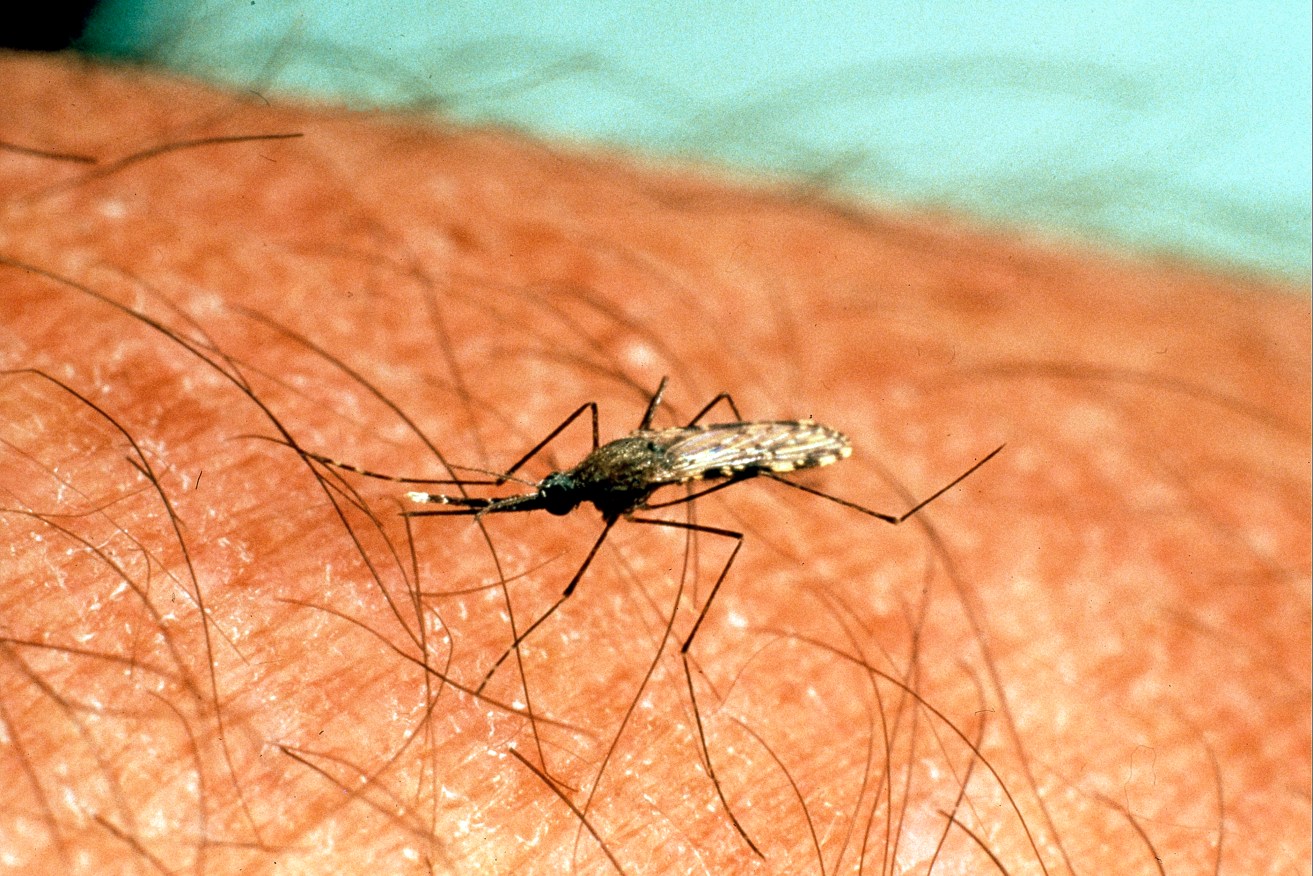
Detection of the mosquito-borne Japanese encephalitis has sparked a health warning. Photo: AAP
Health authorities have issued an urgent warning for people to protect themselves against mosquito bites as a Victorian dad fights for life after picking up a potentially deadly virus.
The Seven Network reports that Steven Bond has been in a coma for a month, battling Australia’s first reported case of Japanese encephalitis in three years.
The 60-year-old began experiencing headache and fever symptoms in early December after working in the NSW town of Finley near the Murray River.
Bond’s wife Cilla, took him to Shepparton Hospital in northern Victoria. But his condition deteriorated so rapidly that he was flown to intensive care at Melbourne’s St Vincent’s hospital.
“Nineteen days on and Stevie remains in a critical condition. Two days ago it was confirmed that he has Japanese encephalitis, a deadly virus transmitted via a mosquito bite,” Bond’s brother John wrote in a GoFundMe plea for the family.
“Doctors have advised Cilla and family that should Steve be able to continue his fight and his brain start to recover, the recovery will take months in ICU and years of rehabilitation. His future capacity to live is unknown.”

Steven Bond is in a coma fighting Japanese encephalitis. Photo: GoFundMe
Victorian health authorities issued an alert for the virus after Bond fell ill. This week, NSW Health followed, saying that JE virus and the related Murray Valley encephalitis had been detected in the state.
Both are spread through mosquito bites.
More than 50 NSW local government areas have been identified at “higher risk” of the virus, with it also detected in routine mosquito surveillance in the north-west Riverina region.
It follows a public plea in Queensland in December after wet weather created ideal mosquito breeding conditions, increasing the risk of Japanese encephalitis spreading from NSW.
Victorian health authorities said the JE virus had also been picked up in environmental surveillance along the Murray River, and in mosquitoes and feral pigs in NSW.
Victoria’s Acting Chief Health Officer Christian McGrath warned those near the Murray River or adjacent regions to take extra precautions.
“The risk of mosquito-borne diseases remains high in the coming weeks. Taking measures to avoid mosquito bites is critical to protect against infections,” McGrath said.
Recent findings indicate that Japanese encephalitis (JE) virus is likely circulating in northern Victoria
JE virus can cause a rare but potentially serious infection of the brain and is spread to humans through bites from infected mosquitoes
More: https://t.co/Yy0srPsSwJ
1/4🧵 pic.twitter.com/EBN2Xv2Bsc
— Victorian Department of Health (@VicGovDH) December 31, 2024
NSW Health executive director of health protection Dr Jeremy McAnulty said mosquitoes thrived in warm conditions, increasing the risk of the viruses, as well as others such as Ross River and Barmah Forest viruses.
“Japanese encephalitis virus has now been found in mosquitos in the Moree area, in the first results reported from the program this year,” he said.
Murray Valley encephalitis (MVE), meanwhile, was detected in sentinel chicken flocks in Cowra and West Wyalong in samples collected in December 2024.
“Japanese encephalitis virus was previously detected in mosquitoes in December 2024 in the Griffith area, and in feral pigs in the Narromine Shire local government area,” McAnulty said.
JEV is a flavivirus related to dengue and yellow fever.
Most people infected with it do not become sick but symptoms can include a fever, vomiting and headaches. In more severe cases, patients can experience seizures, paralysis, permanent disability or even death.
MVE has similar symptoms.
The last outbreak of JE in Australia, in 2022, led to 45 infections and six deaths.
For those who live or regularly work in the areas of concern, a vaccine is available against JEV. There is no vaccine to protect against MVE.
General tips to prevent mosquito bites:
- Apply repellent to exposed skin. Use repellents that contain DEET, picaridin, or oil of lemon eucalyptus. Check the label for reapplication times
- Wear light, loose-fitting long-sleeve shirts, long pants and covered footwear and socks
- Avoid going outside at peak mosquito times, especially dawn and dusk
- Use insecticide sprays, vapour dispensing units and mosquito coils to repel mosquitoes (mosquito coils should only be used outdoors in well-ventilated areas)
- Cover windows and doors with insect screens. Check there are no gaps
- Remove items that may collect water such as old tyres and empty pots from around your home to reduce the places where mosquitoes can breed
- Use repellents that are safe for children. Most skin repellents are safe for use on children aged three months and older. Always check the label for instructions
- Protecting younger infants with carriers draped with mosquito netting, secured along the edges
- While camping, use a tent that has fly screens to prevent mosquitoes entering or sleep under a mosquito net
More information on JE virus, and how to protect yourself can be found here
Want to see more stories from The New Daily in your Google search results?
- Click here to set The New Daily as a preferred source.
- Tick the box next to "The New Daily". That's it.