Threat of more Andrew scandals remains, despite royal banishment

Source: X/Chris Ship
It was already one scandal too many – and it appears it may not be over yet.
After emails emerged last week showing Prince Andrew remained in contact with convicted sex offender Jeffrey Epstein longer than he previously admitted, the House of Windsor finally moved to insulate the monarchy from years of tawdry headlines about his dodgy friends and suspicious business deals.
On Friday (British time), Buckingham Palace released a statement from the prince saying he had agreed to give up use of his last remaining royal titles so that continued allegations about him “don’t distract from the work of His Majesty”.
Craig Prescott, an expert on the monarchy and constitutional law at Royal Holloway University of London, said the revelations demonstrated that Prince Andrew had committed the unforgivable sin of misleading the British public.
“To say something which is proven not to be true, I think, is the straw that broke the camel’s back,” he said.
Already since then, however, there have been further allegations – on Sunday, that Andrew asked his taxpayer-funded police bodyguard to dig up dirt on sexual assault accuser Virginia Giuffre. He is also said to have emailed the late queen’s then-deputy press secretary and told him of his request to his protection officer, and also suggested Giuffre had a criminal record.
The Metropolitan Police has opened a probe into the claims.
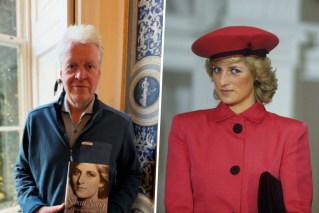
Giuffre, who had moved to Western Australia, died by her own hand in April at the age of 41.
Her posthumous book, Nobody’s Girl: A Memoir Of Surviving Abuse And Fighting For Justice, was six months previously. It will be published on Tuesday.
Given the recent string of almost daily revelations, the royals cannot be alone in wondering what else will emerge from it.
Friday’s move came as Andrew’s brother the King – who is 76 and being treated for an undisclosed form of cancer – works to ensure the long-term stability of the monarchy under his son and heir Prince William.
The Prince of Wales recently gave an interview in which he set out his vision for the monarchy, saying the institution needed to change to make sure it was a force for good.
“In some ways, Prince Andrew has been the exact opposite of that,” Prescott said.
“There is no space for that in the modern monarchy.”
Source: Apple TV
Andrew, 65, is the second son of the late Queen Elizabeth II. He spent more than 20 years as an officer in the Royal Navy before leaving to take up his royal duties in 2001.
Following Friday’s announcement, he will no longer use his remaining royal titles, including the Duke of York, though he technically retains them.
Giuffre’s brother, Sky Roberts, has urged the King to go further and strip Andrew of his right to be a prince.
But formally stripping him would be a time-consuming process requiring an act of parliament. It also risks more uncomfortable moments for the royal family as the legislation is debated.
Andrew’s banishment completes a process that began in November 2019, when he gave up all of his public duties and charity roles.
That was triggered by a disastrous interview he gave to the BBC as he sought to counter media reports about his friendship with Epstein and deny allegations that he had sex with a Giuffre, then 17.
She was trafficked by Epstein in 2001.
The 2019 Newsnight interview, which Andrew hoped would clear his name, backfired when he said he “did not regret” his friendship with convicted paedophile Epstein, who trafficked Giuffre.
He was also heavily criticised for failing to show sympathy with Epstein’s victims.
The interview also sowed the seeds for last week’s upheaval, because Prince Andrew told the BBC he had cut off contact with Epstein in December 2010.
Last Sunday, British newspapers revealed he emailed Epstein on February 28, 2011, after renewed reporting on the scandal. Andrew reportedly wrote they were “in this together” and would “have to rise above it”.
In 2022, Andrew reached an out-of-court settlement with Giuffre after she filed a civil suit against him in New York. While he admitted no admit wrongdoing, he did acknowledge Giuffre’s suffering as a victim of sex trafficking.
He reportedly paid her £12 million ($25 million) to settle the case.
But Andrew has been the subject of tabloid stories stretching back to at least 2007, when he sold his house near Windsor Castle for 20 per cent over the £15 million ($A31 million) asking price.
The buyer was reported to be Timur Kulibayev, son-in-law of Nursultan Nazarbayev, then-president of Kazakhstan, raising concerns the deal was an attempt to buy influence in Britain.
In 2024, a court case revealed Andrew’s relationship with a businessman and suspected Chinese spy who was barred from Britain as a threat to national security. Court documents reveal authorities were concerned that the man could have misused his influence over Andrew.

Andrew with his late mother and the rest of the royal family on the Buckingham Palace balcony.
While the palace said Andrew had decided to give up his royal titles, royal commentator Jennie Bond said the King and Prince William had exerted “enormous pressure”.
“We could say he has fallen on his sword, but I think he’s been pushed onto it,” Bond told the BBC.
“I don’t think this is a decision that Andrew, quite an arrogant man – very, very fond of his status – would have willingly made without a lot of pressure.”
In one possible sign of William’s role in the most recent shift, video from the Duchess of Kent’s funeral in September captured an uncomfortable moment between him and his uncle. As Andrew tried to make conversation, the Prince of Wales barely acknowledges him.
A report in Britain’s Sunday Times suggested that William was “not satisfied” with the decision and intended to take a “more ruthless” approach to his disgraced uncle, including banning him from his future coronation.
It is understood, however, that the King and his heir are in lockstep on dealing with the former duke.
Last week’s revelations came at a particularly sensitive moment for the King as he prepares for a state visit to the Vatican, where he is expected to pray beside Pope Leo XIV.
George Gross, an expert on theology and the monarchy at King’s College, London, said this week’s visit was very important to the King, who has made the bridging of faiths an important part of his “mantra”.
“I think this was the speediest, really the quickest way of lowering his status even more without having to go to parliament,” Gross said. “Even if parliament would have approved, it takes time.”
The King would hope this latest move finally drew a line for his younger brother, Prescott said.
“If there are allegations, or further stuff comes out, it will all be on Prince Andrew,” he said. “They’ve severed the connection between Prince Andrew and the monarchy as an institution.”
Lifeline 131 114
beyondblue 1300 224 636
-AAP
Want to see more stories from The New Daily in your Google search results?
- Click here to set The New Daily as a preferred source.
- Tick the box next to "The New Daily". That's it.