Staggering school costs force cash-strapped parents to work more
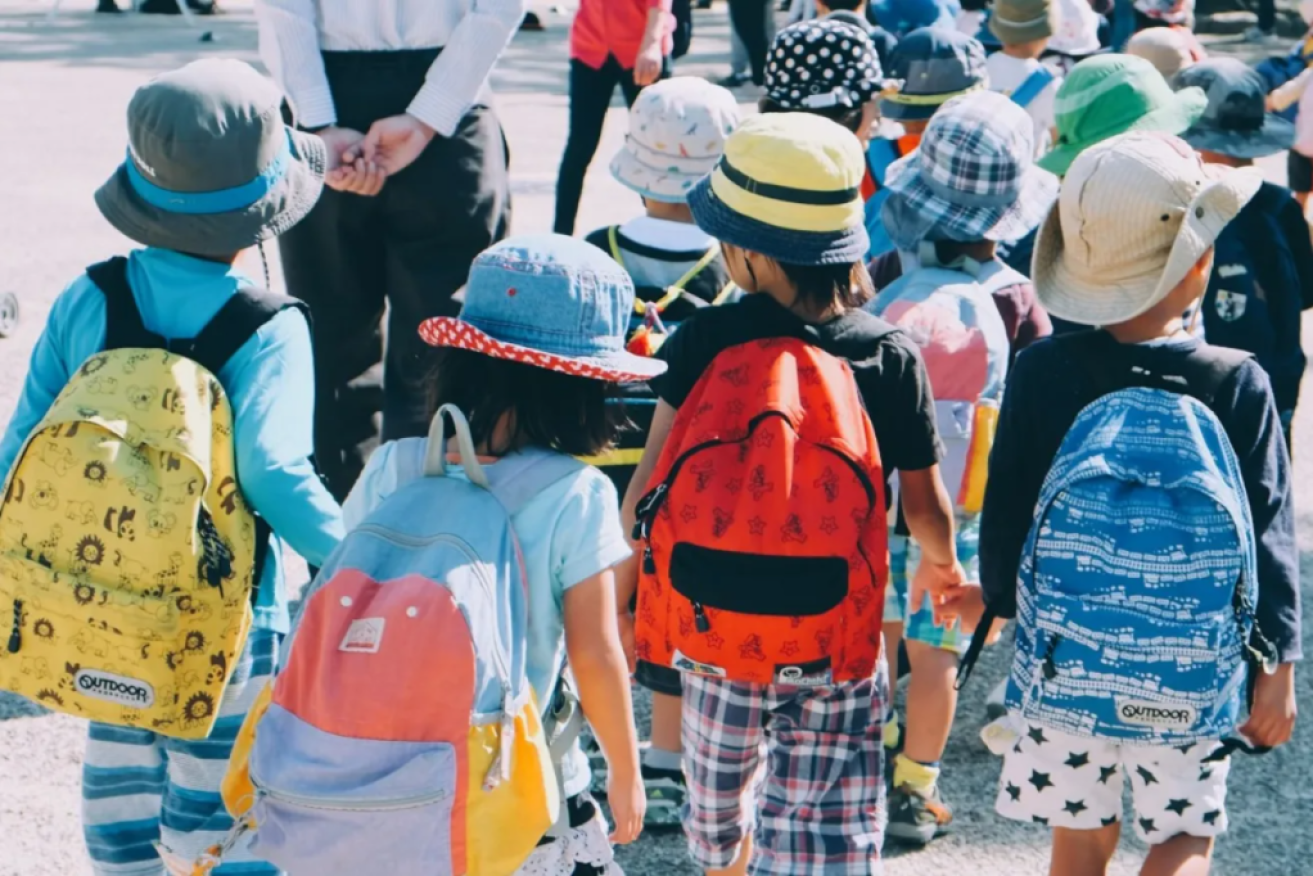
The cost of educating Australian kids is driving parents into debt and forcing them to work more. Photo: Unsplash
Australian families are reconsidering whether to have more children and are relying on others for help to pay education fees as the cost of schooling spirals.
For a child starting school in 2026, a government education will cost families in major cities $113,594, private schooling comes in at $247,174 and sending them to an independent school for 13 years will cost $369,594.
In regional and remote areas, families will pay $100,395 for a government education, $223,874 for Catholic and $230,144 for independent schools.

The cost of educating children in by state and type of school institution. Graphic: AAP
The research conducted by school finance group Futurity used school fee data from Australia’s curriculum authority and interviewed 2500 parents about their spending habits.
Melbourne topped the capital cities in government school costs at $121,202, while regional and remote Queensland parents face the steepest education bill of $108,647.
Government school fees made up 13 per cent for metro and 5 per cent for regional costs. The remainder goes to add-ons such as outside tutoring, transport, school camps and uniforms.
Canberrans will spend the most for a Catholic education, while regional and remote Queenslanders pay the highest fees at $273,494.
Independent schools are most expensive in Melbourne, costing 435,902 while Western Australia is the priciest for regional and remote schools at $275,639.
Families value education, with nine in 10 saying education is important for their child to thrive in life, Futurity’s Sarah McAdie said.
“[They] are prepared to make sacrifices in order for their child to access the education that the parents choose and value for their child,” she said.
But parents are increasingly looking to save by searching for second-hand school uniforms, making laptops last longer and spending less on musical instruments and camps.
A third of respondents said they turned to credit debt, while others cut back on family holidays and even worked more to afford quality education for their kids.
More than half said they relied on others, including grandparents, to pay for their children’s education.
“Alarmingly, 45 per cent of parents said that they are now considering having fewer children as a result of the cost of raising and educating a child today,” McAdie said.
Families have tightened their spending as concerns increase about Australian schools being fully funded, according to the Australian Council of State School Organisations.
“When the household budget is under pressure, things like sport and camps and upgrades are the first things that are scaled back,” interim chair Peter Garrigan said.
He said the real test was whether every child could participate fully without money being a barrier, as parents turned to the “bank of grandparents” for help.
“Australia’s society should be able to support everyone to do that,” Garrigan said.
In Australia, 63 per cent of students are enrolled in government schools, 20 per cent in Catholic schools and 17 per cent in independent schools, according to the Bureau of Statistics.
-with AAP
Want to see more stories from The New Daily in your Google search results?
- Click here to set The New Daily as a preferred source.
- Tick the box next to "The New Daily". That's it.