What holiday-home investors need to know this summer


The tax office is taking a keen interest in holiday-house owners. Photo: Unsplash
Holiday-home owners heading into peak summer are being warned to check their tax claims carefully, with the Australian Tax Office launching a major crackdown on dubious deductions.
H&R Block director of tax communications Mark Chapman said the ATO had tightened its stance after seeing “widespread over-claiming on holiday homes that are, in reality, used largely for private purposes”.
He said many owners had claimed full-year deductions for interest, rates and other holding costs “even when the property is occupied by the owners for much of the year or is only superficially advertised for rent”.
Chapman said the ATO’s updated guidance made one point clear: Deductions are available only when a property is “mainly used to produce assessable income”.
“The ATO wants to draw a firm line between genuine short-term rentals that operate on a commercial footing, and private holiday homes dressed up as investments,” he said.
What the ATO considers ‘genuinely available for rent’
Chapman said the tax office had become increasingly firm about what counted as genuine availability. A property must be “actively and realistically offered to the open market, and not simply listed as a token gesture”, he said.
That means ongoing advertising on public platforms, market-competitive pricing, and a willingness to accept reasonable bookings, particularly in high-demand periods.
“The property has to be run in a way a commercial operator would run it,” Chapman said. “Not in a way that protects the owner’s preferred holiday calendar.”
Red flags that will attract scrutiny
Chapman said the ATO had “become very specific” about signs that a property was not truly income-producing. One major red flag is deliberately overpricing a holiday home so that no one books it.
“Setting nightly rates far above market levels, effectively ensuring no one books, is a classic indicator of private use,” he said.
Blocking out school holidays, long weekends or the summer peak is another giveaway.
“If the owner blocks the calendar for peak periods, the ATO sees that as inconsistent with commercial behaviour,” Chapman said.
Regularly declining reasonable bookings or imposing restrictive conditions, such as no weekend stays or minimum two-week bookings in off-peak seasons, will also raise questions.
“These patterns suggest the owner is curating availability to preserve private enjoyment, not genuinely trying to earn income,” Chapman said.
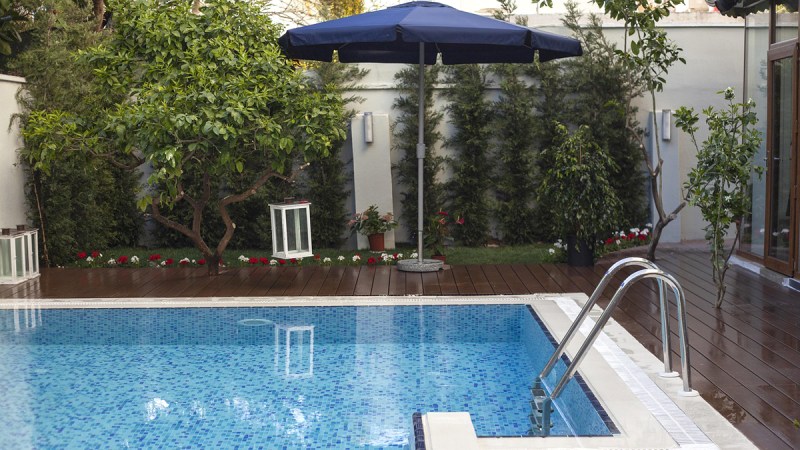
Making your place too difficult to rent will put the tax office on notice. Photo: Pixabay
How owners can stay on the right side of the tax office
Chapman said the No.1 rule for owners was to “behave like a commercial operator”.
That includes setting genuine market rates, keeping the property available during peak seasons, advertising consistently and keeping thorough records of bookings, enquiries, rejected requests, invoices and cleaning or maintenance logs.
“Good documentation is crucial,” he said. “The ATO is crystal clear: If you claim deductions, you must be able to demonstrate that the property was genuinely available and used for income-producing purposes.”
Owners’ most common mistakes
Chapman said many taxpayers erred by assuming any amount of Airbnb income automatically entitled them to claim holding costs.
Others incorrectly claim a full year of deductions, even when the property has been used by family or friends at discounted or zero rent.
“Listing the property only intermittently, or at unrealistic prices, to give the appearance of availability is a common error,” he said.
Another issue is using aggressive apportionment methods that don’t reflect the true mix of private and rental use.
Chapman warned that even discounted family stays count as private us.
“For deduction purposes, it’s still private use, even if some payment is received,” he said.
He said these mistakes all stemmed from the same misconception: “That the presence of any income makes the property a rental business. Under the new framework, that’s no longer defensible.”
Part of a broader 2026 compliance push
Chapman said the crackdown on holiday-home deductions was part of a wider tax office compliance ramp-up for the 2026 income year.
It includes increased scrutiny of short-term accommodation operators, rental deductions, work-related expenses and mixed-use assets, along with expanded data-matching across booking platforms and payment providers.
“Digital platform reporting now gives the ATO real-time visibility of bookings and income patterns,” he said.
When paired with the new ruling, Chapman said the tax office was well positioned to challenge claims that didn’t demonstrate genuine income-producing activity.
With summer in full swing, he says: “If your holiday home is really a holiday home, you can’t claim it as an investment property.”
Republished from View.com.au
Want to see more stories from The New Daily in your Google search results?
- Click here to set The New Daily as a preferred source.
- Tick the box next to "The New Daily". That's it.