Property markets yet to twig to looming disaster losses
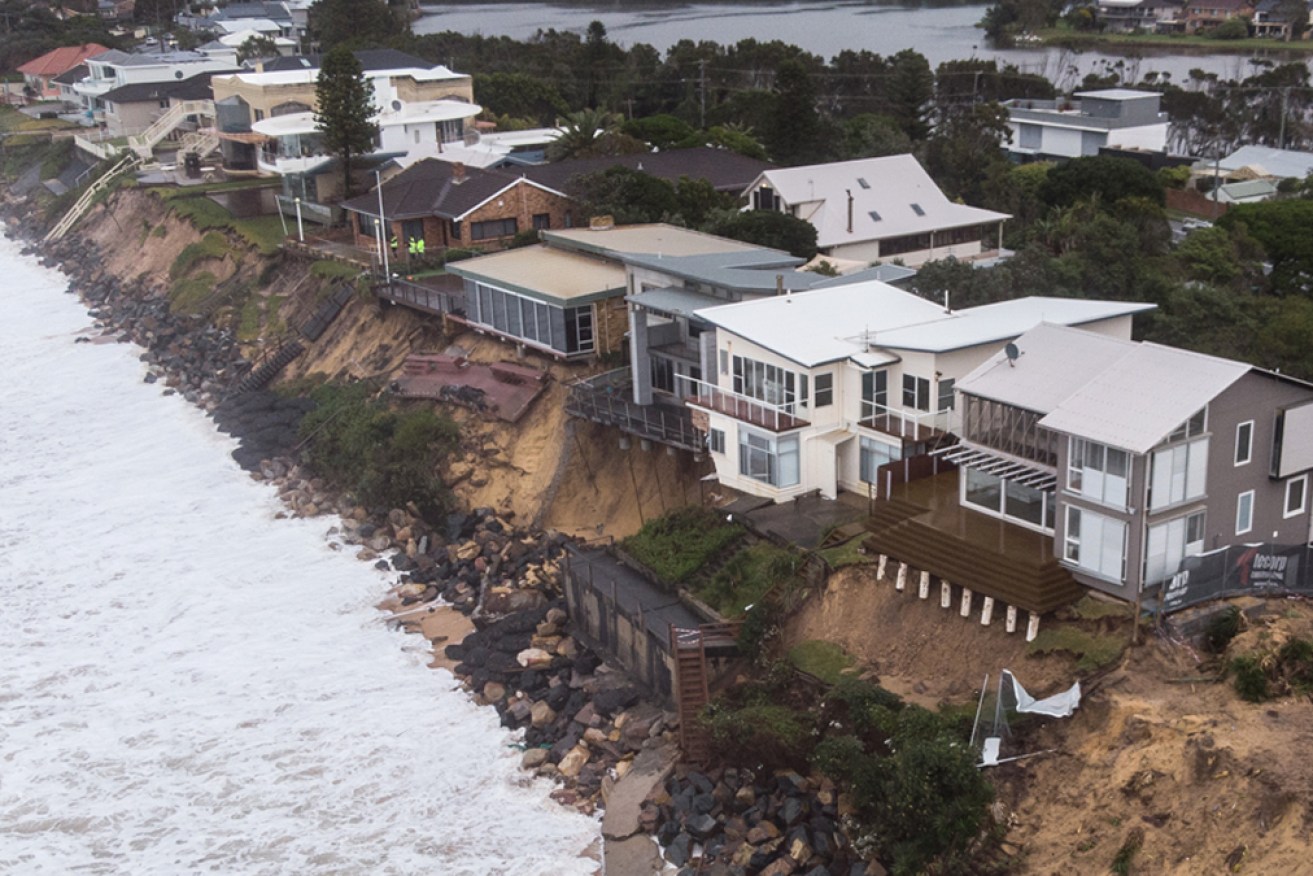
Waterfront properties still command premium prices – despite their growing exposure to cliimate risks. Photo: AAP
Home buyers are still willing to pay top dollar for waterfront views and bush frontage – but a landmark report suggests that won’t always be the case.
Riverine flooding, coastal inundation, bushfires, wind storms and droughts that can crack walls will eventually catch up with property markets, according to Australia’s first national assessment of climate risks.
Under a worst-case scenario, extreme weather events are estimated to hit values by $570 billion by the end of the decade.
Losses could climb to more than $610 billion by 2050 under three degrees of warming – a temperature rise the Australian Climate Service views as “prudent” to prepare for – as buyers opt to pay less for risky dwellings, banks value them accordingly and insurance costs trend higher.
The numbers assume little is done to adapt to changing conditions, and the estimates are far from set in stone.
Ehsan Noroozinejad, a senior researcher at Western Sydney University’s Urban Transformations Research Centre, said property markets were already pricing in “to some extent” known and recent events, such as flood risk.
“But future risks, like sea-level rise or low-salience hazards are only partially or not at all capitalised into prices,” he said.
A compelling explanation for the resilience of many climate-vulnerable homes is that they often come with attractive lifestyle perks.
Waterfront views, for example, always command a price premium.
“Memory fade” after disastrous events, poor knowledge of climate risks and few houses to choose from can also keep upwards pressure on home prices in areas vulnerable to weather extremes.
Even in Lismore, the NSW town at the centre of the costliest disaster in Australian history, property prices have proven resilient.
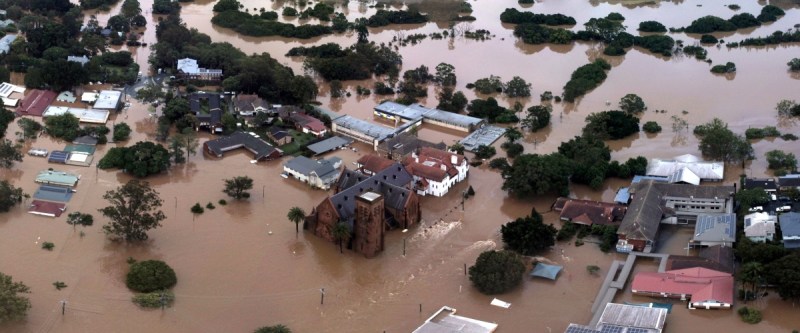
Lismore property prices have bounced back since the disastrous floods of three years ago.
They dipped immediately after the devastating 2022 floods, and while still 6.7 per cent off record highs have since trended higher, based on figures provided by Cotality.
Sales activity in the area has returned to long-run averages after a spike following the catastrophic flooding.
While government buybacks have likely helped keep heat in the local market, Cotality views Lismore as a place where people will continue to buy after a natural disaster.
This, researchers say, is likely in part because of the affordability challenges posed by relocating.
Committee for Economic Development of Australia senior economist Liam Dillon said chronic housing shortages were a major driver of home values, including in many climate-exposed locations in the regions and on the coast.
In line with last week’s sobering risk assessment, Dillon expected climate risk to become a bigger price-driver in years to come, particularly when sea level rise begins to affect many more homes.
“There’s two forces acting there – one is the intensity of what’s playing out in terms of those disasters and then the other one is the number of houses or properties exposed,” Dillon said.
Insurance costs are the biggest immediate pain point. Rising premiums are already influencing home values in a few highly vulnerable locations – and insurance affordability and accessibility problems are only expected to worsen.
The climate report estimates 8.2 per cent of Australian homes, or 751,000, are in high-risk areas, while 8.7 per cent are in very high-risk areas.
By 2090, more than 1.2 million homes could be deemed at very high risk.
Source: AAP
Rising insurance premiums could erode the values of some properties by as much as 10 per cent, Noroozinejad said.
Ray White chief economist Nerida Conisbee said affordable suburbs would likely feel the squeeze of rising insurance costs first. The premium end of markets were typically better able to absorb the costs of surging insurance, she said.
Adelaide Hills is a good example, with higher-income buyers still flocking to the region for its natural beauty and proximity to the city despite its high exposure to bushfire risk.
After a disaster, wealthier households are also more likely to be able to afford a resilient rebuild, such as an elevated dwelling that avoids flood waters.
A gap between perceived and actual risk is another problem.
Dillon said CEDA research suggested Australians may be underestimating the risks they face from natural disasters.
Less than 1 per cent of homeowners believe they are at high risk of flood, for example – when about 4.4 per cent of homes has at least a 1-5 per cent annual probability of inundation.
CEDA believes a lack of easily accessible, understandable information is a big part of the problem that could be easily addressed by governments.
There is also an argument for strengthening mandatory or natural hazard disclosures at point of sale, Dillon said.
It’s a view shared by the Productivity Commission, which has called for resilience ratings to prevent buyers overpaying for climate-vulnerable homes and to incentivise sellers to invest in resilient home upgrades.
-AAP
Want to see more stories from The New Daily in your Google search results?
- Click here to set The New Daily as a preferred source.
- Tick the box next to "The New Daily". That's it.